
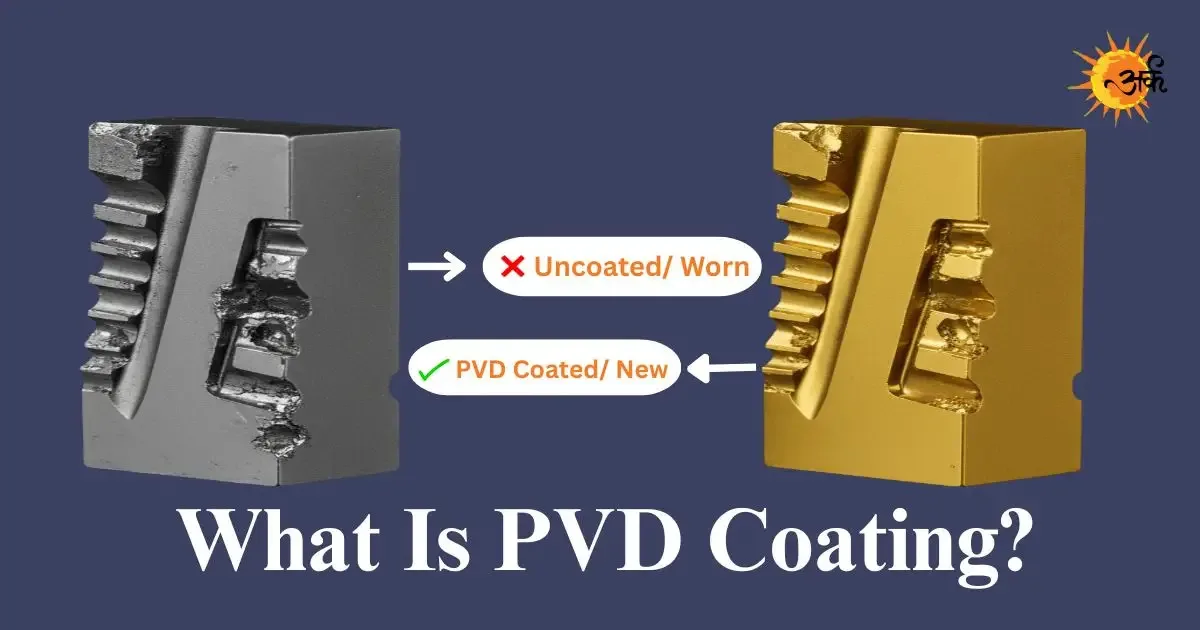
In today’s advanced manufacturing environment, improving the durability and performance of tools and components is essential. Industries such as automotive, aerospace, tooling, and engineering require surfaces that can withstand high temperatures, friction, and wear. This is where PVD coating plays a critical role.
In this comprehensive guide, we will explore what is PVD coating, its process, types, benefits, applications, and insights into PVD coating service and PVD coating price in India.
What is PVD Coating?
Physical Vapor Deposition (PVD) is a vacuum-based coating technology used to deposit a thin, hard layer onto metal or other materials. The coating thickness is typically between 1–5 microns, yet it significantly enhances surface properties.
PVD coating improves hardness, wear resistance, corrosion resistance, and heat stability, making it an ideal hard coating for industrial tools and precision components.
PVD Coating Process
The PVD coating process is carried out in a controlled vacuum environment and involves multiple stages:
1. Surface Cleaning
Components are thoroughly cleaned to remove oil, dust, and contaminants to ensure proper adhesion.
2. Vacuum Chamber Setup
The cleaned components are placed in a vacuum chamber where air is removed to create a controlled environment.
3. Vaporization of Material
The coating material is heated or ionized into vapor form.
4. Deposition
The vaporized material condenses onto the component surface, forming a thin and uniform coating layer.
5. Cooling & Inspection
The coated components are cooled and inspected for quality and performance.
This process ensures strong adhesion, uniform thickness, and high-quality coatings.
Types of PVD Coating
Different industrial applications require different coating properties. Some of the most widely used types of PVD coating include:
- Titanium Nitride (TiN) – General-purpose coating with high hardness and low friction
- Titanium Aluminium Nitride (AlTiN) – Suitable for high-temperature applications
- Aluminium Chromium Nitride (AlCrN) – Excellent oxidation resistance and durability
- TiSiN – Nano-composite coating for extreme machining conditions
- DLC – Low friction coating for precision parts
Among these, Titanium Nitride (TiN) PVD coating is one of the most widely used due to its cost-effectiveness and versatility.
Titanium Nitride (TiN) PVD Coating
Titanium Nitride TiN coating is a ceramic-based layer known for its gold-colored finish, high hardness (2000–2500 HV), and excellent wear resistance.
It is widely used in cutting tools, dies, and industrial components to improve tool life and reduce friction. TiN coating is ideal for general machining applications and provides a balance between performance and cost.
Uses of PVD Coating
PVD coating is used across multiple industries due to its versatility:
- Cutting tools – drills, taps, inserts, end mills
- Dies and molds – improved wear resistance and tool life
- Automotive components – reduced friction and improved durability
- Aerospace parts – enhanced heat resistance and performance
- Extrusion dies – smoother material flow and reduced wear
- Decorative applications – watches, hardware, and jewelry
Benefits of PVD Coating
PVD coating offers several advantages that make it essential in modern industries:
- Increased hardness – protects against wear and abrasion
- Extended tool life – reduces replacement frequency
- Low friction – improves efficiency and reduces heat
- Heat resistance – performs well in high-temperature environments
- Corrosion resistance – protects against oxidation and chemicals
- Cost efficiency – lowers maintenance and operational costs
These benefits make PVD coating a preferred solution for improving productivity and performance.
PVD Coating Service in India
With growing industrial demand, many companies offer specialized PVD coating service in India. These services use advanced technology to deliver high-quality coatings tailored to specific applications.
Professional coating providers ensure proper surface preparation, uniform coating thickness, and strong adhesion. Choosing the right PVD coating service is crucial for achieving maximum performance and durability.
PVD Coating Price
The PVD coating price depends on several factors:
- Type of coating (TiN, AlTiN, AlCrN, etc.)
- Size and complexity of components
- Coating thickness
- Quantity of parts
While the initial cost may seem higher, PVD coating provides long-term savings by extending tool life, reducing downtime, and improving efficiency.
Why Choose PVD Coating?
PVD coating is a reliable and advanced solution for industries looking to enhance performance and reduce costs. Its ability to improve surface properties without affecting the core material makes it highly effective.
Whether for cutting tools, dies, molds, or precision components, PVD coating delivers consistent and long-lasting results.
Conclusion
Understanding what is PVD coating, its process, uses, and benefits helps industries make informed decisions for improving performance and efficiency. From Titanium Nitride (TiN) PVD coating to advanced coatings like AlTiN and AlCrN, PVD technology offers versatile solutions for modern manufacturing challenges.
With the availability of high-quality PVD coating service in India, businesses can leverage this technology to extend tool life, reduce costs, and achieve superior results in their operations.