
The aircraft composite blades market is experiencing a wave of innovation as aerospace OEMs and suppliers invest in next-generation materials and manufacturing techniques. From fan blades in jet engines to rotors in helicopters, composite technologies are enabling performance breakthroughs.
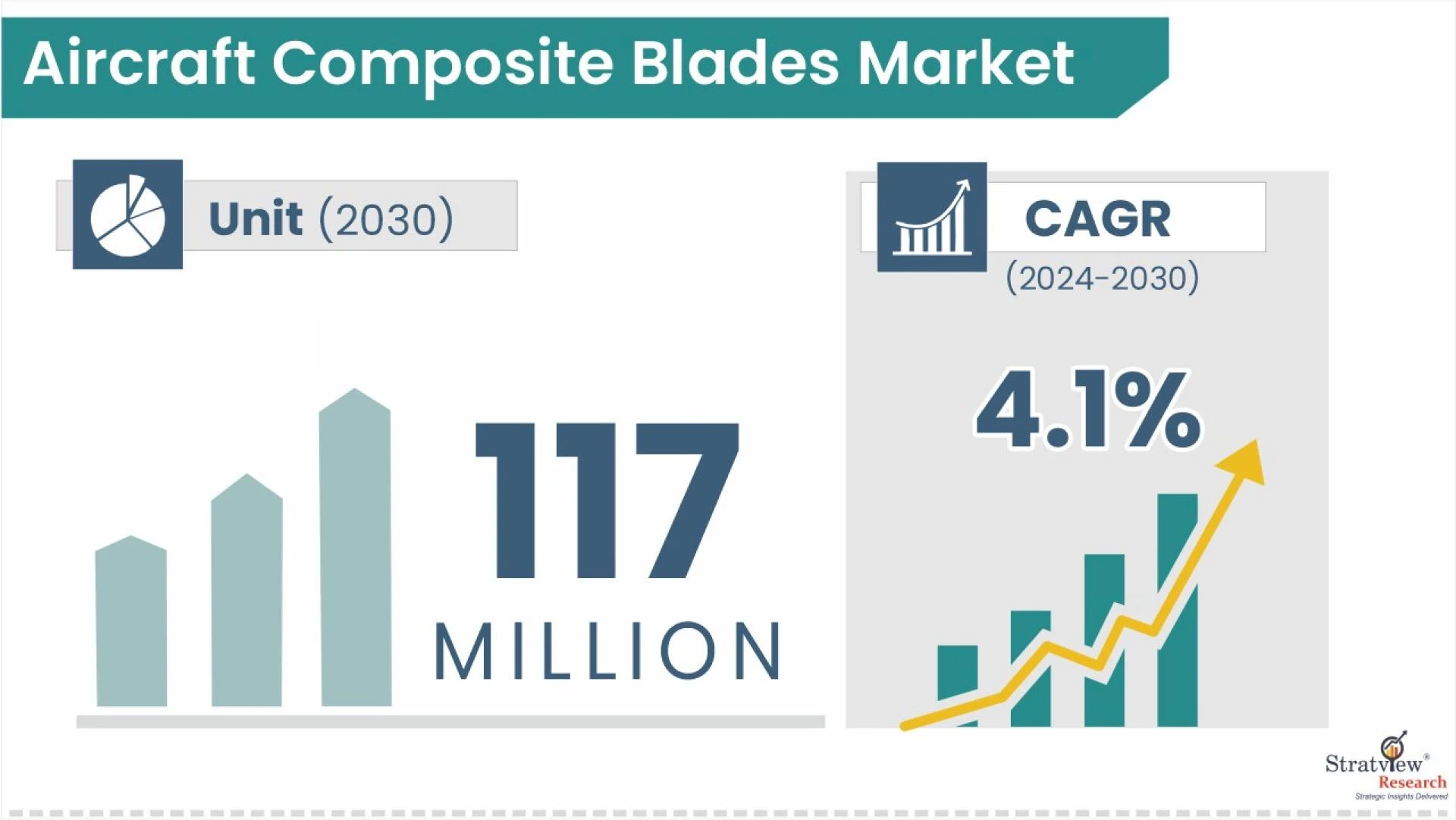
According to Stratview Research, the aircraft composite blades market is estimated to grow at a CAGR of 4.1% over the coming years to reach more than 117 million units in 2030..
Request a sample report to preview our in-depth analysis.
https://www.stratviewresearch.com/Request-Sample/3904/aircraft-composite-blades-market.html#form
Drivers
- Higher Thrust-to-Weight Ratios in Engines
- Increasing Demand for Quiet, Efficient Propulsion Systems
- OEM Push Toward All-Composite Aircraft Structures
Challenges
- Material Traceability and Quality Control
- Recyclability Concerns: Most composite blades are not easily recyclable, posing environmental concerns.
- OEM Dependency: Market growth is tied closely to major engine and aircraft programs.
Trends
- Automation in Blade Manufacturing: Robotic lay-up, curing, and trimming.
- Use of Thermoplastic Composites for improved repairability and faster cycle times.
- 3D-Printed Molds and Tooling to accelerate prototyping.
Opportunities
- Collaborations Between Material Suppliers and OEMs
- Lightweight Blades for Regional and Hybrid Aircraft
- Military Rotorcraft Modernization Programs
Conclusion
With innovation driving costs down and performance up, composite blades are becoming integral to propulsion strategies across aerospace. The future is lighter, stronger, and smarter.