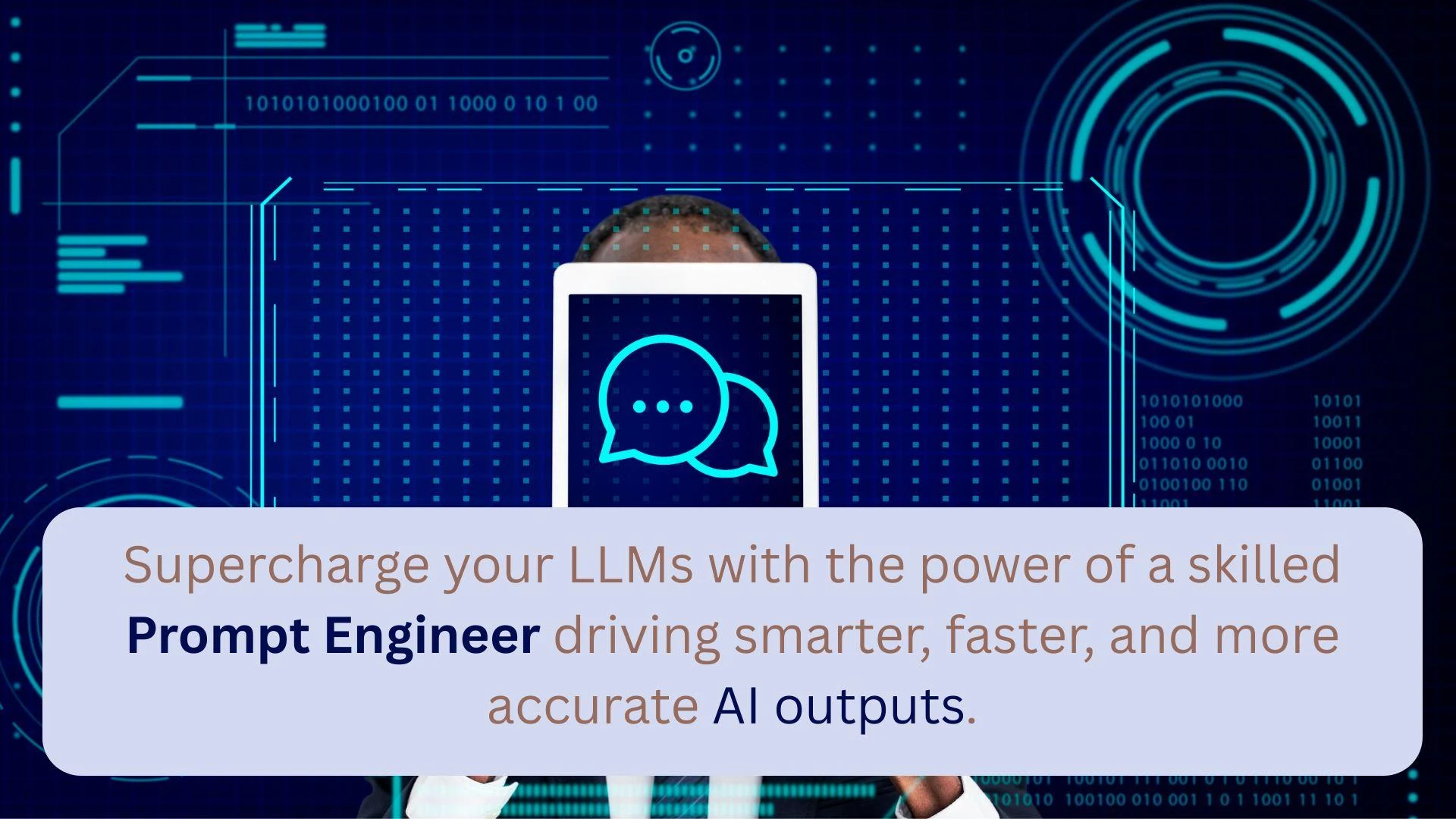
In the rapidly evolving landscape of artificial intelligence, Large Language Models (LLMs) have emerged as undeniably powerful tools, capable of generating human-like text, answering complex questions, and even creating images. However, the true potential of these sophisticated AI models remains locked behind a crucial interface: the prompt. While LLMs are incredibly "smart" in their underlying architecture and vast training data, their practical utility is only as good as the instructions they receive. This fundamental truth underscores the critical importance of prompt engineering.
Businesses today demand precision and efficiency, not the hit-or-miss outcomes often associated with generic or poorly constructed prompts. The era of simply typing a question into an AI and hoping for the best is rapidly drawing to a close, replaced by a strategic, systematic approach to interacting with these advanced systems.
The Problem with Generic Prompts
The pitfalls of generic prompts are numerous and costly. Without precise guidance, LLMs can produce a range of undesirable outputs, leading to:
- Wasted tokens and resources: LLMs operate on a token-based system, meaning every word or sub-word in a prompt and its generated response consumes computational resources. Vague prompts often lead to verbose, unfocused, or irrelevant responses, unnecessarily increasing token usage and, consequently, operational costs.
- Off-target or inaccurate results: A prompt lacking specificity is akin to asking for directions without a destination. The LLM might generate grammatically correct and coherent text, but it could entirely miss the user's intent or provide information that is factually incorrect or inappropriate for the given context. This necessitates significant human intervention for correction and refinement, negating the very purpose of automation.
- Inefficiencies in workflow: When employees spend considerable time re-prompting, editing, and fact-checking AI outputs, the promised efficiency gains of LLMs evaporate. This manual back-and-forth introduces bottlenecks, slows down processes, and frustrates users.
- Challenges in scaling prompt generation in-house: As businesses seek to integrate LLMs across various departments and functions, the demand for effective prompts skyrockets. Relying on individual employees to master prompt engineering through trial and error is simply not scalable. It leads to inconsistent quality, a lack of standardized best practices, and a significant drain on internal resources. Without a structured approach, organizations struggle to propagate successful prompting strategies across their entire AI ecosystem.
These challenges highlight a clear need for specialized expertise in crafting prompts that consistently elicit optimal results from LLMs. This is where the discipline of prompt engineering, and the services that underpin it, become indispensable.
Our Approach to Prompt Engineering
At Hitech BPO, we believe that effective prompt engineering is a fusion of art and science. It's about understanding the nuances of language, the underlying logic of AI models, and the specific context of the business task. Our approach is built on a methodical framework that ensures precision, relevance, and efficiency in every AI interaction.
Key to our methodology is domain-specific prompt tuning for LLMs. We don't just generate prompts; we optimize them for the unique demands of different industries and applications. Whether it's a general-purpose model like GPT or Claude, or a creative AI like DALL·E and Midjourney, our engineers possess the expertise to tailor prompts that unlock their full capabilities. This involves a deep dive into the specific vocabulary, industry standards, and expected outputs within a given domain. For instance, a prompt designed for legal document summarization will differ significantly from one for e-commerce product description generation.
Our prompt engineering formula can be distilled into: Language + Logic + Context = Optimal Model Behavior.
- Language: This encompasses the careful selection of keywords, the structuring of sentences, and the overall clarity and conciseness of the prompt. It's about speaking the AI's language effectively.
- Logic: We embed logical reasoning into our prompts, guiding the LLM through complex tasks by breaking them down into smaller, manageable steps. This often involves techniques like chain-of-thought prompting, where the AI is instructed to show its reasoning process, leading to more robust and verifiable outputs.
- Context: Providing the necessary background information, constraints, and desired output formats is paramount. Context ensures the LLM understands the "why" behind the request, not just the "what." This allows for the generation of responses that are not only accurate but also highly relevant and actionable.
Furthermore, our services extend beyond just crafting individual prompts. We specialize in AI Prompt Generation Services, developing comprehensive prompt libraries and frameworks that can be reused and adapted across various tasks. This systematic approach ensures consistency and accelerates AI adoption within an organization. We also work with businesses to implement LLMs with custom training models, understanding that for highly specialized or proprietary data, fine-tuning an LLM on an organization's internal datasets can yield significantly superior results. This involves not only expert prompt engineering but also data curation, model selection, and iterative refinement to ensure the LLM fully grasps the unique nuances of the client's information.
Industries We Help Automate with Precision Prompts
The versatility of our prompt engineering approach allows us to deliver transformative results across a wide array of industries. Our precision prompts are designed to automate and enhance critical business functions, including:
- E-commerce: Generating compelling product descriptions, automating customer service inquiries, personalizing marketing campaigns, and streamlining inventory management.
- Publishing: Assisting with content creation (articles, blog posts, social media updates), summarizing lengthy documents, generating headlines, and performing editorial checks.
- Design: Creating prompts for generative AI art tools (DALL·E, Midjourney) to produce specific visual assets, brainstorming design concepts, and generating variations of existing designs.
- Data Operations: Automating data extraction, summarizing reports, generating insights from raw data, and creating structured queries for databases.
- Support Automation: Developing highly effective prompts for chatbots and virtual assistants to provide accurate, empathetic, and efficient customer support, reducing resolution times and improving customer satisfaction.
In each of these sectors, the difference between a generic prompt and a precisely engineered one can mean the difference between a minor efficiency gain and a complete overhaul of a workflow.
Why Clients Choose Hitech BPO
Our commitment to excellence and tangible results sets us apart. Clients partner with us for several compelling reasons:
- Human-in-the-Loop Quality Assurance: We recognize that even the most advanced AI benefits from human oversight. Our "human-in-the-loop" methodology ensures that every prompt and its generated output undergoes rigorous human review and refinement. This critical step guarantees accuracy, eliminates biases, and maintains the highest standards of quality, especially for sensitive or high-stakes applications. This iterative feedback loop also continuously improves our prompting strategies.
- Fast Turnaround and Scalable Teams: Time is of the essence in the fast-paced business world. Our dedicated and experienced teams are structured to deliver prompt engineering solutions with remarkable speed, without compromising on quality. Furthermore, our scalable resources mean we can quickly ramp up to meet evolving project demands, from small-scale prompt optimization to large-scale AI integration initiatives.
- Results-Driven Workflows: We are not just prompt generators; we are problem-solvers. Our workflows are designed with a clear focus on achieving measurable business outcomes. We work closely with clients to define key performance indicators (KPIs) for their AI initiatives and then meticulously craft prompts and integrate solutions that drive those results, whether it's increased efficiency, improved customer satisfaction, or enhanced content quality.
- Prompt Optimization Expertise: Beyond initial prompt generation, we specialize in continuous prompt optimization. This involves analyzing AI outputs, gathering feedback, and iteratively refining prompts to achieve even better results over time. This ongoing process ensures that LLMs remain highly effective and adapt to changing business needs and evolving AI capabilities.
- Strategic AI Integration: Our services extend beyond mere prompting; we assist clients in strategically integrating LLMs into their broader technological ecosystems. This involves advising on model selection, API integration, and workflow design to ensure seamless and impactful AI adoption.
Conclusion
The true power of Large Language Models lies not just in their inherent capabilities but in how effectively they are guided. Prompt engineering is the key to unlocking this potential, transforming AI from a promising technology into a precise, indispensable tool for business automation and innovation. Generic prompts lead to inefficiencies and missed opportunities; precision prompts, on the other hand, supercharge LLMs, delivering accurate, relevant, and actionable results.
Don't let the complexity of AI prompts hinder your progress. Partner with Hitech BPO to unlock the full potential of your LLM workflows. Let our expertise in AI Prompt Generation Services, LLMs with custom training models, and comprehensive prompt optimization drive your business towards unprecedented levels of efficiency, accuracy, and growth. Contact us today to discover how precision prompts can revolutionize your operations.