Bioplastics are no longer a niche alternative; they are a fast-expanding sector in global materials science. Packaging remains the largest application segment, accounting for more than 40% of total demand. Starch-based and PLA-blend bioplastics are especially prominent here because they offer both biodegradability and versatility. However, producing consistent quality at scale presents technical challenges, particularly in terms of thermal stability and moisture sensitivity.
Our recent project aimed to create new starch-based and PLA-blend packaging materials with improved mechanical performance while reducing material waste during trials.
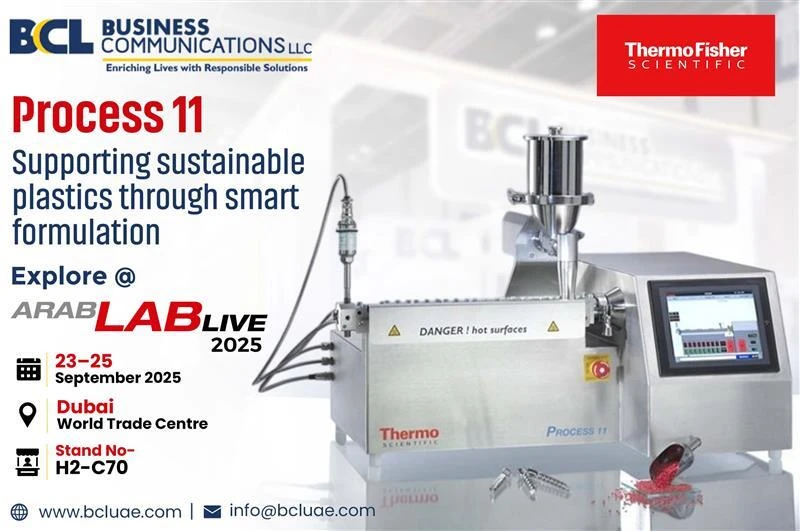
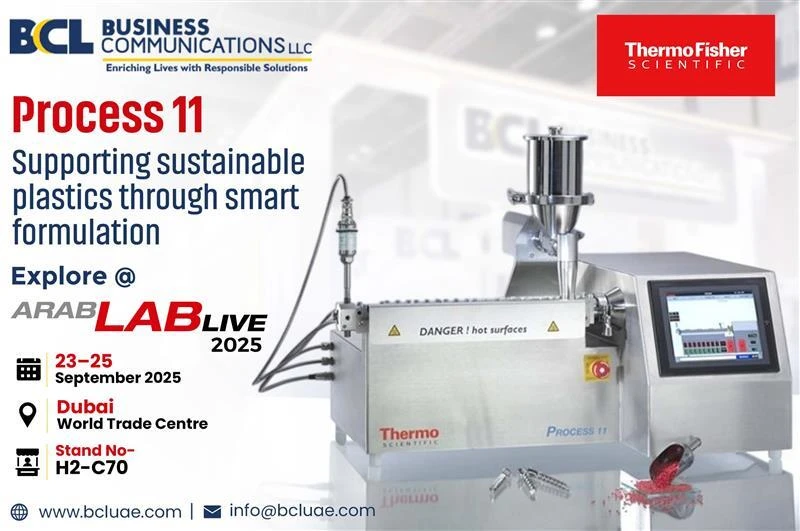
The Process 11 Parallel Twin-Screw Extruder was a practical choice, giving precise process control and replicating industrial-scale extrusion on a lab bench with only 20 grams of material. A bench-top twin screw extruder for R&D, it effectively bridged the gap between innovation and production.
Precision Control in a Compact System
Working with BCL and Process 11, we approached formulation in defined stages:
- Raw Material Conditioning – Moisture levels were carefully monitored to prevent degradation during processing, a crucial factor in bioplastics where stability can directly affect product lifespan.
- Consistent Mixing – The co-rotating twin screws ensured even dispersion of plasticisers and natural fibres across the blends.
- Tailored Temperature Profiles – Barrel zones were adjusted to protect thermally sensitive starch-based inputs while still achieving optimal flow.
- Rapid Cooling – Extrudates were cooled immediately before pelletising to maintain shape and integrity.
The extruder’s ability to switch screw configurations between trials enabled quick adaptation for different material requirements. This flexibility is particularly valuable in a bioplastics sector growing at double-digit rates, where speed-to-market can determine competitive advantage.
Cost-Efficient Formulations
In another application, the same small plastic extrusion machine was used to lower the cost of high-performance plastics without compromising tensile strength, heat resistance, or durability. This is especially relevant given that many manufacturers are now balancing sustainability goals with price sensitivity in competitive markets.
By adjusting polymer-to-additive ratios, incorporating recycled content, and optimising filler loadings, we achieved:
- 20% reduction in impact modifier use
- Successful integration of recycled polymer while retaining mechanical performance
- Material cost savings while meeting production specifications
Real-time monitoring of torque, melt pressure, and output quality allowed for precise adjustments during runs, cutting down trial-and-error cycles. This ability to fine-tune formulations quickly is crucial as market forecasts consistently highlight growth rates between 10% and 18% across different regions, showing strong global demand for sustainable materials.
Insights from the Lab
From a researcher’s perspective, the Process 11 Parallel Twin-Screw Extruder provides both a testbed for innovation and a bridge to scalable production. The growing scale of the bioplastics market, already valued above USD 15 billion in 2024-25, means there is increasing pressure to develop reliable, high-performing formulations that are also economically viable.
For our team, Process 11 made it possible to:
- Trial multiple formulations with minimal material waste
- Understand processing behaviour before scaling to pilot or full production
- Generate consistent, replicable data to support R&D decisions
In a sector where precision processing can make the difference between a promising sample and a market-ready product, having the right lab equipment to make film or fiber samples from melt is essential. And the Process 11 Parallel Twin-Screw Extruder delivers that capability with accuracy, efficiency, and scalability.
Discover More Opportunities
The Extruder is available through Business Communications LLC (BCL) to empower R&D teams in driving sustainable material innovation. At ArabLab 2025, you’ll have the chance to witness the system live in action to see its capabilities firsthand, imagine new possibilities for your workflow, and connect with experts ready to guide your journey toward smarter, greener development.