
Fertility apps have become almost inseparable from modern reproductive planning. They track cycles, predict ovulation, log symptoms, store test results, and sometimes even record sexual activity or mood. For many people, these tools feel private, helpful, and reassuring.
But behind the convenience lies an important question that is often overlooked during emotionally vulnerable moments — how safe is fertility data, and who really has access to it?
Understanding privacy concerns in fertility apps is essential, especially for couples navigating infertility, treatment decisions, or assisted reproduction.
Why Fertility Data Is Extremely Sensitive
Fertility data is not just health data. It reveals intimate details about:
- Menstrual cycles and ovulation
- Sexual activity patterns
- Pregnancy attempts or losses
- Hormonal symptoms
- Medical diagnoses and treatments
This information can expose emotional vulnerability, relationship dynamics, and long-term family planning choices. Unlike step counts or sleep data, fertility data touches deeply personal aspects of life.
Because of this sensitivity, misuse or exposure can feel deeply invasive.
The Illusion of Personal Control
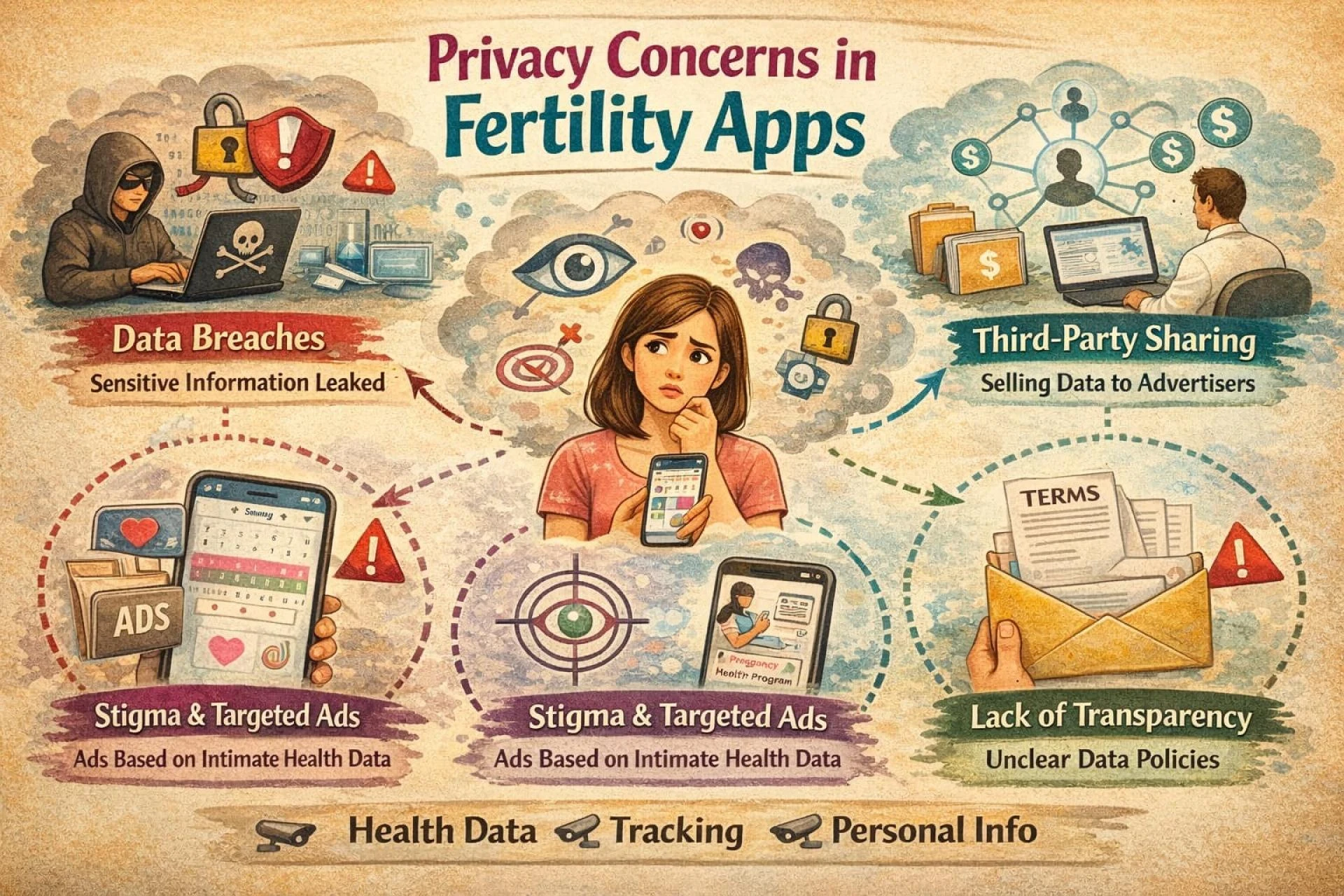
Many users assume that because they input data manually, they own it. In reality, most fertility apps operate under complex privacy policies that allow data sharing in ways users may not fully understand.
Data may be:
- Stored on external servers
- Shared with third-party analytics companies
- Used for advertising or research
- Aggregated and anonymized (sometimes imperfectly)
While companies may not sell names directly, patterns can still be traced, especially when combined with other digital data.
Data Sharing and Third Parties
One of the biggest concerns is third-party data sharing. Some fertility apps share user data with:
- Advertising platforms
- Data analytics services
- Partner companies
This can result in targeted ads related to pregnancy, infertility products, or medical services appearing at emotionally inappropriate times — such as after a miscarriage or failed cycle.
Even anonymized data carries risk when datasets are combined across platforms.
Legal Protection Is Often Limited
Health data protection laws vary widely by country. Many fertility apps are not classified as medical devices, which means they may not be held to the same privacy standards as hospitals or clinics.
In some regions:
- Fertility data is not protected under strict health privacy laws
- User consent is broad and difficult to opt out of
- Data deletion requests may be unclear or incomplete
This legal gap leaves users with fewer protections than they might assume.
Emotional Impact of Privacy Breaches
Privacy concerns are not just technical. They are emotional.
Imagine receiving fertility-related ads during a work meeting. Or seeing pregnancy suggestions after a loss. Or realizing intimate data may be accessible beyond personal control.
These moments can trigger distress, shame, or a sense of betrayal — especially during an already fragile fertility journey.
Privacy violations can erode trust not only in apps, but in digital health tools as a whole.
Over-Sharing Without Awareness
Fertility apps often encourage detailed tracking. The more data entered, the “smarter” the predictions appear.
Users may log:
- Intercourse frequency
- Partner details
- Emotional states
- Medical test outcomes
While this improves app accuracy, it also increases data exposure. Many users are unaware of how much they are sharing — or how long that data is retained.
Convenience can quietly override caution.
How Medical Care Differs From Apps
Unlike apps, medical clinics operate under strict confidentiality and ethical standards. Information shared during consultation is protected, documented responsibly, and used solely for care.
A trusted IVF clinic for infertility in Bangalore prioritizes patient confidentiality, informed consent, and controlled access to medical records — something consumer apps cannot always guarantee.
Apps can support awareness, but they cannot replace secure, regulated medical care.
Questions Users Should Ask Before Using a Fertility App
Before committing to a fertility app, it helps to pause and ask:
- Who owns my data?
- Is my data shared with third parties?
- Can I delete my data permanently?
- Is the app regulated as a health service?
- What happens if the company is sold or shut down?
If these answers are unclear or buried in complex legal language, caution is warranted.
Reducing Privacy Risks While Using Apps
For those who choose to use fertility apps, a few steps can reduce risk:
- Avoid entering unnecessary personal details
- Disable ad personalization where possible
- Use apps with transparent privacy policies
- Avoid linking apps to social media accounts
- Periodically review and delete old data
Less data often means less exposure.
The Emotional Need Behind App Usage
It’s important to acknowledge why people rely so heavily on fertility apps. They offer reassurance, structure, and a sense of control in an uncertain process.
Privacy awareness should not shame users for seeking support. Instead, it should empower them to choose tools thoughtfully and protect themselves where possible.
Final Thoughts
Fertility apps can be helpful companions, but they are not neutral containers. They collect, store, and sometimes share deeply personal information during one of the most sensitive phases of life.
Understanding privacy risks allows couples to make informed choices rather than emotionally driven ones. Fertility care deserves not only medical accuracy, but also dignity, confidentiality, and respect.
Because in fertility journeys, safety is not just physical —
it is emotional, digital, and deeply personal too.