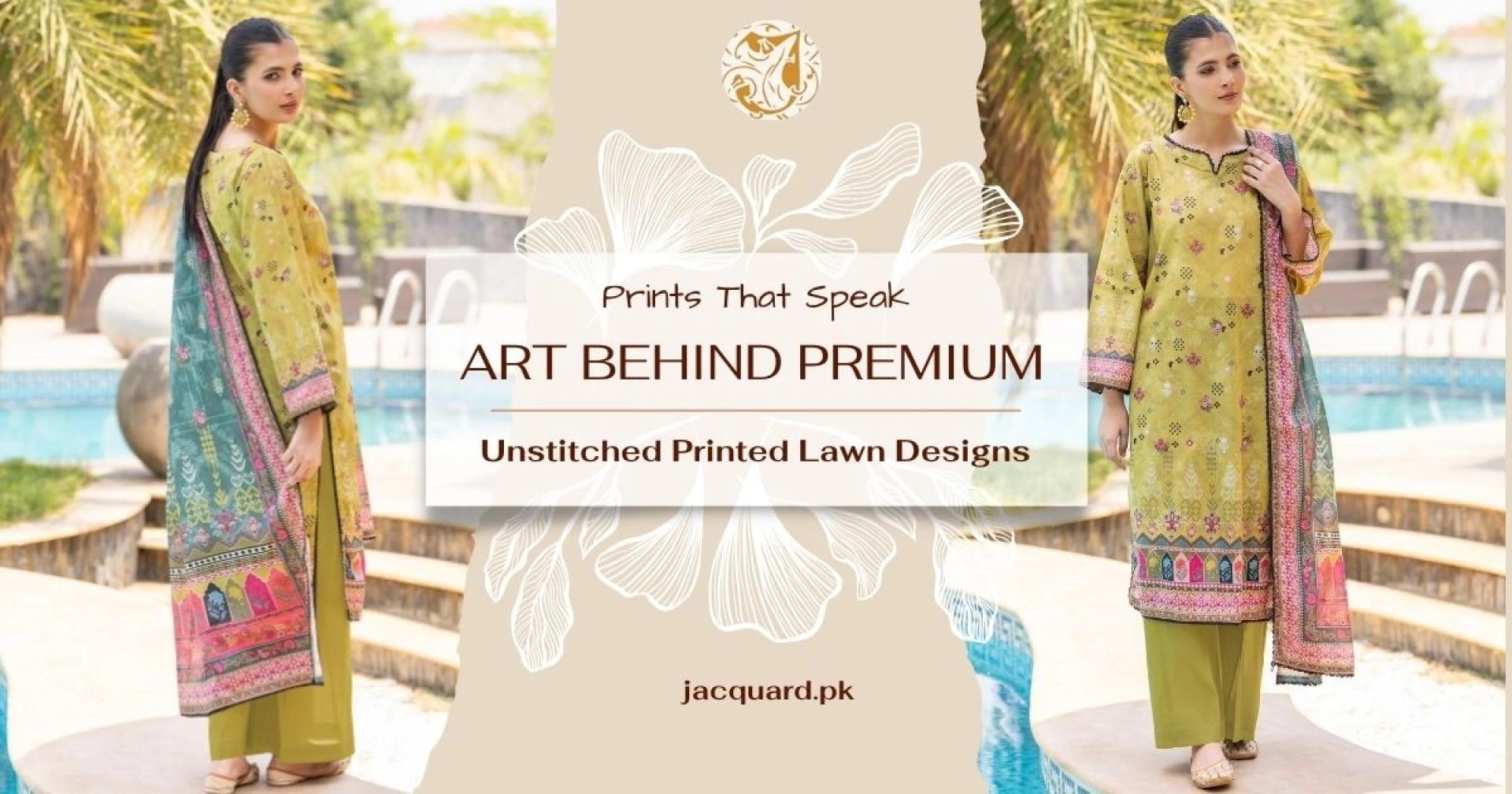
What is printed lawn fabric?
Printed lawn uses fine‑thread cotton. Weavers produce a smooth, light, breathable cloth.
Digital or block methods imprint designs. Unstitched lawn arrives as loose fabric. You tailor it into a custom-fitting garment. Art and fabric merge in each yard.
Use cases:
- Daily summer wear
- Festive 3-piece suits
- Delicate dupattas
Expect durable, soft, translucent fabric yet strong. High-thread count ensures fine drape and print clarity.
Rise of printed lawn suits in Pakistan
After independence, textile sector expanded. Printed lawn suits became fashionable attire.
Simple floral patterns first; later complex designs emerged. Lawn exhibitions turned into high-profile seasonal events. Today lawn prints blend traditional motifs with modern aesthetics.
Traditional print methods: Ajrak & Dabu
Ajrak is Sindhi block printing with geometric symmetry. Based on historical Indus Valley designs.
Natural dyes like indigo, resist stamping techniques. Dabu uses mud-resist and mordants—multi‑layered effects possible. These methods inform lawn patterns, even if printed digitally now.
Modern digital printing
Digital printing gives ultra-fine detail. Complex motifs, watercolor effects, crisp edges—possible at scale. Prints remain vibrant and fade-resistant even after washes. Designers blend block-inspired motifs with digital advances. This method dominates modern premium.
Design themes and motifs
Common motifs:
- paisleys and florals
- Mughal arches and geometry
- geometric repeats inspired by Renaissance or tilework
- nature motifs such as tropics or enchanted gardens
Patterns often echo Ajrak or Mughal iconography but with modern spin. Colors range from pastels to bold jewel tones.
Artist-brand collaborations
Luxury labels often team up with designers or artists. Examples: collector editions with architectural or abstract motifs. These curated prints raise fabric from seasonal staple to fashion statement. Collaborations help brands stand out, avoid “same‑looks” complaints fans share on social media.
Choosing authentic art-rich prints
Check for designer branding or artisan mention. Quality markers: high dpi print, consistent color, no bleeding. Natural dye or block-resist cues may indicate artisan roots. Avoid overly cheap generic repeats. Ask product description: “Ajrak motif”, “Ikat pattern”, “digital print clarity”.
Sustainability in lawn printing
Some brands highlight eco-color, organic dyes, or artisan workshops. Revival of Ajrak block print or Dabu resist reduces chemical waste. Sustainable collections support cultural crafts and reduce environmental impact.
Styling unstitched printed lawn pieces
With unstitched fabric, tailor fit matters. Position motifs where they flatter—panels, yokes, sleeves. Mix shirt prints with contrasting dupatta or trousers. Use minimal embroidery to highlight print art. Choose complementary accessories: simple earrings, solid dupatta, tailored fit.
Conclusion
Premium unstitched printed lawn stands at the intersection of cultural art, modern print technology, and personal style. Its roots in block traditions like Ajrak and Dabu meet crisp digital advances. Motifs that speak—paisley, Mughal, Ikat, geometric tile—offer wearable stories. Choosing authentic prints and tailoring effectively turns fabric into art. This art‑rich lawn remains a standout for comfort, heritage and design. Prints don’t just decorate—they speak.