When a factory picks a coating type, the decision usually stops at colour, finish, and cost. But how that coating gets dried and hardened called curing matters just as much. Powder coating and liquid coating cure in two completely different ways, and using the wrong oven setup for either one can leave you with coating that peels, bubbles, or looks patchy, even if the spray job itself was perfect.
What Is Powder Coating Curing?
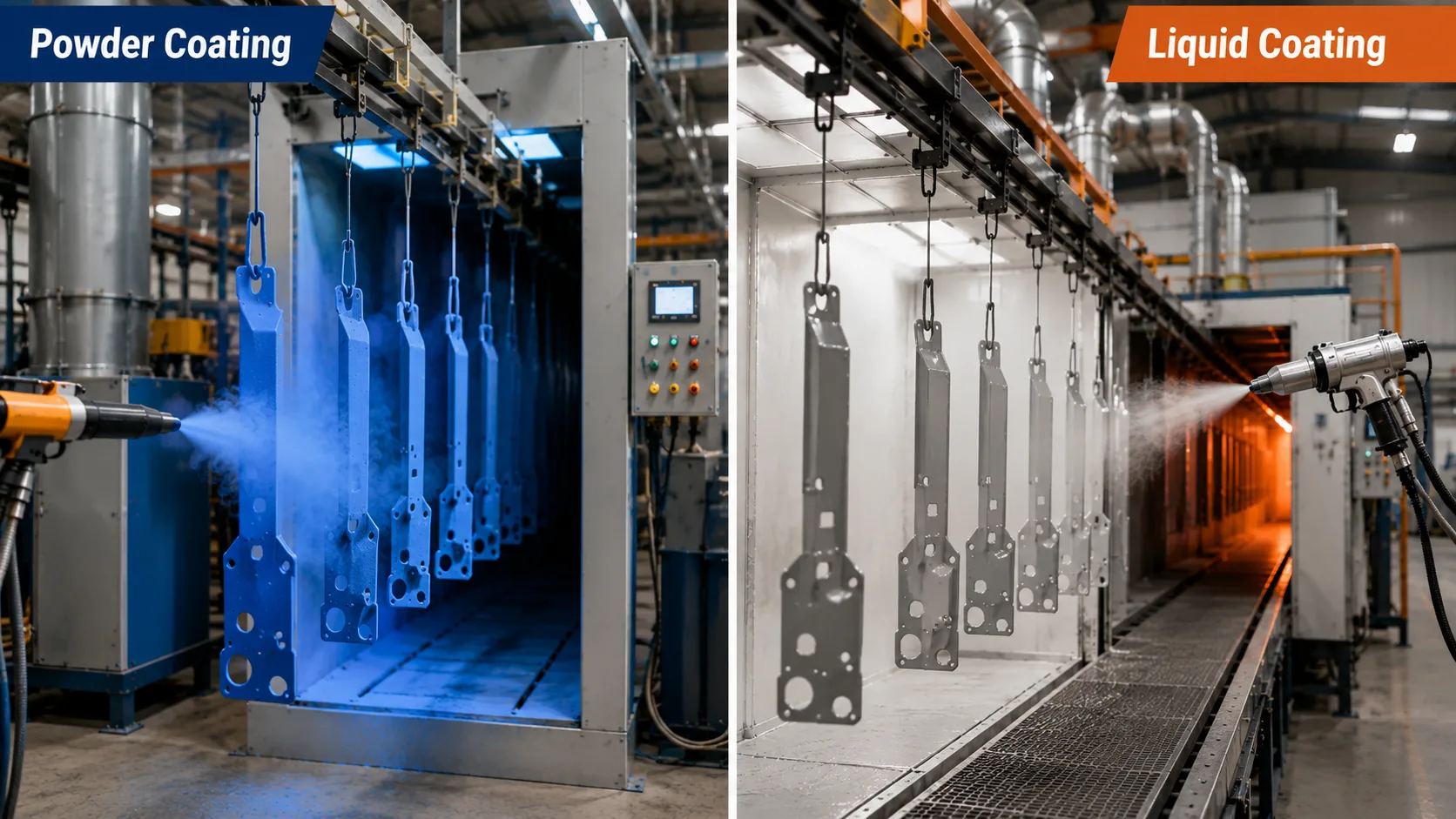
Powder coating is applied as a dry powder. A spray gun gives the powder an electric charge so it sticks to the metal part. Since there's no liquid involved, there's nothing to dry off first, so the part goes straight into the oven.
Inside the oven, heat melts the powder, lets it spread into a smooth, even layer, and then hardens it into a tough, permanent finish. This whole process is called curing. Most powder coatings cure somewhere between 160°C and 220°C, and this usually takes 10 to 25 minutes. The exact time depends on how thick the coating is and how heavy the part is, since a small metal bracket heats up much faster than a large casting.
Because there's no liquid to evaporate, powder coating ovens don't need a separate drying stage. The main job of the oven is simply to spread heat evenly, especially into corners, bends, and hidden areas, so the coating cures the same way across the whole part. This is exactly what Kerone's overhead conveyor ovens are built for, giving even heat distribution for powder coating and paint curing no matter the shape of the part.
What Is Liquid Coating Curing?
Liquid coating, also called wet paint, works differently. It's made of colour pigment mixed into a liquid, either a solvent or water. Before this coating can cure properly, that liquid has to evaporate first, and skipping this step can leave trapped liquid that bubbles or blisters under the paint once the heat goes up.
That's why liquid coating lines use two stages instead of one. First, the part passes through a milder "flash-off" zone, where the solvent or water evaporates off. Then it moves into a hotter "bake" zone, where the paint actually hardens. Liquid coatings usually bake at lower temperatures than powder coating, around 120°C to 180°C, but for a longer time, often 20 to 45 minutes. Car parts coated with e-coat, for example, typically bake at around 175°C for about 20 minutes.
Solvent-based paints give off fumes as they dry, so the oven needs good ventilation and safety controls built in. Water-based paints don't have this fume problem, but they need strong airflow so moisture doesn't build up and linger inside the oven.
Powder vs Liquid: The Main Difference
The simplest way to think about it is this: powder cures with heat alone, while liquid needs a drying step before the heat can do its job. Powder usually cures hotter but faster, while liquid cures cooler but takes longer to finish. Powder coating also gives off almost no fumes, while solvent-based liquid paint does, which means liquid lines often need extra safety and ventilation equipment that powder lines can skip. On top of that, powder ovens only need one heat zone, while liquid ovens need at least two, a flash-off zone and a bake zone, which makes liquid lines a bit more involved to design and run. Generally, powder coating suits high-volume runs in one or two colours, while liquid suits jobs where colours change often or a very specific finish is needed.
How to Choose the Right One for Your Factory
The right choice usually comes down to a few practical things about your parts and your production line. If your parts have a lot of corners, bends, or gaps, powder coating tends to cure more evenly, especially in a conveyor oven built for even airflow. If you change colours often, liquid paint is usually easier to manage, since powder booths take longer to clean out between colour changes. If controlling fumes and emissions is a priority, powder coating is the simpler option, since it releases almost nothing into the air. If you're running high volumes in a single finish, powder coating's shorter curing time usually works in your favour. And if your parts are heat-sensitive, like plastic components or delicate assemblies, you may need a gentler, lower-temperature cure no matter which coating type you choose. Kerone's conveyorised infrared ovens are often used where faster, more controlled curing is needed on simpler part shapes.
How Kerone Can Help
Whether you need a simple, one-zone powder curing oven or a full multi-zone liquid coating line with flash-off, baking, and cooling stages, the oven has to be built around the coating, not the other way round. Kerone designs and builds coating and surface engineering plants for both powder and liquid systems, with the right zones, airflow, and controls for the process you're actually running. If you're planning a new coating line, or upgrading an old one, our engineering team can help you work out the right setup before the oven design gets locked in
Quick Questions People Ask
Can one oven cure both powder and liquid coatings? Only if it's designed for both from the start. The two need very different airflow and zones, so most factories run separate lines for each.
Which is cheaper to run, powder or liquid? Powder coating is usually cheaper to run day-to-day, mainly because it skips the fume-control equipment liquid systems often need. Liquid still makes sense in some cases, like when colour flexibility matters more than running cost.
Does Kerone make ovens for both types? Yes. Kerone builds curing ovens and complete coating lines for both powder and liquid coatings, matched to what's being coated and how much of it is produced.
How do you know the coating is actually cured, not just the oven set right? The oven's set temperature only tells you the air temperature, not whether the part itself got hot enough for long enough. Most plants check this with a temperature logger run through the oven, along with a quick scratch or bend test on a sample part.
Conclusion
Powder coating and liquid coating are two different ways of curing a finish, not just two different paints, and the oven has to be built around that difference. Powder gives a fast, low-fume cure that suits high-volume parts in one or two colours, especially where the shapes are complex. Liquid takes longer and needs a flash-off stage before baking, but it gives more flexibility on colour and finish, which is why industries like automotive still rely on it heavily.
Neither type is simply "better" than the other. The right choice depends on your parts, your production volume, how often colours change, and how much fume control your factory can manage. Once that's clear, the oven design mostly follows on its own.
If you're still weighing the two, it's worth talking it through with an engineering team that builds both systems regularly, rather than guessing and hoping the first oven you buy is the right fit. Kerone's industrial ovens team works through this exact decision with factories every day, matching the curing system to the coating, the part, and the line it needs to run on.