Recovery is where real fitness progress happens. Training breaks muscle fibers down, but recovery is what rebuilds them stronger. Without a structured recovery routine, performance plateaus, fatigue builds up faster, and injury risk increases.
Compression boots have become one of the most efficient tools to support this recovery phase. But the key question is not just whether they work—it’s where they fit in your post-workout routine.
Understanding Post-Workout Recovery Phases
After exercise, your body typically moves through three main recovery stages:
1. Immediate recovery (0–2 hours post-workout)
Your heart rate gradually returns to normal, and the body starts clearing metabolic waste.
2. Short-term recovery (2–24 hours)
Muscle soreness begins to appear as inflammation increases and micro-tears start repairing.
3. Full recovery (24–72+ hours)
Muscles rebuild, adapt, and grow stronger depending on training intensity.
Compression boots are most effective during the first two phases, when circulation support and fluid movement matter most.
Where Compression Boots Fit in Your Routine
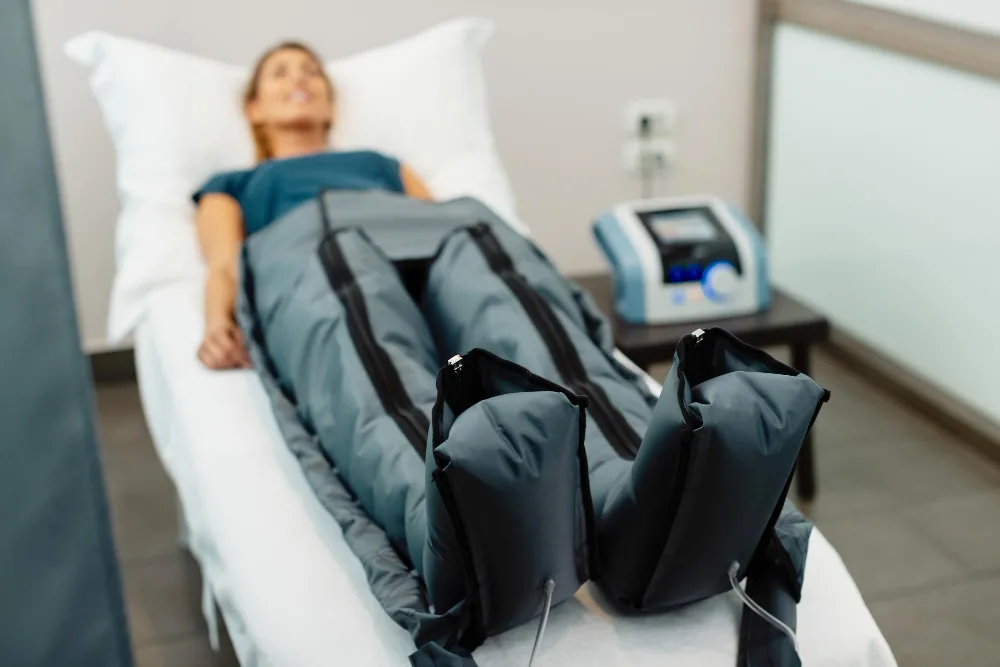
Compression boots are typically used after training sessions, not before or during workouts. Their primary role is to accelerate recovery by improving blood flow and reducing muscle tightness.
A practical routine looks like this:
- Cool down with light movement or stretching
- Hydrate and replenish electrolytes
- Use compression boots for 15–45 minutes
- Follow with protein-rich nutrition and rest
This sequence helps maximize nutrient delivery and reduces post-workout stiffness more efficiently than passive rest alone.
How Compression Boots Support Faster Recovery
Post-exercise fatigue is largely caused by lactic acid buildup, inflammation, and fluid retention in the muscles. Compression therapy addresses these issues through rhythmic pressure cycles that act like a “muscle pump.”
Benefits include:
- Faster removal of metabolic waste
- Improved oxygen and nutrient delivery
- Reduced muscle swelling and soreness
- Enhanced relaxation of tight muscles
- Better readiness for the next training session
This is especially useful for athletes training multiple times a week or following high-intensity programs.
Choosing the Right Compression System
Different compression systems offer varying levels of intensity and customization depending on training demands.
For general fitness users and athletes looking to enhance recovery efficiency, the Healix Flow IPC Boots provide structured pneumatic compression designed to support post-workout muscle recovery and reduce soreness.
For those who require a more advanced and performance-focused setup, the Healix Flow Pro Compression Boots offer deeper compression cycles and enhanced control, making them suitable for athletes with heavier training loads.
How Often Should You Use Compression Boots?
Usage depends on training intensity:
- Light workouts: 2–3 times per week
- Moderate training: After most sessions
- High-performance athletes: Daily use may be beneficial
Consistency matters more than duration. Even short sessions after workouts can significantly improve recovery outcomes over time.
The Role of Compression Boots in Modern Training
Compression therapy is no longer just a recovery luxury—it’s becoming a standard part of structured training programs. As athletes aim to train harder and more frequently, recovery tools like compression boots help maintain performance without increasing injury risk.
They don’t replace basics like sleep, nutrition, or mobility work, but they complement them by speeding up physical recovery in a measurable way.
Final Takeaway
Compression boots fit best after workouts, during the critical recovery window when the body is actively repairing itself. When used consistently alongside proper hydration, nutrition, and rest, they can significantly improve how quickly you bounce back between training sessions.
In modern fitness, recovery is no longer passive—it’s strategic.