
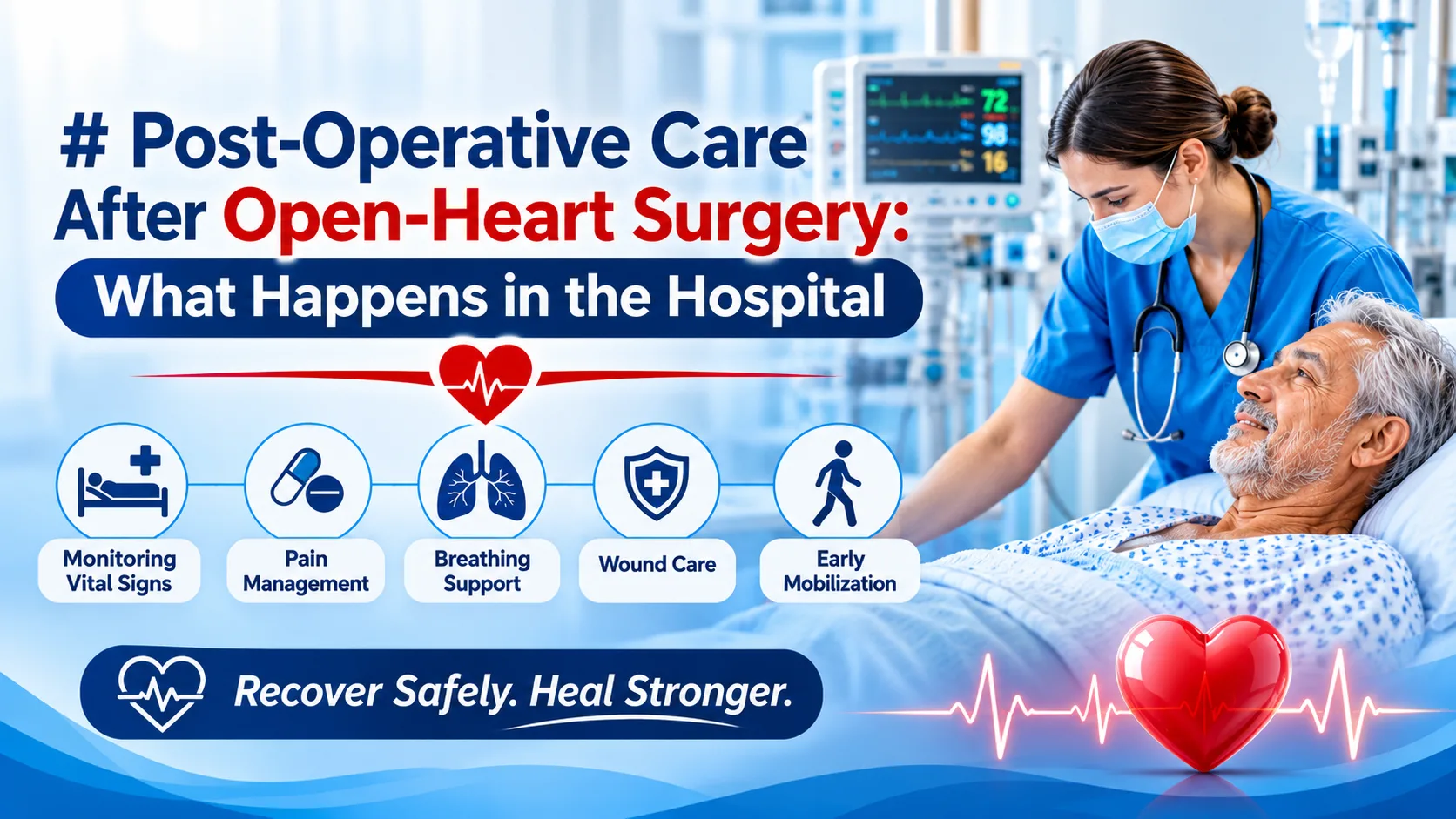
Post-operative care after open-heart surgery is a team effort that begins the moment the operation ends. In the hospital, it means close monitoring in an intensive care unit, careful pain and breathing management, early and supervised movement, protection of the chest wound, steady medicines and nutrition, and emotional support, followed by a clear plan for going home.
Open-heart surgery includes procedures such as coronary artery bypass grafting and heart valve repair or replacement. Because the heart is directly involved, the first days after surgery are the most closely watched. Knowing what happens in the hospital helps families ask better questions and feel less anxious.
This article explains each stage of in-hospital recovery in plain language.
What happens in the first 24 hours in the ICU?
After surgery, the patient is usually moved to a cardiac intensive care unit, still under the effect of anaesthesia. A breathing tube connected to a ventilator is common at first. As the patient wakes and starts breathing well on their own, the team removes it, often within the first several hours, though the timing depends on the patient and the surgery.
The patient may look unfamiliar to relatives: drowsy, pale, with several tubes, wires and monitors attached. This is normal and expected. A dedicated nurse watches the patient continuously, and the surgeon, cardiologist and intensive care doctors review progress through the day.
The main goals in these early hours are simple: keep the heart rhythm and blood pressure stable, make sure the lungs are working, control bleeding, keep the patient warm and comfortable, and wake the patient safely.
What monitoring, tubes and lines are used after open-heart surgery?
Most patients have several devices for a few days. Each has a clear job:
- Heart monitor (ECG): tracks heart rate and rhythm continuously.
- Arterial and central lines: measure blood pressure closely and deliver fluids and medicines.
- Chest drains: remove blood and fluid that collect around the heart and lungs. They are taken out once the drainage settles.
- Temporary pacing wires: sometimes placed during surgery as a backup if the heart rhythm slows.
- Urinary catheter: records urine output, which shows how well the kidneys and circulation are working.
- Pulse oximeter: tracks oxygen levels in the blood.
Blood tests, chest X-rays and sometimes an echocardiogram are done to check recovery. An irregular heartbeat, especially atrial fibrillation, can appear in the first days after surgery. The team watches for it and treats it if it occurs, so an alarm on the monitor does not always mean an emergency.
How are pain and breathing managed?
Pain after open-heart surgery is expected, especially around the chest incision. The care team assesses it regularly and gives pain relief through medicines, so the patient can breathe deeply, cough and move. Patients are encouraged to report pain early instead of waiting for it to become severe, because well-controlled pain speeds recovery.
Lung care matters just as much. After a long operation and anaesthesia, the lungs are prone to collapse in small areas and to infection. To prevent this, nurses and physiotherapists teach deep-breathing exercises, often with a handheld device called an incentive spirometer, and help the patient cough.
A small pillow or folded towel held firmly against the chest while coughing, known as splinting, supports the breastbone and makes coughing far more comfortable. It may feel frightening at first, but coughing does not harm the incision when it is supported properly.
When can the patient start moving, and how is the chest protected?
Movement begins sooner than most families expect. Once the patient is stable, the team helps them sit up, move to a chair and take short, supervised walks, often within the first couple of days. Early movement lowers the risk of blood clots, chest infection and muscle weakness, and it helps the digestive system restart.
At the same time, the breastbone needs time to heal. Patients are usually advised to follow sternal precautions during the first weeks:
- Support the chest with a pillow when coughing, sneezing or getting up
- Avoid pushing or pulling with the arms, such as pushing up from the bed with both hands
- Avoid lifting heavy objects
- Keep the incision clean and dry as advised
A physiotherapist guides each step and adjusts activity to how the patient feels. Progress is gradual: a little more each day, with rest in between. Nurses also check the legs daily for swelling, and the leg incision too when a vein was taken for a bypass.
What role do medicines, nutrition and infection control play?
Medicines. Patients commonly receive medicines to protect the heart and keep blood flowing well, which can include blood thinners, cholesterol-lowering tablets, heart rate and blood pressure medicines, and antibiotics around the time of surgery. After a valve replacement, some patients need long-term blood-thinning treatment. The exact plan is set by the cardiac team, and nobody should change it without medical advice.
Nutrition and fluids. Eating well helps wounds heal. Patients move from fluids to normal food as they recover, and dietitians guide choices that are gentle on the heart, usually lower in salt and unhealthy fats. Fluid balance is tracked closely. Patients with diabetes have their blood sugar monitored, because high sugar levels raise the risk of wound infection.
Infection prevention. Hand hygiene, clean dressings, early removal of tubes that are no longer needed and regular checks of the incision all reduce infection risk. Visitors are often asked to wash their hands and to stay away if they are unwell.
How does recovery affect mood and thinking?
Heart surgery is a big physical and emotional event. Short-term confusion, vivid dreams, poor sleep and anxiety can appear in the first days, especially after time in the ICU. Low mood and tearfulness in the weeks that follow are also common and usually ease with time.
Families can help by speaking calmly, keeping a regular routine, orienting the patient to the day and place, and bringing familiar items where the hospital allows. If confusion, deep sadness or fear continues, tell the care team, because support is available.
How is discharge planned, and what care continues at home?
With an uncomplicated recovery, many patients move from the ICU to a step-down ward within a few days and go home after about a week, though this varies widely. Before discharge, the team reviews the incision, medicines, diet, activity limits, follow-up appointments and a cardiac rehabilitation plan, which builds strength and confidence step by step.
The recovery does not end at the hospital door. The first weeks at home need steady attention to wound care, medicines, walking, meals and warning signs. For a clear overview of what patient care after surgery involves in general, from wound care to emotional support, this guide is a useful starting point.
Families who cannot manage this alone, or who are caring for an older patient, often look for trained help. In Kolkata, professional post surgery care in Kolkata can bring nursing support, medicine supervision and physiotherapy to the patient's home, so the care started in the hospital continues without a gap.
Which warning signs need urgent attention?
Contact the cardiac team or go to the nearest emergency department without delay if you notice:
- Chest pain, or sudden or worsening breathlessness
- A racing, pounding or very irregular heartbeat, or fainting
- Fever or chills
- Redness, swelling, pus or fluid from the chest or leg incision
- A clicking or shifting feeling in the breastbone
- Increasing swelling or pain in one leg
- Sudden weight gain or swelling of the feet and ankles
- Confusion, weakness on one side of the body or trouble speaking
When in doubt, call. Early advice prevents small problems from becoming serious ones.
Disclaimer
This article is published for general information and awareness only. It is not medical advice and does not replace a consultation with a qualified cardiologist, cardiac surgeon or nurse. Care after open-heart surgery differs from patient to patient, so always follow the instructions given by the treating hospital and doctors. Do not start, stop or change any medicine or treatment based on this article. In a medical emergency, contact your doctor or go to the nearest hospital immediately. The publisher and author are not liable for any action taken solely on the basis of the information provided here.