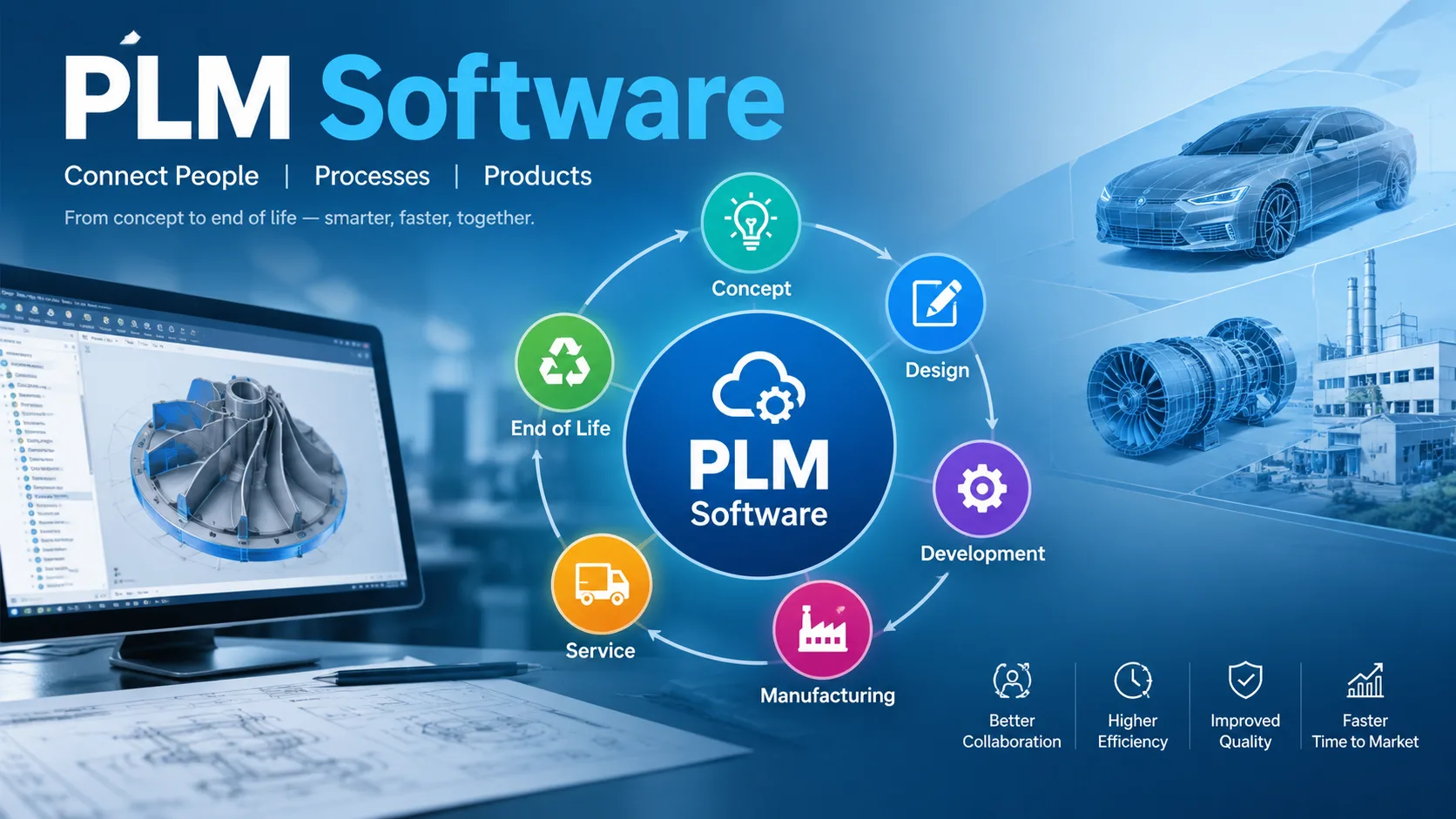
Product development involves many teams, files, revisions, approvals, and engineering decisions. Without a proper system, important information can become difficult to find or teams may work with outdated files. PLM software helps companies manage product information and processes from the early design stage through manufacturing and later product support. It brings engineering, production, quality, and management teams into a connected working environment. For manufacturers handling hundreds or thousands of product records, this can make a major difference in daily operations and project control.
Product Lifecycle Management for Modern Engineering
Product Lifecycle Management, commonly called PLM, covers the complete journey of a product. A typical process can include concept development, CAD design, engineering review, testing, production planning, and product updates. PLM software gives teams a central place to manage information related to these stages.
For example, an engineering team working on a machine component may create several design revisions before production. Instead of keeping these files across different computers, a PLM system can record revisions, approvals, and related documents. This gives users better visibility into what has changed and why.
CAD Data Management and Engineering Collaboration
CAD data management is one of the important areas connected with PLM. Engineering departments often work with thousands of drawings, 3D models, specifications, and technical documents. A small mistake, such as sending an old drawing to production, can result in rework and material waste.
PLM software helps control these files by keeping product information organized and linking related engineering data. It can also support approval processes, revision tracking, and access control. For companies using CAD platforms such as Siemens NX or Solid Edge, this type of data management can help create a more consistent product development process.
How PLM Software Supports Manufacturing Teams
Manufacturing teams need accurate product information before production starts. A change made by an engineer can affect tooling, materials, assembly instructions, inspection plans, and purchasing. PLM connects these activities so that relevant teams can respond to approved product changes.
A practical example is an automotive supplier developing a new bracket. If the material specification changes from one grade to another, the engineering change may affect purchasing and production. A connected PLM process allows the relevant information and approvals to be tracked instead of relying on separate emails or spreadsheets.
PLM and Product Data Management
PDM software and PLM software are closely related, but they have different scopes. PDM mainly focuses on managing product data such as CAD files, documents, revisions, and design structures. PLM covers a broader set of product processes and information across departments.
For a growing manufacturer, starting with strong product data management can provide a useful foundation. As processes become more complex, PLM capabilities can connect engineering information with manufacturing, quality, project management, and other business activities.
Why Businesses Need a Connected Product Process
One major advantage of PLM is better control over product information. When departments use separate systems, teams may spend considerable time checking files, confirming revisions, and asking colleagues for missing information. A connected system reduces these manual checks.
PLM can also provide an audit trail for product changes. This is important in industries where companies need records of approvals, engineering changes, and product requirements. Better information control can support faster decisions while reducing the risk of production based on incorrect data.
Choosing PLM Software for Your Business
Selecting PLM software should start with business requirements rather than a list of features. Companies should examine their current CAD systems, number of users, product data volume, approval processes, manufacturing structure, and future growth plans.
Implementation is another important consideration. Even a powerful PLM platform needs proper setup, user training, data migration, and process planning. Working with an experienced technology partner such as CJ Tech can help businesses assess their engineering environment and plan the right approach for implementation.
CJ Tech supports businesses working with Siemens engineering and product lifecycle solutions. Its services can help organizations understand their software requirements, improve user adoption, and establish practical workflows for product data and engineering processes.
Conclusion
PLM software gives manufacturers a structured way to manage product information, engineering changes, collaboration, and lifecycle activities. When connected with CAD and PDM processes, it can provide teams with better access to reliable product information and clearer control over revisions. Businesses interested in improving their product development process can explore PLM software solutions and discuss their requirements with CJ Tech today.