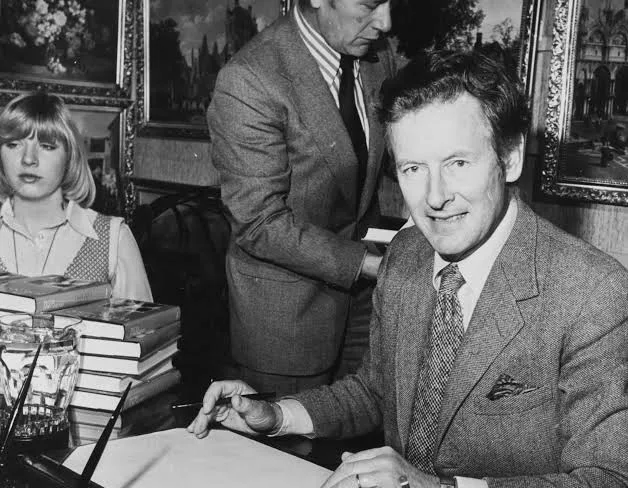
In the grand tapestry of British royal history, certain figures emerge not through bloodline or political power, but through the sheer force of a love story that transcends their era. Group Captain Peter Townsend occupies precisely such a place. He was a decorated war hero, a trusted equerry to King George VI, and a man of genuine dignity and duty. Yet the world remembers him primarily as the man Princess Margaret loved but could not marry—a romance that pitted personal happiness against the immovable weight of tradition, church, and state.
To reduce Peter Townsend to this single chapter, however, does a profound disservice to a remarkable life. He was a Battle of Britain pilot who helped save his nation, a writer of considerable talent, and a man who navigated heartbreak with a grace that defined his character. This article explores the full scope of Townsend's journey: the heroism, the love, the sacrifice, and the quiet decades that followed.
Early Life and Wartime Heroism
Peter Wooldridge Townsend was born on November 22, 1914, in Rangoon, Burma, where his father served as a colonial administrator. Sent to England for his education at Haileybury College, young Peter exhibited the discipline and sense of duty that would characterize his entire life. He joined the Royal Air Force in 1933, a decision that placed him directly in the path of history's greatest conflict.
The Battle of Britain and RAF Career
When the Second World War erupted, Townsend emerged as one of the RAF's most capable pilots. He flew Hurricanes during the Battle of Britain, the pivotal aerial campaign of 1940 that prevented German invasion. His courage under fire earned him the Distinguished Service Order (DSO) and the Distinguished Flying Cross (DFC), decorations reserved for those who demonstrated exceptional bravery in the air.
Key milestones of his wartime service:
- Battle of Britain veteran: Flew countless sorties against the Luftwaffe during Britain's darkest hour
- Squadron Leader: Commanded No. 85 Squadron with distinction
- Multiple combat victories: Credited with shooting down several enemy aircraft
- Recognized for gallantry: Awarded the DSO and DFC, among the RAF's highest honors
By war's end, Townsend had risen to the rank of Group Captain and had earned a reputation as both a skilled aviator and a natural leader. His service record alone would have guaranteed him a place in British history. Yet his most famous chapter was still to unfold.
Service to the Crown: Equerry to the King
In 1944, Townsend's life took a decisive turn when he was appointed as an equerry to King George VI. The role of equerry is both practical and deeply personal—attending to the monarch's daily needs, managing schedules, and providing companionship during private moments. Townsend excelled in the position, his military bearing and quiet competence earning the trust and affection of the royal household.
The King's Trusted Aide
King George VI, whose health was fragile and whose reign had been defined by war and its aftermath, came to rely heavily on Townsend. The equerry was present for the daily rhythms of palace life, from official engagements to the quiet evenings the royal family spent together. This proximity meant Townsend was a constant presence not only to the King and Queen Elizabeth but also to their two daughters—Princess Elizabeth, the future queen, and her younger sister, Princess Margaret.
After King George VI's death in 1952, Townsend was appointed Comptroller of the Queen Mother's household, ensuring his continued presence within the royal circle. It was during these years that the bond between Townsend and Princess Margaret deepened from friendly familiarity into something far more profound.
The Love That Shook the Establishment
Princess Margaret was, by all accounts, a captivating young woman—beautiful, witty, artistic, and possessed of a magnetic personality that drew people toward her. Townsend, sixteen years her senior, was handsome, decorated, and exuded the quiet confidence of a man who had faced death and survived. Their attraction developed gradually, within the gilded cage of palace life, and by the early 1950s, it had become clear to both that they had fallen deeply in love.
The Obstacles
The relationship faced seemingly insurmountable barriers:
ObstacleExplanationTownsend's DivorceHe had married Rosemary Cecil in 1941, and the marriage produced two sons. The couple divorced in 1952, making Townsend a divorced man.The Royal Marriages ActPrincess Margaret required the sovereign's consent to marry before the age of 25.The Church of EnglandAs Supreme Governor of the Church, the monarch was expected to uphold its teachings against remarriage after divorce.The GovernmentPrime Minister Winston Churchill's cabinet made clear their opposition to the match.
The Church of England, under the leadership of the Archbishop of Canterbury at the time, held firmly that marriage after divorce was impermissible if the former spouse was still living. For Princess Margaret, third in line to the throne, to marry a divorced man would have created a constitutional and spiritual crisis.
The Two-Year Separation
In an attempt to allow emotions to settle, Townsend was posted to Brussels as an air attaché, effectively separating the couple for two years. The hope, perhaps, was that distance would dim the passion. It did not. When Townsend returned to England in 1955, and Princess Margaret had turned 25—freeing her from the requirement of her sister's consent—the nation held its breath.
The Decision That Defined an Era
On October 31, 1955, Princess Margaret issued a statement that shocked and saddened millions. She declared that she had decided not to marry Group Captain Peter Townsend. The statement made clear that she had been mindful of the Church's teachings on the indissolubility of marriage and of her duty to the Commonwealth. In one heartbreaking sentence, she chose duty over love.
Townsend's Response
Townsend's reaction to the decision revealed the depth of his character. He made no public complaint, offered no bitter recriminations, and sought no publicity. He simply accepted the verdict with the same stoicism with which he had faced enemy fire over the English Channel. In his memoirs, published years later, he wrote of Margaret with abiding affection and respect, never once betraying the intimacy they had shared or the pain of their parting.
Life After Margaret
Townsend rebuilt his life with quiet determination. He married Marie-Luce Jamagne, a Belgian woman, in 1959. The marriage was a happy one, producing three children and providing Townsend with the domestic peace that had eluded him in the years following the royal romance. He and Marie-Luce settled in France, where Townsend pursued his other great passion: writing.
Literary Career
Townsend proved himself a gifted author, publishing several well-received books including:
- Earth, My Friend — A philosophical travelogue
- The Last Emperor — A biography of Emperor Hirohito
- Time and Chance — His memoirs, offering restrained but poignant reflections on his royal years
- Duel of Eagles — A history of the Battle of Britain
His writing revealed a reflective, cultured mind far removed from the caricature of the stiff-upper-lipped RAF officer. He thought deeply about history, spirituality, and the human condition.
Final Years
Peter Townsend lived quietly in later decades, largely out of the public eye. He and his wife raised their family in France, and he continued to write until the end of his life. He died of stomach cancer on June 19, 1995, at the age of 80. His passing was noted with respect and sadness by those who remembered the dignity with which he had conducted himself through triumph, tragedy, and everything between.
The Legacy of Peter Townsend
Peter Townsend's legacy is more complex than the simple romantic narrative might suggest. He was, first and foremost, a man of duty—to his country, to his sovereign, and to the moral code he had internalized through a lifetime of service. His love for Princess Margaret was genuine and deep, but so too was his understanding that some loves cannot be fulfilled without costs that others must bear.
He represented a particular ideal of British masculinity in the mid-20th century: brave but not boastful, passionate but restrained, deeply feeling but outwardly composed. His silence after the royal romance ended was not weakness but strength—a recognition that the woman he loved had made her choice, and his role was to honor it, not to undermine it.
What He Symbolizes Today
In an era when privacy is scarce and public figures often monetize their personal tragedies, Townsend's discretion feels almost radical. He wrote about his life with elegance and restraint, offering enough to satisfy historical curiosity while guarding the sacred core of his experiences. He reminds us that some stories are more powerful for what they leave unsaid.
Frequently Asked Questions
Who was Peter Townsend?
Group Captain Peter Townsend was a decorated RAF fighter pilot, a Battle of Britain hero, and an equerry to King George VI. He is best known for his ill-fated romance with Princess Margaret, which ended in 1955 when the princess chose duty over love.
Why couldn't Princess Margaret marry Peter Townsend?
Townsend was a divorced man, and at the time, the Church of England—of which Princess Margaret's sister Queen Elizabeth II is Supreme Governor—strongly opposed remarriage after divorce if the former spouse was still living. The government also advised against the match.
What happened to Peter Townsend after the romance ended?
He married Marie-Luce Jamagne in 1959, with whom he had three children. The couple settled in France, and Townsend built a successful career as an author, writing several well-regarded books including his memoirs.
How did Peter Townsend die?
He died of stomach cancer on June 19, 1995, at the age of 80, at his home in Saint-Léger-en-Yvelines, France.
Was Peter Townsend a war hero?
Yes, he was a highly decorated RAF pilot who fought in the Battle of Britain. He was awarded the Distinguished Service Order and the Distinguished Flying Cross for his bravery in combat against the Luftwaffe.
Conclusion
Peter Townsend lived a life that spanned the heights of heroism and the depths of heartbreak. He helped save his nation from tyranny, served his king with devotion, and loved a princess with a passion that moved the world. That the love could not be fulfilled does not diminish its power—it amplifies it. Townsend's story endures because it speaks to something universal: the tension between what the heart wants and what duty demands, and the quiet courage required to accept the difference. In an age of cynicism, his grace remains a lesson, and his life remains a legend worth remembering.