You invested in a beautiful space. The design is sharp. The branding is consistent. The product is excellent. And yet, people walk past. They glance. Occasionally they pause. But the interaction you need — the kind that creates a lead, a memory, or a moment of genuine connection — rarely happens. The problem is almost certainly not your product. It's your wall.
Footfall Without Engagement Is Just Traffic
There is a meaningful difference between a person who passes through your space and a person who stops, interacts, and stays long enough to actually absorb what you are trying to say. Most brand environments are built to impress the first group. Almost none are built to hold the second.
The data from interactive wall technology deployments tells a consistent story: when a surface responds to a person — when it moves, shifts, or reacts to their presence — average dwell time jumps significantly. IIC Lab's installations have recorded 12-minute average engagement times in environments where passive displays averaged less than 90 seconds.
That difference is not decorative. It is commercial.
What 'Interactive' Actually Means in Practice
The term interactive wall gets used loosely. Some people mean a touchscreen. Some mean a projected surface. Some mean something with gesture recognition that tracks movement and responds in real time. The distinction matters because each application solves a different problem.
Interactive wall projections are effective in large spaces — exhibition halls, lobbies, event installations — where the goal is to draw people in from a distance and invite participation without requiring physical contact.
Interactive wall displays (touchscreen-based) work best in sales environments, experience centers, and anywhere a guided, layered content journey is needed. The Godrej Trilogy sales center and BMW's BEVScape are both examples of this format solving a specific commercial problem.
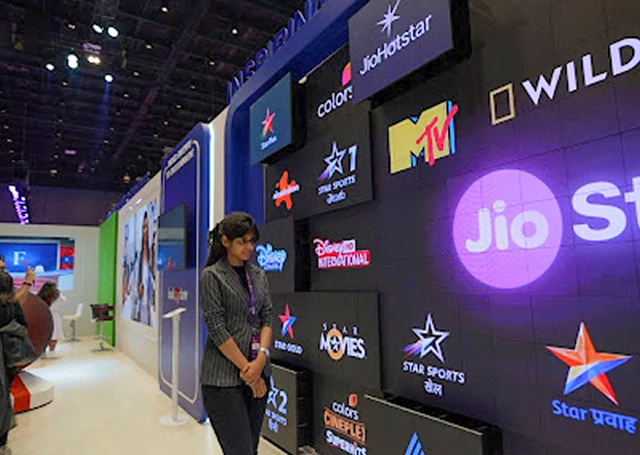
Kinetic LED walls create the most visceral first impression — the kind that stops people mid-stride. IIC Lab built one for Jio Star at WAVES 2025, where 100,000+ visitors engaged with it and it drew PM Modi's attention during the event.
Gesture-based touchless interfaces using Leap Motion technology allow interaction without physical touch — particularly relevant in healthcare, luxury, and premium hospitality environments.
The Three Things Every Interactive Wall Installation Needs to Do
Not every interactive wall delivers results. The installations that genuinely move the needle for brands have three things in common:
- They are built around a specific communication problem, not a general desire to look impressive. BMW needed to educate buyers on EV economics. Deloitte needed to make consulting expertise tangible. Godrej needed to make construction quality verifiable. In every case, the technology served a defined purpose.
- They give visitors a reason to stay, not just a reason to look. Calculators, personalised journeys, touch-triggered animations, multilingual navigation — these are not features. They are retention mechanisms.
- They are integrated into the broader space experience. The best interactive wall installations do not sit in isolation. They are part of a journey — a sequence of moments that build toward a conclusion the visitor arrives at themselves.
What Brands Keep Getting Wrong
The most common failure mode IIC Lab sees is brands investing in interactive wall technology without first defining what the visitor should think, feel, or do differently after engaging with it. The result is technically impressive but commercially inert — a beautiful installation that people photograph and then forget.
The second most common failure is treating an interactive wall as a content delivery system rather than an engagement mechanism. If your wall just plays the same loop that used to play on a regular screen, you have upgraded the hardware but not the experience.
A Space That Works While You Sleep
The most underappreciated value of a well-designed interactive wall is that it works independent of staff. It does not have a bad day. It does not over-explain or under-sell. It presents the right content, in the right order, at the right pace — every time.
For brands operating at scale — multiple locations, high visitor volumes, large geographic footprints — that consistency is commercially significant. BEVScape runs across 40+ BMW showrooms. The same message. The same quality. The same buyer journey. No training gap. No interpretation error.
That is what interactive wall technology, done right, actually delivers.
Ready to turn your brand space into something people actually stop for? IIC Lab has spent 9+ years building interactive wall experiences for BMW, Deloitte, Godrej, Jio, and more. Visit: iiclab.com/services/interactive-wall