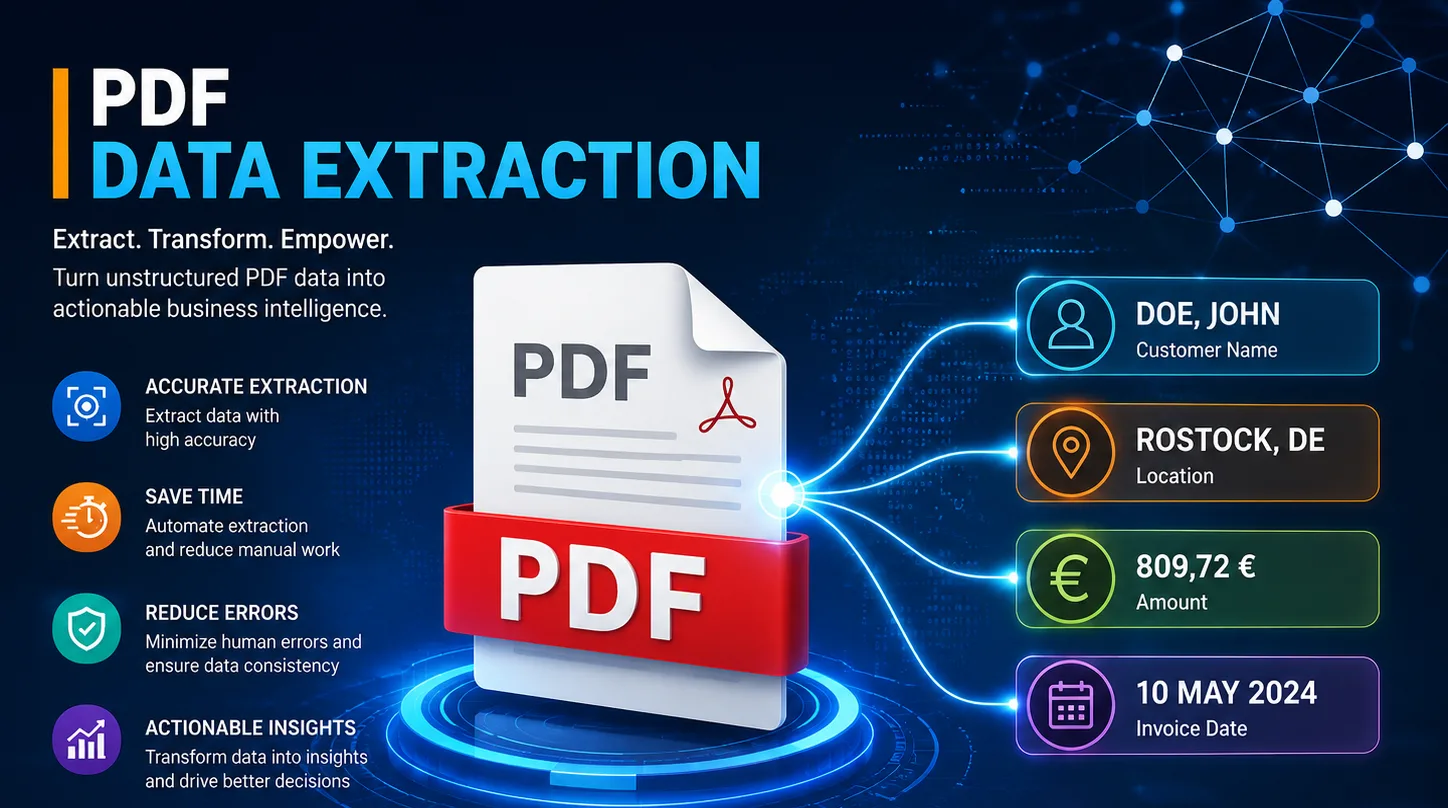
PDF data extraction has become one of the most important processes for businesses that deal with high volumes of paperwork. Invoices, contracts, purchase orders, and compliance documents are still shared as PDFs, and manually pulling information from these files wastes time and increases the chance of errors. As companies move toward automation in 2026, understanding how PDF data extraction works and how to implement it effectively can make a real difference in operational efficiency.
What Is PDF Data Extraction
PDF data extraction is the process of pulling structured or unstructured information from PDF files and converting it into a usable digital format such as Excel, CSV, or a database entry. This includes extracting text, tables, images, and even handwritten notes from scanned documents. Businesses use this process to reduce manual data entry, speed up document processing, and improve accuracy across departments like finance, HR, and operations.
Why Businesses Need Document Data Extraction
Every organization handles documents differently, but the challenges are usually similar. Employees spend hours copying information from PDFs into spreadsheets or internal systems. This manual approach is slow and prone to mistakes, especially when dealing with large volumes of files. Document data extraction solves this problem by automating the process, allowing teams to focus on higher value tasks instead of repetitive data entry work.
Companies that rely on paper heavy workflows, such as banking, insurance, logistics, and healthcare, benefit the most from automated extraction. It reduces turnaround time, improves data accuracy, and helps maintain consistency across large datasets.
How Data Extraction From Documents Works
The process of extracting data from documents typically involves several stages. First, the PDF is scanned or uploaded into an extraction system. Then, the system identifies the layout and structure of the document, recognizing fields like names, dates, invoice numbers, or totals. Optical character recognition technology reads the text, even from scanned or image based files. Finally, the extracted data is validated and exported into the required format for use in business systems.
Modern extraction tools use intelligent algorithms that learn document patterns over time, making the process faster and more accurate with continued use. This is especially useful for businesses that receive documents in varying formats from multiple vendors or clients.
Common Challenges in Extracting Data From Documents
While the benefits are clear, businesses often face certain difficulties. Poor quality scans, inconsistent document formats, and complex table structures can make extraction harder. Some documents contain mixed content types, such as printed text alongside handwritten notes, which adds another layer of complexity. Choosing the right extraction solution that can handle these variations is essential for accurate results.
Data security is another concern, particularly for industries handling sensitive financial or personal information. Businesses need extraction tools that are reliable and built with strong data protection standards.
Benefits of Automating PDF Data Extraction
Automating this process offers several advantages. It significantly reduces manual labor and processing time. It improves data accuracy by minimizing human error. It allows businesses to scale document processing without adding extra staff. It also enables faster decision making since data becomes available almost immediately after extraction.
For finance teams, this means quicker invoice processing. For HR departments, it simplifies onboarding paperwork. For logistics companies, it speeds up order and shipment documentation. Across every industry, automation transforms document heavy processes into streamlined digital workflows.
Choosing the Right Extraction Solution
When selecting a data extraction solution, businesses should consider accuracy, scalability, ease of integration, and support for various document formats. The right solution should also be able to handle high volumes of documents without compromising on speed or accuracy.
Tranistics Data Technologies Private Limited offers solutions built specifically for these needs. Their xtract ai tool is designed to handle complex PDF data extraction tasks, converting unstructured documents into clean, structured data with high accuracy, helping businesses eliminate manual data entry and streamline their document workflows.
If your business is still relying on manual data entry from PDFs, now is the time to make the shift. Tranistics Data Technologies Private Limited can help you automate document workflows, reduce errors, and save valuable time. Reach out today to see how xtract ai can transform the way your business handles data extraction from documents.