Walking through the narrow, winding lanes of the Golden City, one cannot help but be mesmerized by the intricate honeycomb of yellow sandstone that defines the local architecture. Among these treasures, Patwon Ki Haveli stands as the most magnificent testimony to the city's historical opulence. For any traveler seeking to understand the soul of Rajasthan, this cluster of five havelis offers a deep dive into a world where trade, art, and ambition collided to create a masterpiece of stonework.
The Rise of the Patwa Merchants
The story of this architectural marvel begins in the early 19th century with Guman Chand Patwa, a wealthy merchant who dealt in gold, silver, and fine brocade. The Patwas were legendary traders whose business empire stretched across Central Asia and beyond. To reflect this immense wealth, Guman Chand commissioned the construction of five separate wings for his five sons. It took nearly 50 years to complete the entire complex, resulting in a structural harmony that remains unmatched in the Thar Desert.
Architectural Brilliance in Sandstone
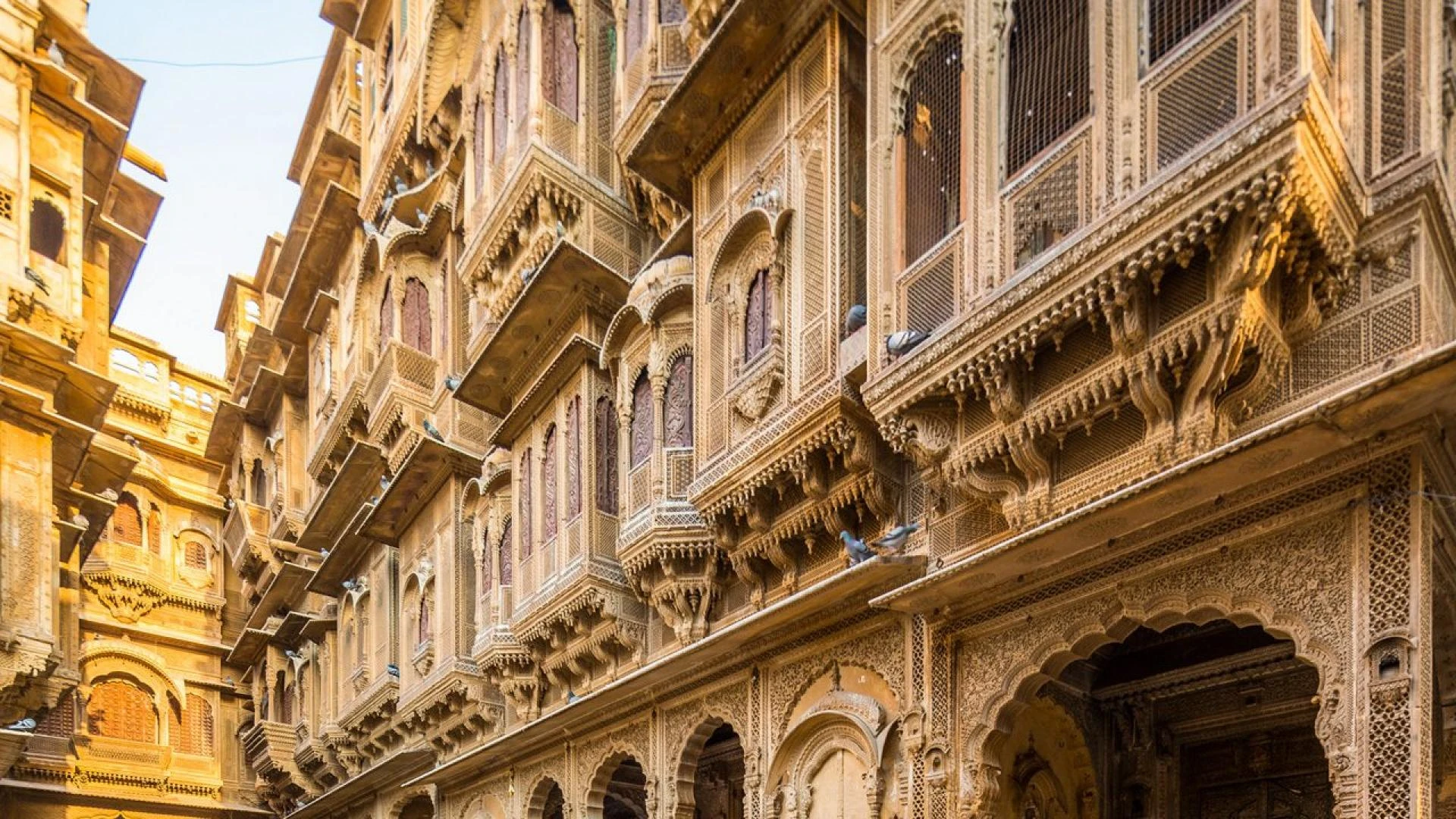
What sets this monument apart is the sheer detail of its "jali" or latticework. Every inch of the exterior is carved with such precision that it resembles fine lace rather than heavy stone. The haveli features over 60 balconies, each boasting a unique design. These balconies were not just for aesthetics; they were engineered to allow cool breezes to circulate through the rooms, providing a natural cooling system against the harsh desert sun. Inside, the walls are adorned with beautiful murals, gold-leaf paintings, and intricate mirror work that once glittered under the soft light of oil lamps.
Navigating the Golden City
Exploring a monument of this scale requires local insight to truly appreciate the hidden stories etched into its walls. Many visitors choose to hire a professional tour operator in Jaisalmer to ensure they don't miss the museum section, which houses rare artifacts, traditional kitchenware, and royal attire from the 19th century. Understanding the historical context of the silk route trade makes the opulence of the Haveli much more than just a visual treat; it becomes a lesson in global economics of the past.
Preservation and Modern Day Significance
Today, the haveli is partially managed by the Archaeological Survey of India (ASI) and partially owned by private residents. It has transitioned from a private family residence to a world-renowned heritage site. The transition hasn't been without challenges, as the soft yellow sandstone requires constant maintenance to combat the effects of erosion and modern pollution. However, the preservation efforts have ensured that the "Taj Mahal of Jaisalmer" remains a primary draw for history buffs and architecture students from around the globe.
Accessing the Heritage Zone
Because the Haveli is located in a congested part of the old city near the Jaisalmer Fort, reaching it can be a bit of a logistical puzzle for newcomers. To avoid the hassle of navigating narrow streets or dealing with unpredictable local transport, booking a reliable Jaisalmer taxi service is the most efficient way to arrive at the gates refreshed and ready to explore. Professional drivers often provide the added benefit of knowing the best times to visit to avoid the largest crowds, allowing for better photography opportunities.
A Legacy Carved in Stone
As the sun sets over Jaisalmer, the light hits the Patwon Ki Haveli in a way that makes the entire building appear to glow from within. It stands as a reminder of an era when Jaisalmer was a vital hub of the Silk Road. The wealth of the Patwa family may have moved on, but the craftsmanship of the local masons lives on in the pillars and ceilings of this grand residence. It is a bridge between the 19th-century boom and the modern tourism-driven economy of Rajasthan.
Practical Tips for Your Visit
- Timing: Aim for the early morning or late afternoon when the light is golden and the heat is manageable.
- Guided Tours: Consider hiring a local guide who can point out the specific symbolism in the carvings, such as the motifs of prosperity and protection.
- Footwear: Wear comfortable walking shoes, as you will be climbing several flights of narrow, steep stairs to reach the upper terraces.
- Photography: While photography is allowed, certain museum sections may require a small additional fee. The view of the Jaisalmer Fort from the upper balconies is one of the best in the city.
Visiting this site is more than just a checkbox on a sightseeing list; it is an immersive experience into the lifestyle of the merchant princes of the desert. From the grandeur of the facades to the intimacy of the living quarters, the Haveli tells a story of a family that reached the pinnacle of success and left behind a golden legacy for the world to admire.