Knee pain is one of the most frequently reported orthopedic problems worldwide. In many cases, it develops due to osteoarthritis, a degenerative condition that gradually damages the cartilage within the knee joint. Since the knee supports most of the body’s weight and plays a crucial role in mobility, it is particularly prone to wear and tear over time.

In the early stages, knee arthritis can often be managed with medications, physiotherapy, lifestyle changes, and injections. However, when these treatments fail to relieve pain or restore mobility, surgical intervention may become necessary. For selected patients, Partial Knee Replacement Surgery Delhi offers an advanced alternative to total knee replacement, allowing faster recovery while preserving healthy joint structures.
Consulting an experienced Orthopaedic Surgeon Delhi is essential to determine whether this procedure is suitable for your condition.
What Is Partial Knee Replacement Surgery?
Partial knee replacement, also known as unicompartmental knee replacement, is a surgical procedure that replaces only the damaged section of the knee joint with an artificial implant. Unlike total knee replacement, which replaces the entire joint, this procedure preserves the healthy bone, cartilage, and ligaments.
The knee joint is divided into three compartments — medial, lateral, and patellofemoral. Partial knee replacement is recommended when arthritis is limited to a single compartment, most commonly the medial side. If arthritis affects multiple compartments or if the knee ligaments are unstable, a total knee replacement is usually the preferred treatment.
Who Is a Suitable Candidate?
Partial Knee Replacement Surgery Delhi may be recommended for patients who meet specific clinical criteria. Suitable candidates often include:
- Patients with osteoarthritis confined to one compartment of the knee
- Individuals with stable knee ligaments, particularly an intact ACL
- Patients seeking a minimally invasive procedure with quicker recovery
- Younger or active individuals who want to delay total knee replacement
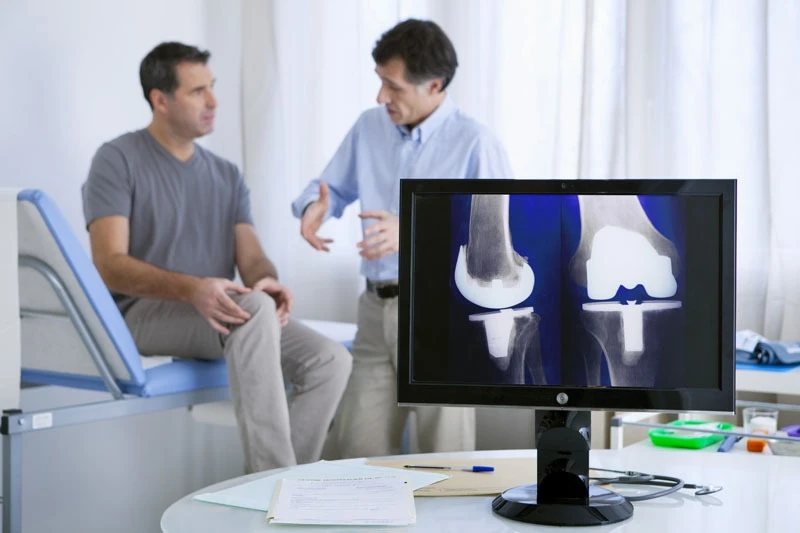
A comprehensive assessment by an Orthopaedic Surgeon Delhi, including imaging tests such as X-rays or MRI, helps determine eligibility.
Advantages of Partial Knee Replacement:
Partial knee replacement has gained popularity due to several clinical and functional benefits.
Faster Recovery:
Since the surgery is less invasive than total knee replacement, patients often experience a shorter hospital stay and quicker rehabilitation. Many individuals are able to resume daily activities sooner.
Smaller Incision and Reduced Tissue Damage:
The procedure typically involves a smaller surgical incision and minimal disruption to surrounding muscles and tissues.
More Natural Knee Function:
Because the healthy ligaments and joint structures are preserved, patients often report a more natural feeling in the knee after surgery.
Reduced Postoperative Pain:
Replacing only the damaged portion of the joint can result in less post-surgical discomfort compared to full knee replacement.
Lower Risk of Complications:
With limited surgical exposure, the chances of complications such as infection, blood loss, or deep vein thrombosis (DVT) may be reduced.
Limitations of Partial Knee Replacement:
Despite its advantages, this procedure may not be suitable for every patient.
Limited Eligibility:
Only a small percentage of individuals with knee arthritis meet the criteria for this surgery.
Implant Longevity:
Partial knee implants generally last around 10–15 years, which may be shorter than some total knee replacement implants.
Possibility of Arthritis Progression:
Since only one part of the knee is treated, arthritis may develop in other compartments over time.
Rehabilitation Requirements:
Although recovery is faster, patients still require physiotherapy and guided exercises to restore strength and joint flexibility.
Partial vs Total Knee Replacement:
Choosing between partial and total knee replacement depends on several factors, including the extent of arthritis, joint stability, patient age, and activity level.
Partial Knee Replacement Surgery Delhi is usually recommended when arthritis is localized to a single compartment. In contrast, total knee replacement is often required when joint damage is widespread or when ligaments are compromised.
Importance of Consulting an Experienced Surgeon:
Accurate diagnosis and surgical planning play a crucial role in successful outcomes. An experienced Orthopaedic Surgeon Delhi can evaluate the severity of knee damage and recommend the most appropriate treatment plan.
With modern surgical techniques and personalized rehabilitation programs, Partial Knee Replacement Surgery Delhi can help patients reduce pain, improve mobility, and return to an active lifestyle with greater comfort and confidence.
#Partial Knee Replacement Surgery Delhi #Joint Replacement Surgery in Delhi
Also visit: https://www.skillshare.com/en/user/dranantkumartiwari