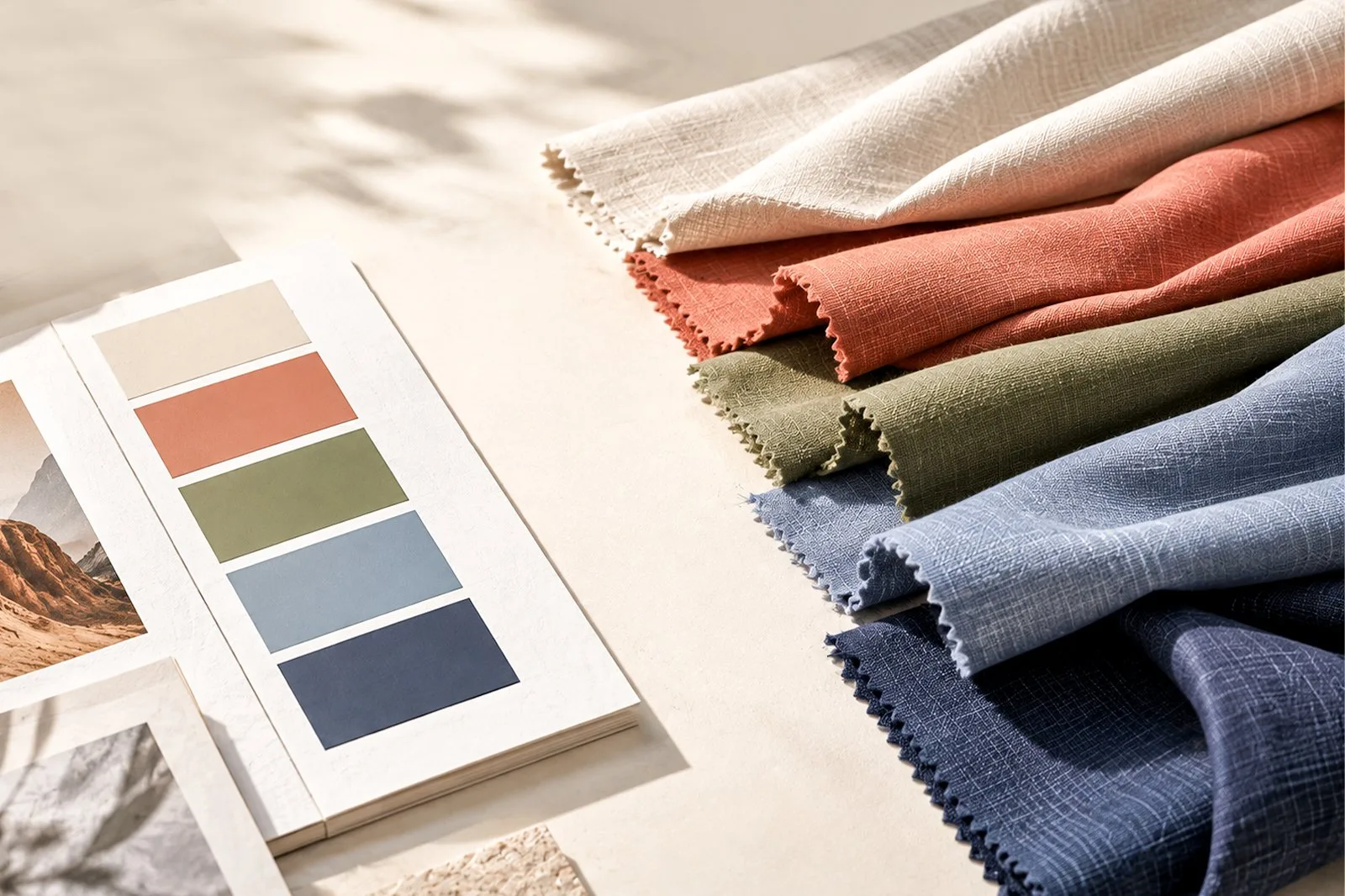
A colour can start with a forecast, appear on a runway, take over social media and eventually show up in a fabric catalogue.
That journey may look simple from the outside. For apparel brands and fabric suppliers, it is anything but.
Today, colour trends move faster than ever. A shade appears in a Pantone forecast, designers begin experimenting with it, influencers wear it, brands feature it across social media, and suddenly customers start recognising and asking for it.
For the fabric industry, this creates an important question: how do you turn a colour trend into a fabric collection that people actually want to buy?
That is where understanding Pantone colour trends becomes valuable.
Why Pantone Matters to the Fashion Industry
Pantone has become an important reference point for designers, brands and manufacturers working with colour. Its Fashion, Home + Interiors system includes colours developed specifically for materials such as textiles, with TCX colours designed for cotton and other soft goods.
The annual Pantone Colour of the Year also receives enormous attention beyond the design industry. It can influence fashion, interiors, beauty, packaging and product design, giving one particular colour a level of visibility that would be difficult to create organically.
But Pantone does not work in isolation. Its own colour forecasting process looks at influences ranging from fashion and entertainment to technology, travel, social media, materials and changing lifestyles.
So when a Pantone colour begins appearing everywhere, it is often part of a much larger cultural movement.
And then social media takes over.
From Pantone Swatch to Social Media Trend
Think about how people discover colour today.
They may see a shade on Instagram. Then they notice it on a celebrity. A fashion creator styles it in a reel. Pinterest fills with interiors and outfits in similar tones. Brands begin photographing products in the same palette.
The colour becomes recognisable.
This matters because social media has shortened the distance between trend awareness and consumer demand.
A colour no longer has to wait for a traditional fashion cycle to influence buying behaviour. A strong visual trend can gain attention quickly, and apparel brands need to respond without losing sight of commercial practicality.
For fabric suppliers, this changes the conversation.
It is no longer enough to ask, “What colours are trending?”
The better question is:
“How do we translate this colour movement into fabrics that brands can actually use?”
A Trending Colour Is Not Automatically a Good Fabric Colour
This is where things become interesting.
A colour that looks beautiful on a screen does not necessarily look the same on fabric.
Material, weave, fibre, texture and finish can all affect how a colour is perceived. Pantone itself maintains different colour systems because colour appearance changes depending on the material it is applied to.
A warm shade on a smooth superfine cotton can have a very different character from the same colour on linen.
A muted tone may feel sophisticated on a structured weave but flat on another construction. A bright colour might work beautifully as a statement shirt but become difficult to sell if offered across an entire collection.
This is why fabric sourcing requires more than matching a swatch.
It requires understanding how colour behaves on fabric.
How Apparel Brands Can Turn Colour Trends Into Fabric Collections
A good fabric collection should not simply copy a Pantone palette.
It should interpret it.
Start by separating colours into three broad roles.
Core colours are dependable shades that customers return to season after season. Think whites, classic neutrals, blues and other established shirting colours.
Supporting colours introduce seasonal freshness without becoming difficult to sell.
Statement colours bring the trend into the collection and give the range something new.
This approach allows brands to respond to Pantone colour trends without rebuilding their entire fabric range every season.
It also creates a natural connection between seasonal collections and a dependable Never-Out-of-Stock fabric collection.
At Cirocco, our NOS range maintains over 1,000 designs throughout the year, giving businesses access to evergreen colours and designs while allowing them to introduce newer seasonal directions alongside them.
That balance is important.
You want your collection to feel current, but you also want customers to find the colours they already trust.
Social Media Creates Demand. Fabric Makes It Real.
There is a reason certain colours perform so well on social media.
They photograph well.
A strong colour can immediately change the mood of a post, campaign or collection. It can make a garment look fresh before a customer has even considered its construction or fibre.
That visual impact can influence what customers begin looking for.
But once a colour moves from Instagram to an apparel collection, the conversation changes.
Now you need to think about:
- Which fibre suits the colour?
- Which weave brings out its character?
- Is it better suited to formal or casual shirting?
- Should it be a solid, stripe, check or jacquard?
- Does it work as a seasonal statement or a longer-term colour?
- Can the fabric be replenished if demand increases?
These are fabric-sourcing questions, not simply colour questions.
Where a Fabric Supplier Makes the Difference
This is where an experienced fabric supplier can make a real difference to apparel brands.
At Cirocco, our monthly collections are developed with research into current and future market colour and Pantone trends, alongside new finishes, constructions and designs.
That allows us to look beyond the colour itself.
A brand may come to us with a particular shade in mind. The next step is understanding what they want that colour to achieve.
Is it for a premium shirting line?
A seasonal fashion collection?
A casual range?
A new colour story for retailers?
Or a core fabric that needs dependable availability?
From there, the conversation can move towards the right fibre, construction, weave and finish.
Our range includes superfine cotton and linen shirting, Egyptian cotton, Supima cotton, jacquards, blends and other constructions suited to different requirements. For brands looking beyond ready collections, Cirocco also offers bespoke fabric development and sourcing support.
That means a colour trend does not have to remain a reference image on a mood board.
It can become a fabric.
The Importance of Timing
There is another side to colour forecasting that often gets overlooked: timing.
If a brand identifies a colour trend too late, the opportunity may already have passed. If it commits too early without understanding demand, it may be left with inventory that is difficult to move.
This is why fabric suppliers need to pay attention to colour trends before they become mainstream.
At Cirocco, more than 200 new designs are added to the monthly collection, covering different counts, constructions, weaves, finishes and price points.
For apparel businesses, this creates room to respond to changing colour preferences without relying entirely on custom production.
The goal is not to chase every trend.
It is to identify the trends that make sense for your market and build the right fabric options around them.
From Colour Forecast to Commercial Collection
Pantone may give the fashion industry a language for discussing colour. Social media gives those colours visibility. But fabric is where the idea becomes tangible.
The journey looks something like this:
Pantone forecast → social media visibility → consumer interest → colour direction → fabric development → apparel collection
Each stage matters.
A successful apparel brand does not simply ask what colour is trending. It asks how that colour fits its customer, its product, its price point and its wider collection.
That is where an experienced fabric supplier becomes part of the creative process.
Turn Colour Trends Into Fabrics That Work
At Cirocco, we bring together over 90 years of textile experience with an understanding of changing colour, design and market preferences. From ready-stock collections and our year-round NOS range to bespoke development and sourcing, we help brands move from an idea to a fabric that works in the real world.
If you are planning your next apparel collection and want to translate emerging Pantone colour trends into commercially relevant fabrics, speak to the Cirocco team about your requirements.