
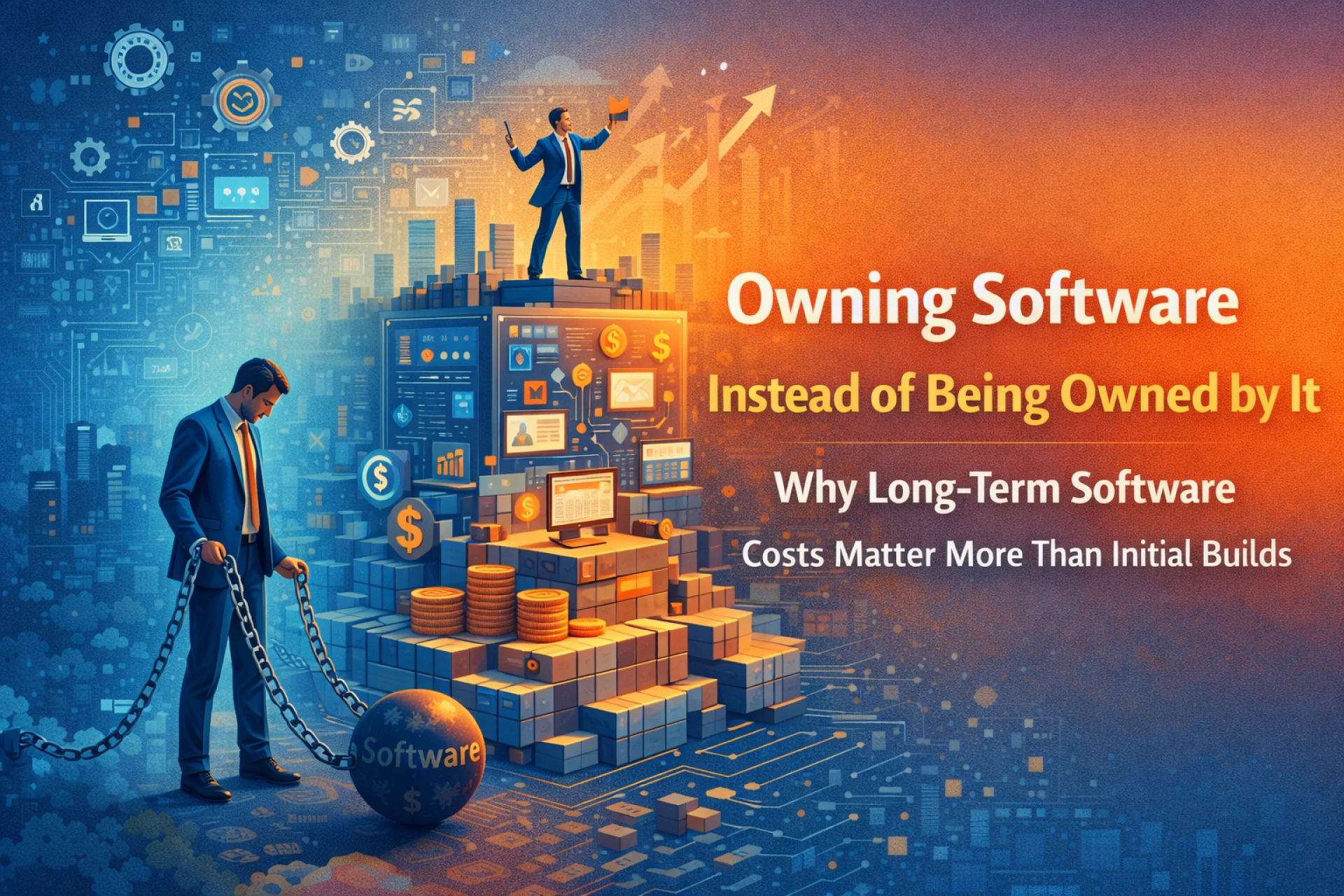
Many organizations underestimate the true cost of software. Budgets often focus on development timelines, launch dates, and feature lists, while overlooking what happens after deployment. Over time, systems demand updates, integrations, security improvements, and performance tuning. What seemed affordable at launch can quietly become expensive, fragile, and difficult to manage.
This is not always due to poor development. More often, it stems from decisions made without a long-term ownership mindset. When software is built to “get it live” instead of to be operated, extended, and maintained, organizations lose control over cost, speed, and flexibility.
Modern businesses are rethinking how they invest in technology, shifting toward custom software development services that emphasize sustainability, maintainability, and predictable total cost of ownership.
API DOTS works with organizations to ensure their software remains an asset—not a liability—throughout its lifecycle.
Software Ownership Is a Strategic Discipline
Owning software does not simply mean holding the source code. True ownership involves:
- Understanding how systems work
- Being able to modify them safely
- Controlling infrastructure and integrations
- Avoiding dependency traps
When organizations rely heavily on black-box tools or tightly coupled vendor ecosystems, they often sacrifice long-term control for short-term convenience.
This is why many growing companies engage a technology consultant early—to help them evaluate architectural trade-offs and avoid decisions that create long-term cost and risk.
API DOTS approaches software development with ownership as a core principle, ensuring clients retain control over their platforms.
The Hidden Cost of Short-Term Development Choices
Quick wins often come with delayed consequences. Common examples include:
- Hard-coded business logic
- Poorly documented systems
- Inflexible data models
- Tight coupling between components
These choices speed up initial delivery but make future changes expensive and risky. Over time, development slows, maintenance costs rise, and innovation stalls.
Investing in well-structured web app development services may require more upfront planning, but it significantly reduces long-term effort and expense.
API DOTS helps organizations balance speed with sustainability—avoiding shortcuts that compromise future growth.
Vendor Lock-In and Loss of Control
Many off-the-shelf platforms promise rapid deployment and feature-rich solutions. However, they often introduce hidden constraints:
- Limited customization
- Expensive licensing models
- Restricted integrations
- Dependency on vendor roadmaps
As businesses evolve, these limitations become increasingly problematic.
Custom-built platforms and carefully designed integrations give organizations freedom to adapt. API integration services for e-commerce websites and enterprise systems enable flexibility without sacrificing interoperability.
API DOTS designs systems that minimize lock-in while maximizing integration potential.
Infrastructure Choices Shape Long-Term Costs
Infrastructure decisions directly influence operating expenses. Poorly optimized environments can inflate costs through over-provisioning, inefficiencies, or unexpected usage spikes.
Choosing the right cloud server for small business workloads or enterprise applications requires understanding traffic patterns, growth expectations, and compliance needs.
Effective infrastructure management involves:
- Right-sizing resources
- Automating scaling
- Monitoring usage continuously
- Aligning costs with business value
Through expert DevOps consulting, API DOTS helps organizations build infrastructure strategies that remain cost-effective as systems grow.
DevOps as a Cost-Control Mechanism
DevOps is often associated with faster releases, but its financial impact is equally important.
Mature DevOps professional services reduce costs by:
- Preventing deployment failures
- Reducing downtime
- Automating repetitive tasks
- Improving predictability
Automation lowers operational overhead while increasing reliability. For organizations managing older systems, DevOps also enables safer updates—critical for software maintenance services for legacy systems.
API DOTS integrates DevOps practices that support both technical and financial sustainability.
Legacy Systems and Escalating Maintenance Costs
Legacy platforms often become expensive not because they are old, but because they are difficult to change.
Symptoms include:
- High effort for small updates
- Dependency on scarce skills
- Increased risk during releases
- Security vulnerabilities
Without proactive legacy system modernization services, maintenance costs continue to rise while value declines.
API DOTS helps organizations stabilize costs by modernizing selectively—upgrading high-risk areas while preserving critical functionality.
Custom Software as a Cost Optimization Strategy
While custom development is sometimes viewed as expensive, it often reduces total cost over time by eliminating unnecessary features, licenses, and workarounds.
Custom solutions allow organizations to:
- Pay only for what they need
- Optimize performance for real workloads
- Integrate systems efficiently
- Adapt without replacing entire platforms
API DOTS delivers custom software development services focused on long-term value rather than short-term savings.
Industry-Specific Cost Considerations
Different industries experience cost pressures differently:
- Fintech app development must account for compliance and security investments
- Enterprise healthcare software faces regulatory and data protection costs
- SaaS product development services must balance infrastructure expenses with user growth
Generic cost models rarely work across industries. API DOTS applies industry-aware planning to ensure cost structures align with operational realities.
AI Investments Require Ongoing Ownership
AI features often promise efficiency gains, but they introduce ongoing responsibilities:
- Model retraining
- Data quality management
- Monitoring accuracy and bias
- Infrastructure optimization
A software development firm specializing in AI solutions must design AI systems that are maintainable—not experimental dead ends.
API DOTS builds AI-enabled platforms with clear ownership models, ensuring automation reduces costs rather than creating new ones.
Offshore Development and Cost Transparency
Working with an offshore development company can significantly reduce development expenses—but only with clear governance.
Hidden costs arise when:
- Documentation is weak
- Knowledge is siloed
- Quality standards vary
- Rework becomes common
API DOTS emphasizes transparency, process discipline, and knowledge sharing to ensure offshore development remains cost-effective and sustainable.
Maintenance as a Financial Safeguard
Ignoring maintenance often leads to emergency fixes, outages, and rushed rewrites—each far more expensive than planned upkeep.
Effective legacy software maintenance programs include:
- Scheduled updates
- Security patching
- Performance optimization
- Technical debt management
API DOTS positions maintenance as a predictable operating expense rather than an unpredictable crisis cost.
Measuring Software ROI Beyond Features
True ROI is not measured by features delivered, but by outcomes enabled.
Key indicators include:
- Reduced operational effort
- Faster response to change
- Lower support costs
- Increased system lifespan
As an experienced IT services provider for small businesses and enterprises, API DOTS helps clients evaluate software investments through a long-term value lens.
Why Long-Term Partnerships Reduce Costs
Frequent vendor changes increase costs through onboarding, knowledge loss, and rework.
A long-term product development software agency partner understands system history, business goals, and constraints—reducing friction over time.
API DOTS builds enduring partnerships that lower costs through continuity and informed decision-making.
Planning for Financial Sustainability in Software
Sustainable software is not about minimizing spending—it’s about spending wisely.
Organizations that succeed plan for:
- Growth-related cost changes
- Integration expansion
- Regulatory updates
- Technology evolution
These plans allow businesses to adapt without financial shocks.
API DOTS helps organizations design software strategies that remain financially sustainable even as demands increase.
Final Thoughts
Software ownership determines freedom.
Organizations that control their systems control their pace of innovation, cost structure, and ability to adapt. Those that don’t often find themselves constrained by tools meant to help them.
By investing in thoughtful design, disciplined execution, and ongoing maintenance, businesses can ensure their software remains an asset—not an escalating expense.
API DOTS partners with organizations to build, maintain, and evolve software platforms that deliver long-term value, predictable costs, and strategic control.