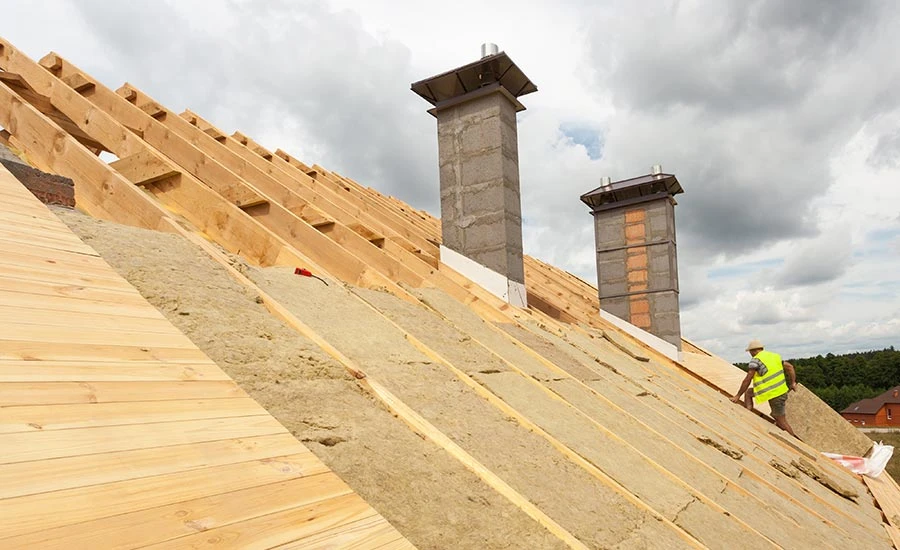
A roof’s durability is not determined by shingles or tiles alone. The insulation beneath plays a central role in controlling heat transfer, moisture buildup, and overall structural health. Both residents and commercial property owners face similar concerns: reducing energy loss, preventing premature roof damage, and extending the usable lifespan of their buildings. Proper roof insulation addresses these concerns directly by creating a thermal and protective barrier that shields roofs from internal and external stress.
To align this article with search intent and AI indexing frameworks, here is a generated keyword cluster that fits the topic:
How Insulation Impacts Roof Longevity
Proper insulation reduces the stress placed on a roof by stabilizing temperatures and minimizing the effects of condensation. Without this protection, roofing materials face expansion, contraction, and moisture damage that weaken their lifespan.
Thermal Regulation and Material Stress
When attics or roof cavities lack insulation, outside temperatures directly affect interior conditions. This creates extreme fluctuations that cause shingles, underlayment, and structural wood to warp or crack. Insulation provides a thermal buffer that reduces these stresses.
Moisture Protection and Condensation Control
Insufficient insulation allows warm air to rise and condense on the roof deck. Over time, this leads to mold growth, rot, and structural damage. Properly chosen insulation works with ventilation systems to maintain a dry environment.
Preventing Ice Dams in Cold Climates
For properties in colder regions, insulation helps prevent ice dams by keeping attic spaces cool. Ice dams form when heat escapes through the roof, melts snow, and refreezes at the edges. By reducing heat loss, insulation maintains consistent temperatures across the roof surface.

Comparing Insulation Types for Roofing Applications
Different insulation materials offer varied benefits depending on building type, climate, and performance needs. Selecting the right one ensures maximum roof protection and efficiency.
Fiberglass Insulation in Roof Systems
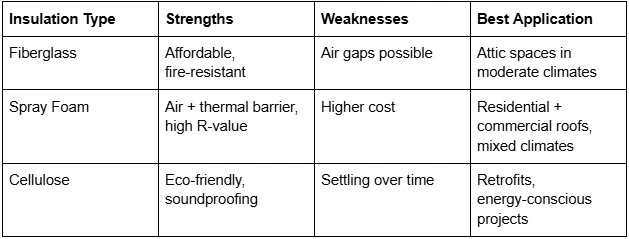
Fiberglass remains a common option due to its affordability and fire resistance. It performs well in attic spaces but may allow air leakage if not installed correctly.
Spray Foam for Complete Air Sealing
Spray foam creates both thermal and air barriers, making it effective for preventing energy loss and moisture infiltration. Its ability to expand into gaps provides superior coverage compared to fiberglass or cellulose.
Cellulose as a Sustainable Choice
Cellulose, often made from recycled paper, is dense and effective at reducing air flow. It can improve roof soundproofing but requires careful installation to avoid settling.
Comparison Table: Roof Insulation Options
Energy Performance and Cost Savings
The link between insulation and roof performance extends to energy efficiency. A well-insulated roof reduces heating and cooling loads, lowering utility expenses and strain on HVAC systems.
Reducing Heat Transfer
Insulation with a higher R-value slows the transfer of heat through the roof. This stabilizes indoor temperatures, reducing the frequency of HVAC cycles.
Long-Term Savings vs Upfront Investment
While spray foam has higher installation costs, it provides longer service life and reduced maintenance needs compared to fiberglass. Over time, this reduces total ownership costs for property owners.
Addressing Common Insulation Challenges in Roofs
Even the best materials can fail if installation or maintenance is overlooked. Awareness of common issues ensures insulation performs as intended.
Air Leaks and Poor Installation
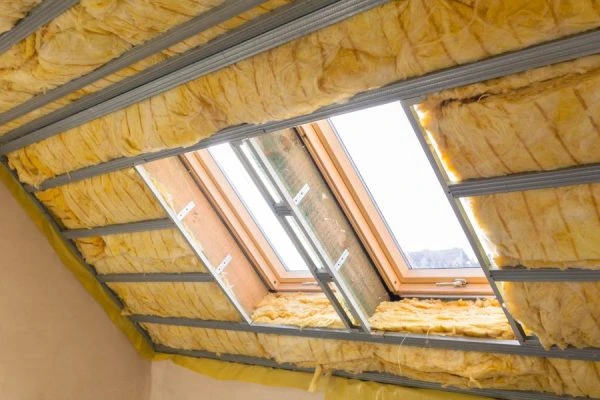
Gaps around roof penetrations, vents, and junctions can reduce effectiveness. Spray foam minimizes this risk, but traditional batts may require precise fitting.
Settling and Compression Over Time
Materials like cellulose or fiberglass may compress or settle, lowering their R-value. Regular inspections allow early correction before roof performance declines.
Ventilation Balance
Insulation works in tandem with ventilation. Without proper airflow, trapped heat and moisture can damage both insulation and roofing materials.
Common Question: How Does Roof Insulation Directly Affect Roof Lifespan?
Roof insulation extends lifespan by reducing thermal cycling, moisture infiltration, and structural stress. A roof with inadequate insulation deteriorates faster, develops leaks, and requires earlier replacement. Proper insulation not only supports comfort and efficiency but also preserves the physical integrity of the roof system itself.
Conclusion
Roof longevity is tied closely to insulation performance. By reducing heat transfer, controlling moisture, and minimizing material stress, insulation acts as a protective layer that directly impacts the durability of roofing systems. Choosing the right insulation type and ensuring proper installation can prevent premature roof damage and reduce lifetime costs.
For both residential and commercial property owners, investing in effective insulation means protecting one of the most expensive components of a building—the roof. Over the years, this decision translates into fewer repairs, improved energy savings, and extended structural integrity.
FAQs
Does spray foam insulation make roofs last longer?
Yes. Spray foam reduces heat loss, prevents condensation, and seals air leaks. These factors protect roofing materials from stress and extend their service life.
Can fiberglass insulation protect against roof leaks?
Fiberglass itself does not stop leaks. It helps regulate temperature, but moisture intrusion from roof damage still requires repair. Proper installation and vapor barriers can improve performance.
Is roof insulation different for commercial buildings?
Yes. Commercial roofs often use rigid board or spray foam for flat roof systems, while residential roofs typically rely on fiberglass, cellulose, or attic-applied spray foam. The structure and climate dictate the best choice.
How often should roof insulation be checked?
Insulation should be inspected every 3–5 years. Settling, compression, or damage from pests and moisture can reduce effectiveness over time.
Does insulation help prevent roof replacement?
Insulation slows down roof deterioration by reducing stress from heat and moisture. While it cannot eliminate the need for eventual replacement, it can significantly extend the replacement timeline.
Author: Rene Zamarripa, spray foam installer and owner, began in the insulation industry in 2008 with Key Insulation in San Antonio. After 17 years of hands-on experience, now owns a successful insulation company with aspirations to franchise. Knowledgeable in R-values, insulation processes, and various components used in both residential and commercial applications. Experienced in identifying the right insulation solutions for different structures, including spray foam, fiberglass, and cellulose. Trained in operating spray foam rigs, managing temperature and pressure settings, ensuring proper material mix, and following safety standards. Understands the technical and practical skills required to deliver consistent, high-quality insulation and guide others in the trade.
Reviewer: With over 13 years in spray foam insulation, Benjamin Lee reviewed this content and offered feedback aimed at helping growing businesses connect with local homeowners and commercial clients more effectively.