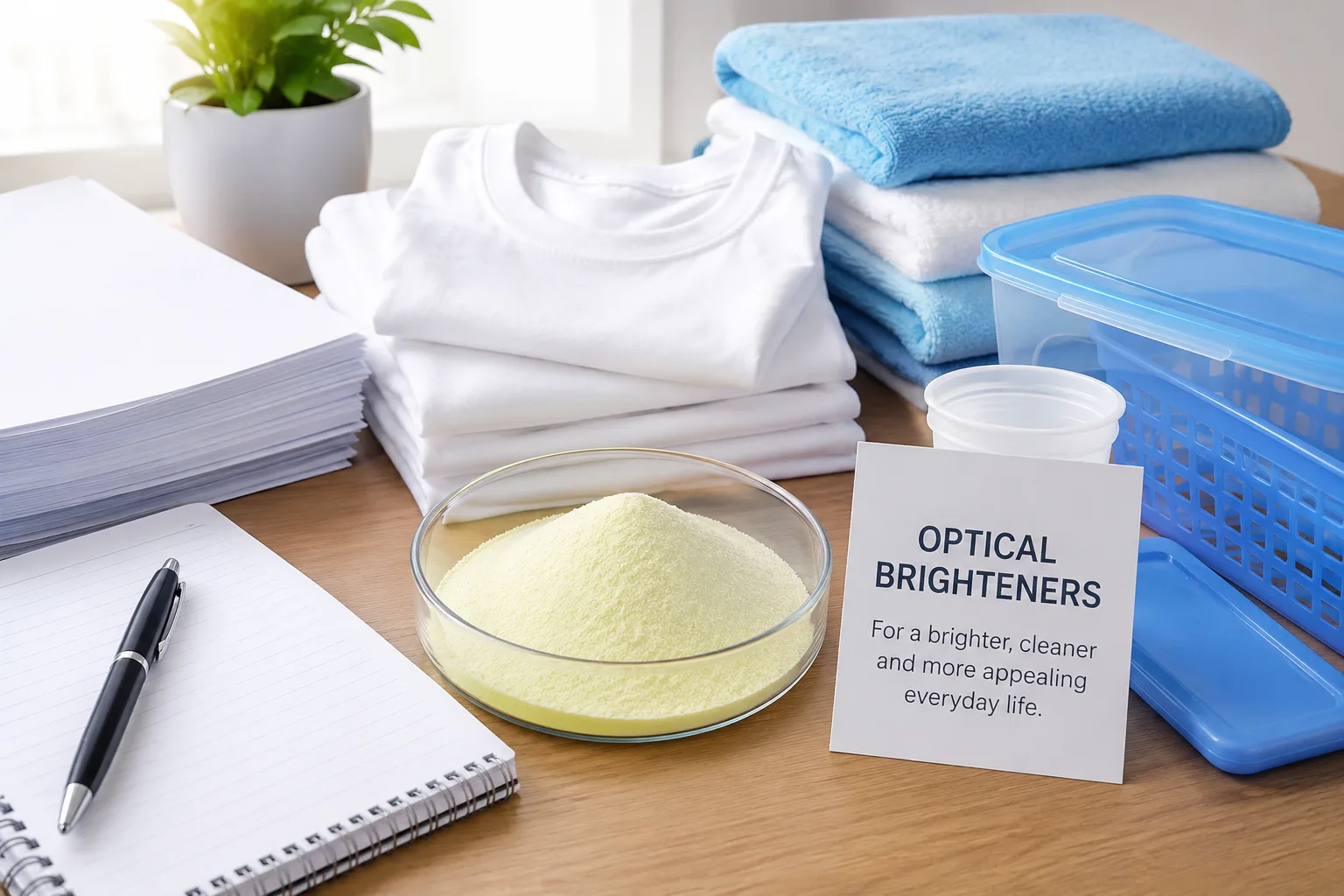
Imagine a new white shirt glowing in the sunlight, a crisp sheet of printer paper, and a fresh white plastic chair in your garden. All three look bright and clean, and one small chemical is quietly working behind them. It is called an optical brightener.
An optical brightener, also known as a fluorescent brightening agent, does not clean or bleach anything. Instead, it plays a small trick with light. Sunlight carries invisible UV rays. This chemical absorbs those rays and releases them back as visible blue light. Since blue cancels out yellow tones, the material looks much whiter and brighter than it actually is.
In paper:
wood pulp is naturally a bit yellowish or grey. Paper mills add optical brighteners during manufacturing to fix this, giving notebooks, office paper, and tissue paper their clean, crisp look.
In textiles:
even bleached cotton can carry a slight yellow tone. Adding an optical brightener during finishing removes this last trace of dullness. This is why white shirts, bedsheets, and school uniforms look so pure and fresh, exactly what customers expect.
In plastic:
raw material is not always perfectly white or clear. Manufacturers add brighteners to give chairs, buckets, and containers a fresh, premium look, since customers often judge quality just by appearance.
The reason one product works across three very different industries is simple: paper, textile, and plastic all face the same basic issue, their raw material looks slightly dull, and customers want it to look bright and new. Optical brighteners solve this one problem everywhere.
Are Optical Brighteners Safe to Use?
Many businesses also ask if optical brighteners are safe for regular use. In most cases, when used in the right quantity and following proper industry standards, these chemicals are considered safe for paper, textile, and plastic applications. Good manufacturers test their products carefully before supplying them in bulk, so that customers do not face any quality or safety issues later. Today, there is also a growing demand for eco-friendly and skin-safe brightening agents, especially in fabrics that come in direct contact with human skin, like clothing and bedsheets. Choosing a supplier who follows strict quality checks makes a big difference in the long run.
Not every brightener works the same way for every material, though. Paper, fabric, and plastic each need a different formulation. This is why choosing an experienced supplier matters, someone who understands your exact industry and can guide you on the right product. You can explore the complete range of colour chemicals on the home page or check specific options on the products page.
From the paper we write on to the clothes we wear and the plastic we use daily, optical brighteners work quietly to make ordinary things look fresh and appealing. If your business needs a reliable optical brightener along with the right technical guidance, you can reach out through the contact us page for a simple conversation.