
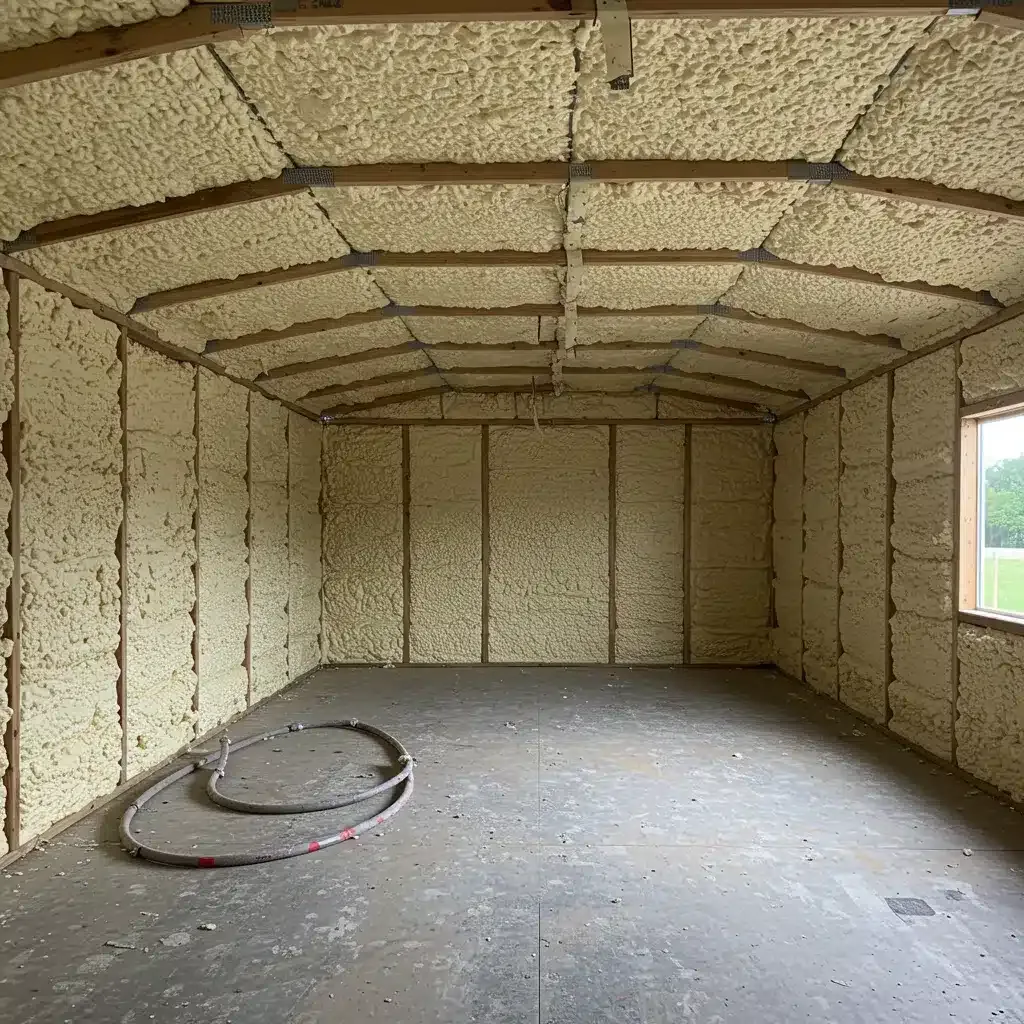
The primary choice between open-cell spray foam vs. closed-cell spray foam insulation depends on specific building goals and the environment of a project. Open cell foam is a lightweight, flexible material that expands significantly to fill gaps, while closed cell foam is a dense, rigid product that provides structural strength and a moisture barrier. Both options effectively stop air leakage, which is a major cause of high utility bills.
Deciding on the right insulation requires an understanding of technical specifications like thermal resistance and structural impact. Industry experts point out that homes using these materials can see a significant drop in energy consumption compared to those using traditional fiberglass. This comparison explains the technical differences to help property owners decide which material fits a building best.
Core Differences in Foam Density and Structure
The most noticeable difference lies in the foam density of the two materials. Open cell foam typically has a density of about 0.5 pounds per cubic foot. The cells are intentionally left open, which makes the foam soft and sponge-like to the touch.
Closed cell foam is much denser, usually weighing about 2 pounds per cubic foot. In this version, the cells are completely closed and packed tightly together. They are filled with a gas that helps the foam maintain its shape and provides better thermal resistance.
This difference in structure affects how the material behaves once installed. The dense nature of closed-cell foam makes it very hard once it cures. It is so strong that it can actually increase the structural integrity of the walls it occupies.
Thermal Performance and R-value Standards
The R-value of an insulation material measures its ability to resist heat flow. Because of its density, closed-cell foam has a much higher rating per inch. It usually offers an R-value of about 6.5 to 7.0 per inch of thickness.
Open cell foam has a lower thermal resistance, typically ranging from 3.5 to 3.8 per inch. This means a thicker layer of open cell foam is required to achieve the same thermal performance as a thinner layer of closed cell foam. If limited space exists in the wall studs, the denser option is often better.
Market data suggests that nearly 40% of a building's energy is lost through air infiltration. Both foam types address this by creating an airtight seal. However, the higher R-value of the closed cell variety makes it a favorite for extreme climates where temperature swings are severe.
Understanding Moisture Resistance and Vapor Barriers
Regarding moisture resistance, these two materials perform very differently. Closed cell foam is waterproof and acts as a built-in vapor barrier. It does not allow water to move through it, making it ideal for flood-prone areas or damp basements.
Open cell foam is permeable to moisture. While it does not soak up water like a sponge, it allows water vapor to pass through it. This can be an advantage in certain roof designs where a builder wants to detect a leak quickly rather than having water trap itself against the wood.
When insulating a crawl space or an exterior wall exposed to heavy rain, the moisture-blocking properties of closed-cell are superior. In dry, indoor partitions, the breathability of the open cell version might be preferred to prevent wood rot in specific framing setups.
Effective Cavity Filling and Expansion Rates
The expansion rate of the foam determines how well it handles cavity filling during installation. Open cell foam expands at a ratio of about 100 to 1. This massive expansion allows it to reach every tiny crack and corner in a wall or ceiling.
Expert Observation: Open cell foam is excellent for soundproofing between rooms. Its soft, airy structure is much better at absorbing sound waves than the rigid, dense closed cell alternative.
Closed cell foam expands much less, usually at a ratio of about 30 to 1. This means the installer must apply it in multiple passes to reach the desired thickness. It is highly effective for narrow spaces where maximum insulation is needed in a small footprint.
Comparison of Technical Specifications
FeatureOpen Cell FoamClosed Cell FoamFoam Density0.5 lbs / cubic foot2.0 lbs / cubic footR-Value per Inch3.5 - 3.86.5 - 7.0Expansion RateHigh (100:1)Low (30:1)Moisture BarrierNoYesStructural StrengthMinimalHighBest Use CaseInterior walls / AtticsExteriors / FoundationsStandard Application Methods for Professional Installers
The application methods for both types involve mixing two chemical components at the tip of a spray gun. Technicians must monitor the temperature and pressure of these chemicals to ensure the foam cures correctly. Even a slight imbalance can lead to lingering odors or poor adhesion.
For large open areas like attics, installers often prefer the high expansion of open-cell foam. It covers large volumes quickly and provides a total air seal with less material weight. This is particularly helpful in older homes where the structure might not support the heavy weight of dense foam.
Closed-cell application requires more precision. Because it is so rigid, it cannot be easily trimmed if it over-expands beyond the wall studs. Professionals often spray it in layers to prevent the material from overheating during the chemical reaction.
Which Insulation Performs Better in Extreme Temperatures?
In high-heat environments like the Mojave Desert, the choice between open cell vs. closed cell often favors the denser material for exterior shells. Closed cell foam blocks the intense radiant heat from the sun more effectively than its lighter counterpart.
However, open cell foam is frequently used in vented and unvented attic assemblies in more temperate zones. It provides an excellent seal against hot summer air without the higher cost of closed cell. It is also more affordable for property owners on a strict budget who still want the benefits of spray foam.
Performance requirements often vary by climate, and regional builders frequently tailor these material choices to local conditions. In areas prone to high winds or seasonal storms, the rigidity of closed-cell foam can help the house resist swaying. It essentially bonds the framing together into a single, solid unit.
Factors to Review Before Choosing Your Insulation Type
Before committing to a specific foam, check the depth of the wall cavities. Standard 2x4 studs provide limited space. If a high R-value is needed in that narrow gap, closed-cell is the standard way to meet modern energy codes.
Consider the acoustic needs of the space. When a home theater or a quiet office is being built, open cell foam is a strong choice. Its structure is designed to trap noise, whereas the hard surface of closed-cell foam can sometimes reflect sound.
Building Tip: Always check local building codes regarding vapor retarders. Some regions require an extra layer of vapor-retardant paint over open cell foam to meet moisture safety standards.
Evaluate the budget versus long-term savings. While the initial cost of closed cell is higher, its durability and thermal efficiency often lead to greater savings over time. Market data indicates that high-quality insulation can increase a home's resale value by up to 5%.
Regional Guidance for Desert and Dry Climates
In places like Las Vegas, the primary goal is keeping extreme summer heat outside. Closed-cell foam is frequently applied to the underside of roof decks to create a conditioned attic space. This prevents air conditioning ducts from sweating and losing efficiency.
The dry climate also means that the moisture-permeable nature of open cell foam is less of a risk than it would be in a humid environment. Many local builders use open cell for its cost-effectiveness in residential neighborhoods while reserving closed cell for commercial projects or metal buildings.
Always ensure the installation team understands the local temperature requirements. Spraying foam when the wood is too hot can cause the material to pull away. Experienced teams know how to adjust their equipment to handle the unique demands of desert construction.
Efficient Results for Modern Buildings
Selecting between these two materials is a matter of balancing a budget with performance needs. Open cell foam offers a great air seal and sound dampening at a lower price point. It works well for most residential interior applications where space is not an issue.
Closed cell foam provides a premium solution for those needing moisture protection and high thermal resistance. Its ability to strengthen the building and block water makes it a top-tier choice for exterior walls and harsh environments. Evaluate the specific structure to determine which density will provide the best return on investment.
Professional Guidance for Your Insulation Project
Selecting the right product between open cell vs. closed cell ensures a property remains comfortable throughout the year. If it is unclear which option fits an attic or walls, the team at Supreme Spray Foam LV can help. They offer expert services including Attic Insulation, residential spray foam insulation, and specialized closed cell spray foam insulation to meet these needs. They can be reached at [email protected] or by calling (702) 904-9895. Whether a free quote for a new project or repairs on existing foam is needed, contacting a professional is the best way to guarantee a long-lasting and energy-efficient result for a home or business.
Common Questions Regarding Foam Insulation
Can you use open cell foam on exterior walls?
It can be used on the interior side of exterior walls, provided there is a proper weather barrier on the outside. It is not suitable for direct exposure to the elements or in areas where it might contact liquid water.
Does closed-cell foam ever need to be replaced?
When installed correctly, closed-cell foam is designed to last the lifetime of the building. It does not sag or settle like fiberglass batts and maintains its R-value for decades without degrading.
Is spray foam safe for indoor air quality?
Once the foam has fully cured, which usually takes 24 hours, it is inert and does not off-gas. It improves indoor air quality by blocking dust, pollen, and other outdoor allergens from entering the home.
Which foam is better for metal buildings?
Closed-cell foam is generally better for metal structures because it prevents condensation from forming on the steel. It adheres tightly to the metal and acts as a barrier against the temperature changes that cause moisture buildup.
How does spray foam affect the roof's lifespan?
By stabilizing the temperature of the roof deck, spray foam can reduce the thermal expansion and contraction of roofing materials. This often helps shingles or metal roofing last longer by minimizing structural stress.