Preparing for an IT certification exam involves much more than reading books or watching training videos. Whether you're pursuing certifications in cloud computing, cybersecurity, networking, project management, DevOps, or artificial intelligence, success depends on understanding both the exam objectives and the testing experience itself.
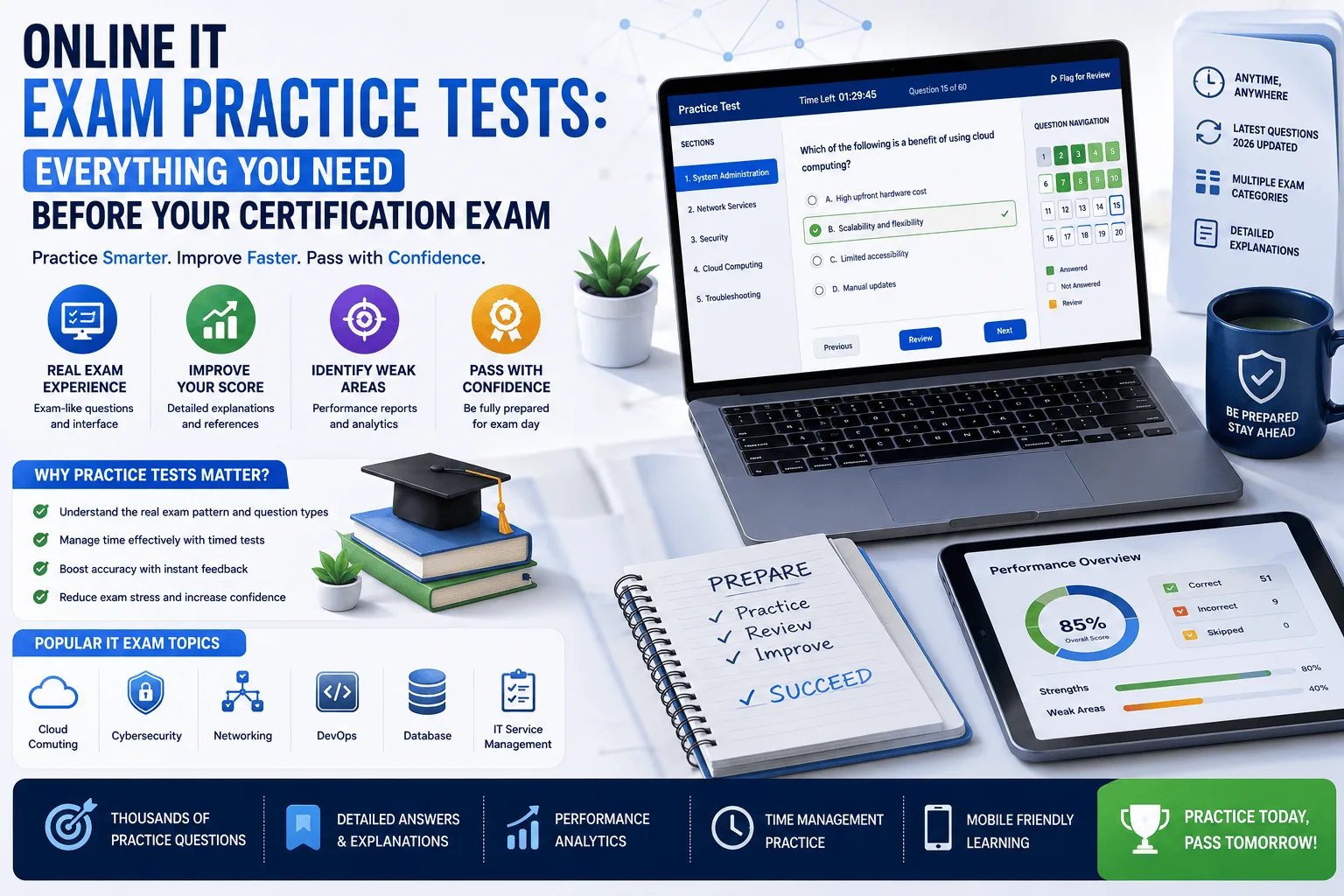
One of the most effective preparation methods is using online IT exam practice tests. Well-designed practice exams help you become familiar with the exam format, identify knowledge gaps, improve time management, and build confidence before exam day. However, not every practice test offers the same quality or educational value.
This guide explains how online IT exam practice tests work, their benefits, what features to look for, and how to use them effectively alongside official learning resources.
Why Practice Tests Matter
Many certification candidates spend weeks studying theory but never test themselves under exam conditions.
Practice tests bridge that gap by allowing you to apply your knowledge in realistic scenarios. Instead of simply recognizing concepts, you learn how to analyze questions, eliminate incorrect answers, and manage the pressure of a timed exam.
Regular testing also helps reinforce long-term memory because actively recalling information is generally more effective than repeatedly rereading study materials.
What Makes a Good Practice Test?
Not every online practice exam is worth your time.
A high-quality practice test should:
- Reflect the official exam objectives.
- Include realistic question formats.
- Provide detailed answer explanations.
- Cover all major domains.
- Receive regular content updates.
- Simulate actual exam timing.
The goal is not to memorize answers but to understand the reasoning behind each solution.
Benefits of Online Practice Tests
Online practice exams offer several advantages over traditional paper-based preparation.
BenefitHow It HelpsExam FamiliarityReduces surprises by simulating the real testing experiencePerformance TrackingIdentifies strengths and weak areasTime ManagementImproves pacing during timed examsKnowledge ValidationConfirms understanding of exam objectivesConfidence BuildingReduces exam-day anxiety through repeated practice
Candidates who consistently review their mistakes often improve much faster than those who rely solely on reading or video courses.
When Should You Start Using Practice Tests?
Many learners wait until the final week before their exam, but a gradual approach is usually more effective.
A practical study plan might look like this:
Early preparation
Use short quizzes after completing each study topic to confirm your understanding.
Middle stage
Begin taking partial mock exams covering multiple domains while reviewing incorrect answers carefully.
Final preparation
Complete several full-length timed practice exams under realistic conditions before scheduling your certification exam.
This progressive strategy helps measure improvement throughout your preparation rather than only at the end.
Choosing Reliable Practice Resources
When selecting an online practice platform, look for resources that emphasize learning rather than memorization.
Useful features include:
- Detailed explanations for every answer.
- Performance reports by exam domain.
- Timed and untimed practice modes.
- Question review functionality.
- Regular updates following exam changes.
- Mobile and desktop accessibility.
Avoid resources that promise guaranteed success through memorization or claim to provide actual live exam questions. Legitimate preparation focuses on developing skills and understanding the official objectives.
Improve your exam readiness with online practice tests and study materials: https://certempire.com/practice-tests/
Combine Practice Tests with Other Learning Methods
Practice tests work best as part of a balanced study plan.
For the strongest results, combine them with:
- Official certification documentation.
- Vendor learning paths.
- Hands-on laboratories.
- Technical books.
- Video training.
- Personal projects.
- Community discussions.
Hands-on experience remains especially important for performance-based certifications, where candidates must complete practical tasks instead of answering multiple-choice questions.
Common Mistakes Candidates Make
Some learners misuse practice tests and limit their progress.
Common mistakes include:
- Memorizing answer sequences instead of understanding concepts.
- Ignoring explanation sections.
- Repeating the same questions without reviewing weak areas.
- Skipping hands-on practice.
- Taking too many practice exams without studying between attempts.
Treat each incorrect answer as an opportunity to improve rather than simply calculating your score.
Measuring Your Readiness
Practice scores alone should not determine whether you're ready for the real exam.
Instead, ask yourself whether you can:
- Explain why the correct answer is right.
- Identify why alternative options are incorrect.
- Apply concepts in practical situations.
- Solve unfamiliar scenarios confidently.
- Complete questions within the allotted time.
When you consistently perform well across all exam domains—not just your strongest topics—you are usually in a better position to schedule your certification exam.
Conclusion
Online IT exam practice tests are valuable tools for evaluating knowledge, improving confidence, and preparing for the structure of certification exams. However, they should complement—not replace—official study materials, hands-on experience, and continuous learning.
By choosing reliable practice resources, reviewing explanations carefully, and combining mock exams with practical experience, you can approach your certification exam with greater confidence and a deeper understanding of the technologies being tested.
FAQs
Are online IT exam practice tests enough to pass a certification exam?
Practice tests are valuable preparation tools, but they should be combined with official documentation, hands-on experience, structured learning, and consistent revision to build comprehensive certification knowledge.
When should I begin taking practice exams?
Start using topic-based quizzes early in your preparation, then gradually progress to full-length timed mock exams as you become more comfortable with the official exam objectives.
How many practice tests should I complete?
There is no fixed number. Continue practicing until you consistently understand the concepts, perform well across all domains, and comfortably manage the exam time limits.
Should I memorize practice test answers?
No. Memorizing answers provides limited long-term value. Focus instead on understanding the explanations, identifying weak areas, and learning how to solve unfamiliar certification scenarios confidently.
Can practice tests reduce exam anxiety?
Yes. Practicing under realistic exam conditions improves familiarity with question formats, strengthens time management skills, and increases confidence before sitting for the actual certification exam.
Read More: CPC vs CCA 2026: Exam Difficulty, Salary, and Job Prospects Compared