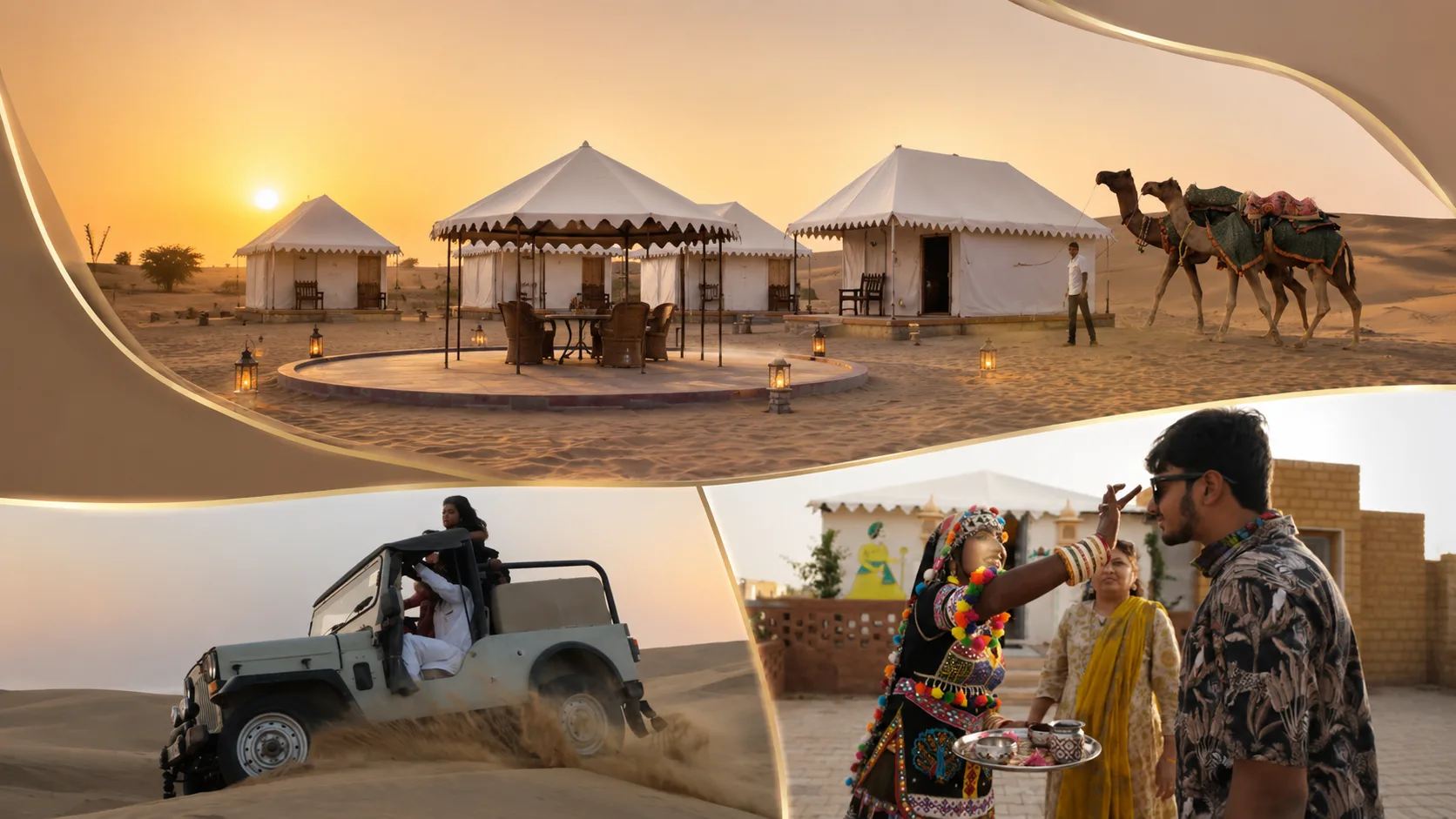
The Thar Desert does not offer one fixed kind of holiday. A family may experience it through shared camel rides, cultural performances and evenings beneath the open sky. A couple may value privacy, sunset colours and the silence that follows the day’s activities. Photographers observe changing light and the geometry of the dunes, while cultural travellers listen to folk music and explore traditions connected with western Rajasthan. The landscape remains the same, but the experience changes according to the traveller.
This is why selecting a desert resort should begin with the purpose of the journey. Accommodation photographs may create interest, but guests should also consider location, comfort, food, activities and how much time they intend to spend in the desert. A well-planned stay allows travellers to experience Jaisalmer beyond a short sightseeing excursion. It creates enough time to understand the contrast between the city’s golden architecture and the wider silence of the Thar.
Jaisalmer Is More Than Its Fort
Jaisalmer Fort is one of the destination’s most recognisable landmarks, but the city’s identity extends beyond its fortified architecture. Historic havelis, local markets, traditional craftsmanship, regional food and desert settlements contribute different layers to the journey. Outside the city, the landscape gradually opens into dunes, sparse vegetation and wide horizons.
Travellers who remain only in the urban area may appreciate Jaisalmer’s history but miss the atmosphere that has shaped much of the region’s culture. The desert changes the pace of the journey. Distances feel broader, evenings appear quieter and the sky becomes a more visible part of the experience.
A balanced visit can therefore include city sightseeing and a dedicated desert stay. Instead of treating the dunes as a short photographic stop, travellers can spend enough time to experience sunset, cultural activities, dining and the calm of the night.
Families Need Shared Experiences and Individual Comfort
Family holidays often include different generations with different expectations. Children may be excited by camel rides and jeep adventures, while parents want comfortable accommodation and organised meals. Grandparents may prefer cultural performances, a relaxed pace and suitable seating.
The correct desert stay should allow these interests to exist together. Families do not need to participate in every activity as a single group. Some members may join a safari while others remain at the property and enjoy the surroundings. The important factor is that everyone can find a meaningful way to experience the destination.
When selecting a Luxury Resort in Jaisalmer, families should examine accommodation features, attached washrooms, meal arrangements, activity schedules and transportation. Lohagarh Desert Resort offers Swiss tents and other accommodation options designed to connect modern comfort with the desert environment. Guests should confirm the exact category, facilities and occupancy before booking.
Couples Often Seek Privacy and a Slower Pace
For couples, the desert’s appeal often lies in its separation from ordinary routines. The open landscape reduces distraction, while sunset, cultural evenings and quieter moments create a naturally different atmosphere. A desert stay can become a honeymoon experience, anniversary journey or simply an opportunity to spend time together away from city congestion.
Privacy remains important. Couples should compare accommodation categories and understand how tents or cottages are positioned within the property. They should also decide whether they prefer an activity-filled stay or one centred on relaxation.
At Lohagarh Desert Resort, couples can combine comfortable accommodation with camel or jeep experiences, cultural evenings, food and time beneath the desert sky. The aim does not need to be completing every available activity. A sunset observed without urgency or an evening spent listening to folk music may become more memorable than an overloaded programme.
Photographers Experience the Desert Through Light
The Thar changes continuously as the sun moves. Morning light can reveal subtle textures, while sunset creates deeper colours and longer shadows. Cultural performances, local clothing, desert movement and night skies provide additional subjects, but photographers should approach people and traditions respectfully.
A photographer planning a desert stay should consider more than scenic potential. Equipment protection is important because sand can affect cameras and lenses. Batteries should be charged, storage should be sufficient and a secure bag should remain available during activities. Guests should ask before photographing performers, staff or local residents at close range.
Lohagarh Desert Resort’s location near the desert environment gives travellers opportunities to observe open landscapes and cultural evenings without returning immediately to the city. However, natural conditions vary, and no particular sunset, weather pattern or night-sky visibility can be guaranteed.
Adventure Travellers Need Responsible Planning
Camel rides and jeep safaris introduce movement and excitement into a desert holiday. These experiences allow travellers to move beyond the immediate resort surroundings and encounter the scale of the landscape more directly.
Adventure should still be approached thoughtfully. Guests should confirm activity duration, safety guidance, appropriate clothing and any health limitations. Travellers with back, joint or mobility concerns should discuss whether a particular activity is suitable. Children and elderly guests may require additional consideration.
Desert activities can also be affected by weather and operational conditions. A responsible traveller follows local guidance and understands that schedules may need adjustment. The purpose is to enjoy the environment without treating it as an unrestricted amusement space.
Culture Gives the Desert Its Human Identity
The dunes are visually powerful, but the desert experience becomes deeper when travellers engage with the region’s living culture. Folk music, dance, local food, clothing and hospitality reveal how communities have created expression and celebration within a demanding landscape.
Cultural evenings at Lohagarh Desert Resort may include folk music, traditional dance and bonfire experiences, subject to season, weather and resort arrangements. These performances should not be viewed merely as background entertainment. They represent artistic traditions that deserve attention and respect.
Guests can improve the experience by watching rather than speaking loudly through performances, asking permission before close photography and recognising the skill involved. Cultural travel becomes more meaningful when visitors treat performers as artists rather than decorative elements of the holiday.
What Creates a Five-Star Desert Experience?
A 5-Star Resort in Jaisalmer experience should be judged through the complete stay rather than a label alone. Comfortable accommodation, cleanliness, attached facilities, food quality, organised activities and responsive hospitality must work together. Luxury in the desert is created when guests can feel connected to the landscape without sacrificing essential comfort.
Travellers should still verify whether a property holds a formal star classification before interpreting promotional language literally. “Five-star experience” and an officially classified five-star hotel are not automatically the same thing. Informed guests should evaluate published facilities, recent information and direct confirmation instead of relying only on a search phrase.
At Lohagarh Desert Resort, the emphasis is on Swiss-tent accommodation, desert activities, cultural programmes, dining and a peaceful atmosphere. Guests should confirm the services included in their selected package because inclusions may differ by booking.
Food Becomes Part of the Cultural Journey
A desert stay feels incomplete when dining is treated only as a practical requirement. Regional dishes, preparation styles and shared meals can introduce travellers to another side of Rajasthan. Cultural evenings and food together create a transition from daytime adventure to a more relaxed night.
Families should communicate children’s preferences and dietary requirements before arrival. Travellers with allergies or medical restrictions should seek clear information about ingredients and preparation. Couples and groups should review whether meals are included in the package and what type of dining arrangement is offered.
Lohagarh Desert Resort presents food as part of the wider desert experience, with local flavours and hospitality complementing accommodation and cultural activities. Clear communication during booking helps travellers arrive with realistic expectations.
Premium Hospitality Is Often Found in Small Details
A Premium Resort in Jaisalmer is not defined only by expensive interiors. Guests experience quality through accurate booking information, a prepared accommodation, clean facilities, coordinated activities, organised meals and staff who communicate clearly when plans change.
In a desert environment, these details become particularly important. Travellers may be unfamiliar with the location, climate and activity arrangements. Dependable communication reduces uncertainty and helps guests prepare appropriate clothing, arrival transport and expectations.
Visitors also contribute to a smoother stay. Arrival times, dietary needs and activity interests should be communicated beforehand. If plans change, the property should be informed instead of being expected to reorganise every arrangement after arrival.
A Desert Night Should Not Be Rushed
Many travellers focus on sunset and leave soon afterwards. However, the transition from evening into night reveals another side of the desert. Temperatures change, sound carries differently and the sky becomes more prominent once surrounding light is reduced.
A cultural programme, dinner and quiet time outdoors can make the night feel like a complete experience rather than the end of a safari. Stargazing may be enjoyable when weather and visibility are favourable, but guests should not expect professional astronomical conditions on every night.
The most memorable moments may be simple: conversation beside a bonfire, music carrying across the open air or the stillness experienced after the activities finish.
Planning the Right Length of Stay
A short desert visit can introduce the landscape, but travellers who want to combine Jaisalmer city sightseeing with resort activities should avoid placing everything into one hurried day. The appropriate duration depends on arrival time, season, transport and the interests of the group.
Families may want enough time for children to rest between city and desert experiences. Couples may prefer an unhurried evening and morning, while photographers benefit from observing the landscape under different light.
Before booking, travellers should coordinate transportation between Jaisalmer and the resort, confirm check-in arrangements and understand when planned activities begin. Arriving after an activity has concluded may affect the experience, so timing should be discussed directly.
Conclusion
The Thar Desert offers a different journey to every traveller. Families discover shared adventure, couples find privacy, photographers follow changing light and cultural travellers encounter traditions shaped by the region. No single activity defines the stay; its meaning comes from the relationship between landscape, accommodation, food, hospitality and time.
Lohagarh Desert Resort allows guests to experience this relationship through Swiss tents, desert safaris, cultural evenings, regional dining and peaceful surroundings near Jaisalmer’s desert landscape. The resort can serve as more than accommodation when travellers give themselves enough time to participate without rushing.
A successful desert journey therefore begins with understanding what the traveller wants from it. When the property, activities and pace match that purpose, Jaisalmer becomes more than a city visited or a sunset photographed. It becomes an experience that continues long after the sand has been left behind.