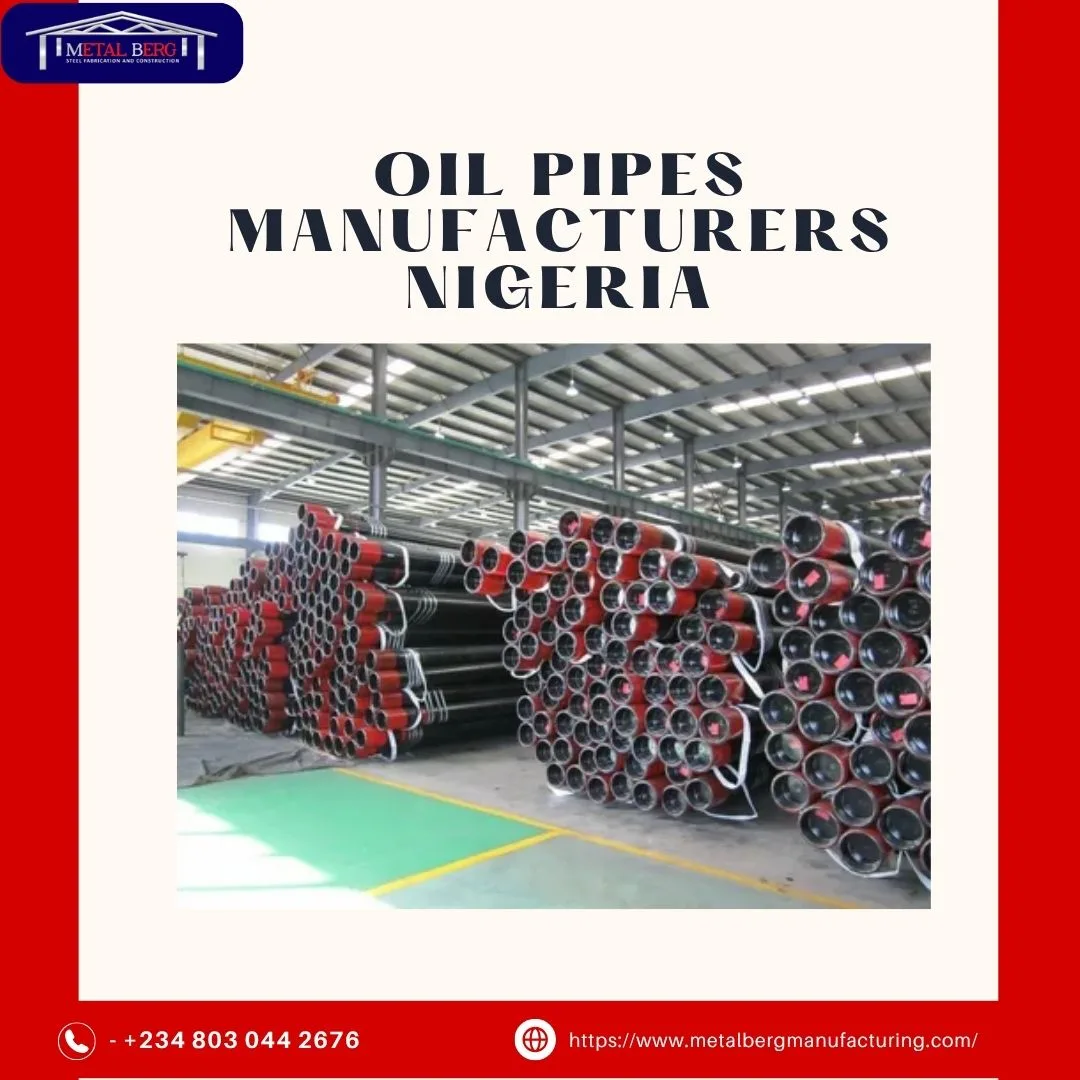
Nigeria’s oil and gas industry depends on strong, dependable infrastructure for the safe movement and handling of petroleum products. Among the most important components of this infrastructure are steel pipes designed for demanding industrial environments. From petroleum transportation to piling and structural applications, the right pipe can influence project safety, durability, maintenance requirements, and long-term operating costs.
For companies involved in energy, construction, infrastructure, and industrial development, selecting experienced Oil Pipes Manufacturers Nigeria is an important procurement decision. The manufacturer should understand material requirements, fabrication quality, dimensional accuracy, testing, and the practical demands of projects operating in challenging conditions.
Metal Berg Manufacturing Company Factory provides steel manufacturing solutions for industrial applications, including petroleum pipes and piling pipes. Its product range is designed to support projects where dependable steel products and appropriate engineering considerations are essential.
Why Are Quality Steel Pipes Important for Oil and Gas Projects?
Oil and gas installations can expose piping systems to pressure, mechanical loads, environmental conditions, and corrosion risks. Because of these challenges, pipe selection cannot be based solely on price or availability.
Nigeria’s petroleum infrastructure is subject to engineering and regulatory requirements. The Nigerian Upstream Petroleum Regulatory Commission (NUPRC) guidelines state that structural steel plates, shapes, and pipes used in relevant facilities should conform to appropriate ASTM specifications or internationally recognised equivalents for their intended purposes.
This makes quality control an important part of procurement. A suitable pipe should have the required dimensions, material characteristics, weldability, and mechanical performance for its intended application.
What Are Petroleum Pipes Used For?
Petroleum pipes can serve a range of industrial purposes depending on their design, size, material grade, and project specifications. They may be incorporated into systems associated with petroleum handling, transportation, processing, and related infrastructure.
A project may require different pipe characteristics depending on factors such as:
- Operating pressure
- Pipe diameter and wall thickness
- Installation conditions
- Temperature
- Mechanical loading
- Corrosion exposure
- Welding and joining requirements
- Applicable technical standards
For this reason, buyers should communicate the complete project specification before placing an order. The correct product is not necessarily the largest or thickest pipe; it is the pipe engineered and manufactured for the specific operating conditions.
Why Does Manufacturing Quality Matter?
The manufacturing process has a direct influence on pipe reliability. In demanding applications, inconsistencies in dimensions, weld quality, material composition, or surface condition can create problems during installation and operation.
Nigeria’s pipeline guidance highlights the importance of manufacturing records, inspection reports, welding documentation, mechanical and chemical testing, non-destructive testing results, dimensional checks, and material traceability for pipeline systems.
Consequently, businesses looking for Oil Pipes Manufacturers Nigeria should evaluate more than production capacity. They should consider whether the supplier can consistently meet specified technical requirements and provide appropriate documentation for project verification.
A professional manufacturing approach can also help simplify procurement, inspection, installation, and quality-assurance processes.
How Do Piling Pipes Support Construction Projects?
Piling pipes are another important steel product used in infrastructure and construction. They can provide structural support for foundations where buildings, bridges, industrial facilities, marine structures, and other developments require deep foundation systems.
Piling applications can involve substantial vertical and lateral loads. Therefore, pipe dimensions, wall thickness, steel properties, fabrication quality, and connection methods must be selected according to engineering calculations and site conditions.
Although petroleum pipes and piling pipes may look similar in certain applications, their intended functions can be different. Buyers should therefore avoid treating every steel pipe as interchangeable. Engineering specifications should determine the appropriate product.
What Should Buyers Check Before Selecting a Pipe Manufacturer?
Choosing a supplier should involve a structured evaluation rather than relying only on a quotation. Businesses can consider several important factors.
Material quality: Confirm that the proposed steel meets the required specification and grade.
Dimensions: Check outside diameter, wall thickness, length, and dimensional tolerances against the project requirements.
Manufacturing capability: Evaluate whether the manufacturer has the equipment and processes necessary for the required pipe type and volume.
Testing and inspection: Ask about applicable mechanical, chemical, weld, dimensional, and non-destructive testing procedures.
Traceability: For major industrial projects, documentation linking materials and manufacturing stages can be important for quality assurance.
Application knowledge: A manufacturer familiar with industrial and petroleum-related requirements can provide more useful technical guidance during procurement.
The Standards Organisation of Nigeria maintains technical committees covering areas such as petroleum tanks and installations, steel and aluminium products, welding, and metal pipes and metallic fittings, demonstrating the importance of standards within Nigeria’s industrial manufacturing environment.
Why Is Local Manufacturing Valuable in Nigeria?
Working with Oil Pipes Manufacturers Nigeria can offer practical advantages for businesses undertaking projects within the country. Local manufacturing can make communication easier and may simplify coordination around specifications, production requirements, inspections, delivery planning, and project schedules.
Local suppliers can also have a better understanding of regional industrial requirements and operating environments. For large construction and energy projects, dependable communication is particularly valuable because specifications can change as engineering, procurement, and construction activities progress.
Metal Berg Manufacturing Company Factory focuses on steel manufacturing solutions for industrial requirements, including petroleum pipes and piling pipes. Businesses can discuss their required dimensions, quantities, material specifications, and intended applications before proceeding with procurement.
How Can Proper Pipe Selection Improve Project Performance?
Selecting the right pipe can support project efficiency from procurement through installation and operation. A properly specified product reduces the likelihood of compatibility issues and unnecessary modifications during construction.
For oil and gas pipeline systems, Nigerian regulatory guidance also addresses factors such as weldability, pipeline flexibility, pressure-related considerations, corrosion control, inspection, and maintenance. The guidance references API 5L or an internationally recognised equivalent for pipeline manufacturing specifications in relevant applications.
International standards also provide technical frameworks for specific petroleum applications. For example, ISO 11960:2020 specifies technical delivery conditions for steel pipes used as casing and tubing in oil and gas wells, including various grades and connection types.
These standards illustrate why technical specifications should be established before production rather than after the pipes have been manufactured.
What Makes Metal Berg Manufacturing Company Factory a Practical Choice?
For businesses sourcing industrial steel products, working with a capable manufacturer can make procurement more straightforward. Metal Berg Manufacturing Company Factory offers petroleum pipes and piling pipes intended for industrial and construction applications.
When discussing an order, buyers should provide relevant information such as required pipe dimensions, quantity, application, material grade, project standards, delivery expectations, and any special testing or coating requirements. This allows the manufacturer to better understand the project and determine the appropriate production requirements.
Companies searching for Oil Pipes Manufacturers Nigeria should ultimately focus on product suitability, manufacturing consistency, technical support, documentation, and reliability rather than selecting a supplier based solely on cost.
Conclusion
Steel pipes play an essential role in Nigeria’s energy, construction, and industrial infrastructure. Petroleum pipes must be selected according to operating conditions and applicable engineering requirements, while piling pipes need to satisfy the structural demands of foundation projects.
Choosing experienced Oil Pipes Manufacturers in Nigeria can help businesses approach procurement with greater attention to quality, specifications, testing, and application requirements. With appropriate planning and technical communication, organizations can source steel pipe products that better match their project needs.
Metal Berg Manufacturing Company Factory
Block 16 Plot 283, Green Estate, Amuwo Odofin Estate 102102, Lagos, Nigeria
- +234 803 044 2676
https://www.metalbergmanufacturing.com/
https://goo.gl/maps/NfZ25r1vuWz2GHBMA