When analyzing the countless systems that power today’s industries, one often finds that the greatest impacts are made by the smallest components. The O ring Drive Belt is a prime example—discreet and often overlooked, yet fundamentally essential for reliable operation in countless machines. At Shanghai Puteken Transmission System Co., Ltd., decades of expertise have shown us that investing in quality O ring Drive Belts can spell the difference between smooth-running production and costly, unexpected downtime.
Indeed, the world of drive belts is broad, covering everything from flat belts and V-belts to advanced timing belts. However, the O ring Drive Belt stands apart due to its simplicity, flexibility, and sheer versatility. Whether deployed in small appliances, printing presses, precision instruments, or light-duty conveyor systems, this belt offers reliable power transmission with minimal fuss. Its small size belies its significance; an O ring Drive Belt is often the lifeline that synchronizes, mobilizes, and optimizes mechanical movement.
As industries evolve—with increasing automation, miniaturization, and demands for operational uptime—the stakes are higher than ever. Even the briefest interruption can cascade into missed targets, compromised productivity, and dissatisfied customers. It’s in these moments that the seemingly humble O ring Drive Belt proves its value.
Understanding the O Ring Drive Belt
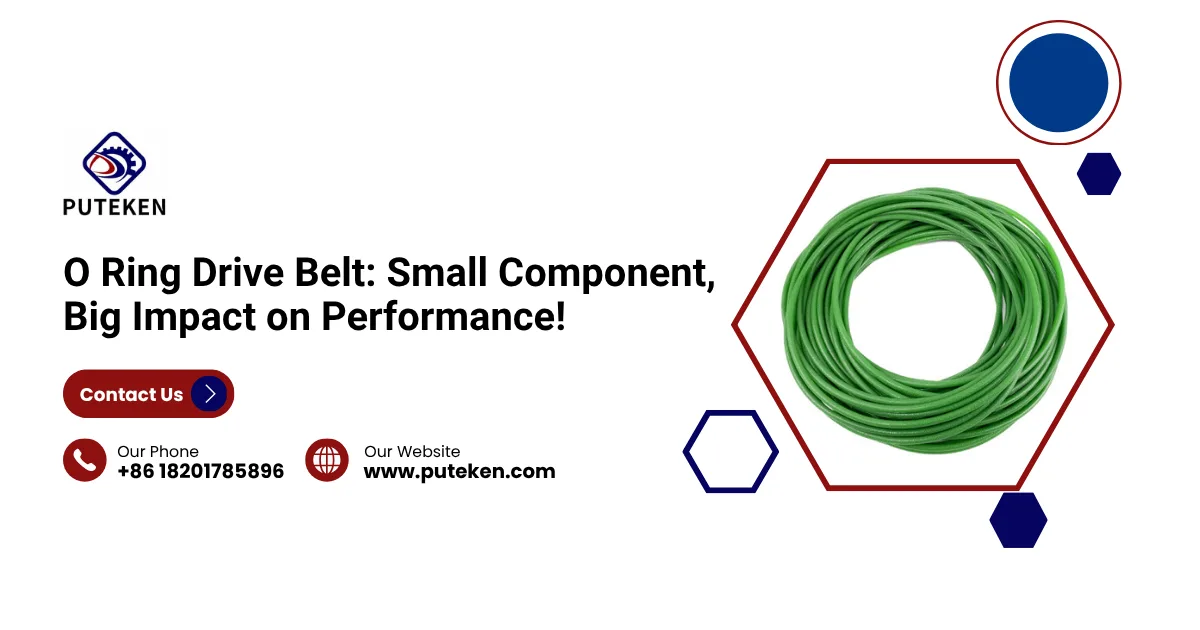
An O ring Drive Belt is a circular, elastomeric belt shaped like the letter ‘O’. It is engineered to transmit rotational power between components—often in situations where precision, quiet operation, and compact design are key. Commonly made from high-quality elastomers such as polyurethane or rubber, these belts offer unique flexibility and durability.
How Does an O Ring Drive Belt Work?
Its operation is based on friction. The O ring Drive Belt loops tightly over two or more pulleys, transferring movement from a driving shaft to a driven shaft. Because of its round profile, the contact area with pulleys is reduced compared to flat or V-belts—resulting in less drag, reduced wear, and lower heat generation. As a result, O ring belts are favored for:
- Low load/light-duty applications
- Delicate or precision-driven movements
- Quiet, vibration-free operation
- Space-constrained setups
Where Are O Ring Drive Belts Commonly Used?
You’ll encounter O ring Drive Belts in diverse industries:
- Consumer Electronics: Turntables, cassette decks, and CD drives
- Printing: Inkjet and label printers, paper feeders
- Packaging Machinery: Light conveyor systems, sorting lines
- Medical Devices: Laboratory mixers, diagnostic equipment
- Office Equipment: Copiers, scanners, and small moving assemblies
As you can see, their uses range from household gadgets to sophisticated industrial installations, confirming their status as a true “small component, big impact” product.
Advantages of O Ring Drive Belts
Why do so many engineers and maintenance teams specify O ring Drive Belts for their most sensitive and demanding applications? Let’s consider the key attributes that elevate these belts above the alternatives:
1. Flexibility and Versatility
The elastomeric composition allows O ring Drive Belts to stretch and conform to variations in pulley distances, offering a “slip fit” flexibility. This adaptability is invaluable in prototypes and custom machines, where design modifications might change drive distances or pulley configurations.
2. Low Noise and Vibration
Thanks to their round, seamless design and elasticity, O ring Drive Belts operate quietly, transmitting minimum vibration. This makes them ideal for consumer electronics and medical devices, where noise and tremor must be minimized.
3. Easy Installation and Replacement
Unlike toothed or endless flat belts, O ring Drive Belts can be installed easily without dismantling the drive system. Stretching them over pulleys requires no special tools—a boon for field service and rapid repair.
4. Wide Material Options
Manufacturers like Shanghai Puteken Transmission System Co., Ltd. offer O ring Drive Belts in a variety of elastomers (e.g., natural rubber, silicone, polyurethane, EPDM), allowing for precise selection based on chemical resistance, temperature ratings, or environmental factors.
5. Cost Effectiveness
With lower material and manufacturing costs compared to more complex belts, O ring belts provide budget-friendly solutions for light- to medium-duty tasks.
6. Customization
O ring belts can be ordered in virtually any diameter or cross-section, with options for color-coding, anti-static properties, or food-grade compliance. Custom joins or “welded” endless formats are available for special technical purposes.
The Impact of O Ring Drive Belts on Operational Performance
Let’s move from theory to practice. How exactly does an O ring Drive Belt enhance the performance of your systems? Here are some real-world impacts:
1. Uptime and Reliability
A single O ring Drive Belt failure can disable an entire device or assembly line. With robust materials and proper selection, you enjoy long service life and predictable change-out intervals—meaning less surprise downtime.
2. Protection for Sensitive Components
Their elasticity provides a buffering effect, reducing shock loads on gears, bearings, or motors. This not only extends the lifespan of these expensive parts, but also ensures more consistent precision in sensitive processes.
3. Enhanced Safety
Unlike rigid or metallic drive components, O ring Drive Belts pose minimal risk in failure. If a drive jams, the belt will slip or break harmlessly, offering inherent overload protection.
4. Efficiency in Automation
Where high-repeatability or low mass inertia is required—such as robotic arms, pick-and-place machines, or miniature conveyors—the light weight and low inertia of O ring Drive Belts reduce energy consumption and allow rapid reversals.
5. Clean Operation
Smooth, enclosed O ring Drive Belts do not shed fibers or produce significant dust, an important consideration in cleanrooms, food production, or electronics assembly.
Selecting the Right O Ring Drive Belt: The Shanghai Puteken Approach
Every application is unique. Selecting the optimal O ring Drive Belt means considering not just basic measurements, but also a variety of operational and environmental parameters. Here’s how to approach selection:
Key Selection Criteria
1.Diameter and Length:
Proper fitment is critical. Shanghai Puteken offers custom sizing in both standard “American” and metric sizes, as well as custom cross-section thicknesses.
2.Material Compatibility:
- Polyurethane: For chemical resistance and long wear
- Silicone: For high/low temperature resilience
- EPDM or Nitrile: For grease or oil resistance
3.Load and Speed:
Consider torque, pulley diameter, and speed—higher stresses may require reinforced or higher-durometer (hardness) versions.
4.Environment:
Abrasion, moisture, chemicals, temperature extremes all impact material choice.
5.Certification Needs:
For food, pharmaceutical, or cleanroom environments, demand belts certified for non-toxicity and hygiene.
The Shanghai Puteken Promise
At Shanghai Puteken Transmission System Co., Ltd., our engineering team assists every step of the way. Through consultation and custom manufacturing, we ensure your O ring Drive Belt delivers the performance, reliability, and value essential for your specific needs.
Maintenance Best Practices for O Ring Drive Belts
Getting the most out of your O ring Drive Belt depends on both correct selection and proper maintenance practices:
Regular Inspections:
Check belts for wear, nicks, surface damage, or loss of elasticity. Early intervention prevents unscheduled shutdowns.
Tension Adjustment:
Over-stretched or excessively tight belts can lead to reduced efficiency, premature failure, or pulley/bearing stress. Follow manufacturer guidelines for correct fitment.
Pulley Checks:
Inspect pulleys for chips, roughness, or misalignment. Worn pulleys can quickly destroy even a brand-new belt.
Cleaning:
For belts exposed to oils, grit, or sticky residues, use appropriate cleaners (never harsh solvents) and dry thoroughly.
Storage:
Store spare O ring belts flat, away from sunlight, ozone, or high temperatures, to prevent pre-installation aging.
Advancements and Trends in O Ring Drive Belt Technology
The O ring Drive Belt is not standing still! With new demands and materials, today’s belts outperform those of previous decades:
- Advanced Compounds: Development of anti-static, antimicrobial, and UV-resistant elastomers.
- Precision Manufacturing: Laser cutting and computer-controlled extrusion ensure size repeatability for the most demanding tasks.
- Welded Endless Belts: “On-site” heat welders allow for replacement without machine disassembly, improving uptime for large, complex conveyors.
- Color Coding and Identification: For process control and quick replacement in multi-belt, multi-machine settings.
Shanghai Puteken Transmission System Co., Ltd. remains at the forefront, introducing next-generation O ring Drive Belts for a changing industrial world.
A Small Component With Outsized Influence
As industrial systems become more automated, miniaturized, and sophisticated, the importance of every single component grows. The O ring Drive Belt—though simple in form—is crucial in countless devices and machines, quietly underpinning productivity, reliability, and efficiency around the globe.
Frequently Asked Questions (FAQ)
Q1: What exactly is an O ring Drive Belt, and how is it different from other belts?
An O ring Drive Belt is a round, continuous belt made commonly from elastomer (polyurethane, rubber, silicone). Its simplicity, flexibility, and ability to operate efficiently in small and light-duty applications distinguish it from flat, V, or toothed belts.
Q2: How do I know if my application is suitable for an O ring Drive Belt?
If your system requires low to moderate torque, compact design, quiet operation, and easy maintenance—such as in small appliances, medical devices, printers, or conveying small/light loads—then an O ring Drive Belt is often the ideal choice.
Q3: Can O ring Drive Belts handle high-speed or high-load applications?
Generally, O ring Drive Belts are best for light- to medium-duty tasks. For high-torque or high-speed operations, reinforced belts or alternative designs may be recommended.
Q4: What materials are O ring Drive Belts made from?
Materials include polyurethane (most common for industrial use), silicone, EPDM, natural rubber, and nitrile. The choice depends on required resistance to chemicals, temperature, abrasion, or environmental factors.
Q5: How long does an O ring Drive Belt typically last?
With correct selection and maintenance, an O ring Drive Belt can last months to several years, depending on load, speed, and environmental exposure.
Q6: How do I measure for a replacement O ring Drive Belt?
Measure the belt’s overall relaxed length and its cross-sectional diameter. Shanghai Puteken offers guides and support to ensure a perfect fit.
Q7: Can I install an O ring Drive Belt myself?
Absolutely. The stretch-fit design allows easy installation and removal without specialized tools. However, ensure pulleys are clean and undamaged when fitting a new belt.
Q8: Does Shanghai Puteken Transmission System Co., Ltd. offer custom O ring Drive Belts?
Yes! We provide custom lengths, materials, cross-sections, and even color-coded or certified belts for specialized environments.
Q9: Are O ring Drive Belts food safe?
Food-grade belts are available. Please specify your industry and compliance needs when inquiring.