
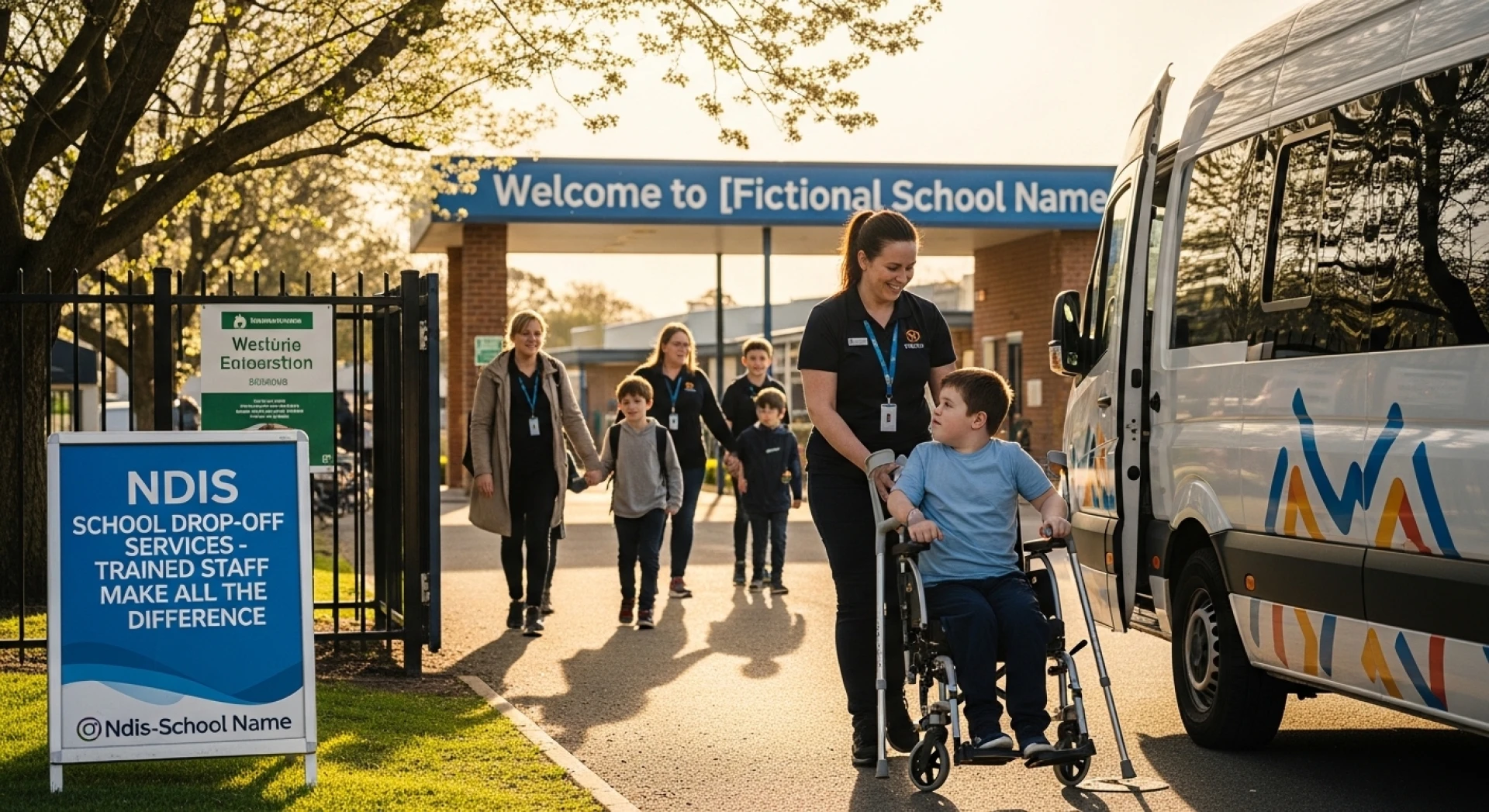
Every parent wants their child to arrive at school safely. For families of children with disabilities, this simple wish involves considerably more planning, trust, and careful decision-making than most people realize. The morning school run isn't just about getting from home to the classroom door. It's about ensuring a child who may have complex medical needs, behavioral support requirements, or significant anxiety arrives calmly, safely, and ready to learn.
This is why NDIS school drop off services have become such a vital support category for Australian families navigating the challenges of disability alongside the demands of daily life. When these services work well, they remove enormous stress from family mornings, support children's independence, and create reliable routines that benefit everyone involved. But quality varies widely, and understanding what separates exceptional services from merely adequate ones matters enormously for families making these important decisions.
Staff training stands at the absolute center of what makes drop off services genuinely trustworthy. Any driver can follow a route from a house to a school. But handling a medical emergency mid-journey, managing a child who becomes distressed in the vehicle, communicating effectively with a non-verbal student, or responding appropriately when a child's behavior escalates requires specialized knowledge that standard driving qualifications simply don't provide.
NDIS school drop off services that invest seriously in staff training demonstrate a fundamental understanding that they're not operating a generic transport service. They're providing specialized support for some of the most vulnerable students in Australia, and that responsibility demands professional preparation that goes far beyond basic competency. The difference between trained and untrained staff in these situations can genuinely be the difference between safety and serious harm.
In this article, we'll explore what comprehensive staff training looks like for school transport providers, why medical emergency preparedness is non-negotiable, how trained staff support different disability types during transport, what families should look for when evaluating providers, and how the right NDIS school transport service creates positive daily experiences for students.
The Real Stakes of School Transport for NDIS Students
Getting NDIS students to school safely isn't just a logistical exercise. For many children with disabilities, the transport journey itself can be a significant source of anxiety, sensory challenge, or medical risk. Understanding these stakes helps explain why staff training requirements for quality providers go so far beyond what standard transport services demand.
Some students experience seizures that can occur without warning during transport. Others have severe allergic reactions requiring immediate epinephrine administration. Some children have respiratory conditions that can deteriorate rapidly. Others have behavioral support needs that, when mishandled, can escalate into situations that put both the child and other vehicle occupants at risk. These aren't remote possibilities. They're real scenarios that trained staff in quality NDIS school drop off services prepare for and handle regularly.
Beyond acute medical or behavioral situations, the daily transport experience shapes students' readiness to learn. A child who arrives at school distressed from a difficult transport experience starts the school day at a significant disadvantage. A child who arrives calmly, having had a positive interaction with familiar, skilled transport staff, is ready to engage and learn. This daily difference accumulates over a school year into a meaningful impact on educational outcomes.
Medical Emergency Training: Preparing for the Unexpected
The cornerstone of quality staff training in drop off services is comprehensive medical emergency preparation. Staff must be ready to respond appropriately to medical events that can occur in moving vehicles, often without immediate access to medical facilities.
First aid certification is the baseline requirement, but quality providers go significantly further. Staff working with students who have specific medical conditions receive condition-specific training. For students with epilepsy, this means understanding different seizure types, knowing when to intervene and when to observe, managing safe positioning in vehicle seating, and knowing exactly when and how to call emergency services.
For students with severe allergies, training covers recognizing early signs of anaphylaxis, locating and administering epinephrine auto-injectors, positioning the student appropriately, and managing the situation while continuing to drive safely or pulling over appropriately. This training requires hands-on practice, not just theoretical knowledge.
Students with diabetes require staff who understand hypoglycemia and hyperglycemia warning signs, appropriate immediate responses, and communication protocols with families and school nurses. Students with complex respiratory needs require staff familiar with their specific management plans and equipment.
This medical training isn't a one-time event. Quality providers schedule regular refreshers, update staff when individual students' medical needs change, and conduct scenario-based training that keeps skills sharp and responses automatic rather than requiring conscious recall during stressful situations.
Communication Training: Connecting With Every Student
Medical emergency preparedness addresses the most acute situations, but daily communication quality determines the overall experience for NDIS students using school transport. Many students receiving these services have communication differences that require specific training to navigate effectively.
Students who use augmentative and alternative communication devices need transport staff who understand how to interact with these tools, can recognize when students are communicating through them, and respond in ways that validate and encourage communication efforts. Rushing students through boarding because AAC communication takes more time undermines both the relationship and the student's communication confidence.
Non-verbal students communicate through behavior, facial expressions, body language, and sometimes sounds. Staff trained in reading these communication methods can identify when a student is uncomfortable, anxious, happy, or experiencing discomfort even without verbal expression. This capacity to understand non-verbal communication prevents situations from escalating unnecessarily and helps staff respond proactively to student needs.
Students with autism often have specific communication preferences including preferred topics, sensory sensitivities to voice volume or tone, and needs for predictable communication routines. Trained staff learn each student's individual communication profile and adapt their approach accordingly, creating transport experiences that feel safe and predictable rather than unpredictable and stressful.
Behavioral Support During Transport
For students who have behavioral support needs, transport environments can be particularly challenging. Vehicles are small enclosed spaces with limited distraction options, changing sensory environments as traffic and road conditions shift, and the inherent unpredictability of journey timing. These factors can trigger behavioral responses that require skilled, trained handling.
Quality NDIS school drop off service staff receive training in positive behavior support principles that translate specifically to transport contexts. This includes understanding the function of different behaviors, implementing proactive strategies that prevent escalation, using de-escalation techniques when situations develop, and knowing when and how to involve families or support teams.
Critically, staff training emphasizes understanding that challenging behavior is communication. A student who becomes distressed during transport is telling staff something important about their experience. Trained staff work to understand what's being communicated and address the underlying need rather than simply managing surface behavior through approaches that might technically control immediate situations while damaging the relationship and increasing future distress.
Individual behavior support plans developed by NDIS behavior support practitioners should be understood and followed by transport staff. These plans contain specific strategies, triggers to avoid, and responses that have been identified as helpful for that particular student. Transport staff who understand and implement these plans provide consistency that benefits students enormously.
Building Consistent Relationships With Students
Consistency in staffing is one of the most valuable things quality school drop off services can offer. When students travel with the same driver and support workers daily, relationships develop that make transport experiences significantly better for everyone involved.
Familiar staff understand individual students' routines, preferences, and communication styles without requiring daily reminders. They notice when something seems different about a student's mood or presentation and can communicate these observations to families and school staff. They know which students need quiet journeys and which benefit from friendly conversation. They understand who needs the window seat, who prefers certain music, and whose routine includes specific verbal reassurances at predictable points in the journey.
These relationships also build student confidence and trust. For children with anxiety or those who've had difficult experiences with transport, developing trust with consistent, kind, and skilled transport staff transforms their relationship with the daily journey. What began as a stressful experience gradually becomes a comfortable routine.
Forever Corner Stone prioritizes staffing consistency in their NDIS school drop off services because they understand how profoundly this consistency impacts student experience and outcomes. Their approach to rostering ensures students see familiar faces rather than rotating strangers, building the trust that makes quality transport possible.
Vehicle Preparation and Safety Systems
Staff training is essential, but the vehicles in which NDIS students travel must also meet high standards. Quality school transport providers maintain vehicles specifically equipped for their student populations, with safety systems that complement trained staff responses.
First aid kits stocked with supplies relevant to the specific students traveling in each vehicle go beyond generic contents to include condition-specific items. A vehicle regularly transporting a student with severe allergies must carry appropriate epinephrine auto-injectors as backup to those the student carries. A vehicle used for students with seizure conditions should have appropriate positioning aids.
Communication systems allowing drivers to request emergency assistance without compromising vehicle control are essential. Modern systems enable hands-free emergency calls that allow staff to simultaneously drive to safety and communicate with emergency services.
GPS tracking provides families and providers with real-time journey information that adds an important safety layer. Knowing exactly where the vehicle is at all times means that if something unexpected happens, response can be coordinated quickly. Families appreciate this transparency, and it creates accountability that supports consistent service quality.
Coordination Between Transport Staff and Schools
Quality NDIS school drop off services don't operate in isolation. They function as part of a broader support network that includes families, schools, and other NDIS providers. Effective coordination between these parties significantly improves outcomes for students.
Transport staff who communicate with school reception about student arrivals and any notable observations during the journey provide valuable information that teachers can use to inform their approach that day. A student who was visibly anxious during transport might benefit from a gentle settling-in period rather than immediate engagement with demanding tasks.
Schools can reciprocate by communicating with transport providers about factors that might affect students' state during the return journey. A challenging day, an upsetting incident, or a particularly positive achievement all provide context that helps transport staff calibrate their approach appropriately.
Families sit at the center of this communication network. Regular communication between transport providers and families keeps everyone aligned about students' changing needs, helps identify patterns in difficulties, and ensures that information from healthcare providers or NDIS therapists reaches transport staff in timely ways.
Choosing the Right NDIS School Transport Provider
For families evaluating NDIS school drop off services, asking detailed questions about staff training reveals a great deal about provider quality and commitment. Providers who invest seriously in training welcome these questions and answer them specifically rather than offering vague reassurances.
Ask what specific medical training staff receive beyond basic first aid. Ask whether training is tailored to the specific medical needs of students they'll be transporting. Ask how often training is refreshed and updated. Ask about the qualifications of those who provide training.
Ask about behavioral support training, including whether staff have experience with positive behavior support approaches. Ask how they handle escalating situations in vehicles and what their de-escalation protocols involve.
Ask about communication training, especially regarding AAC devices and non-verbal communication if relevant to your child's needs. Ask whether staff have specific experience with your child's disability type.
Organizations like Forever Corner Stone approach these questions transparently because their investment in staff training is genuine rather than performative. Their school transport team receives comprehensive preparation that covers medical emergencies, behavioral support, communication differences, and the specific needs of individual students they serve.
The Parent Perspective What Peace of Mind Really Means?
For parents of NDIS students using school transport services, peace of mind isn't a luxury. It's a prerequisite for functioning effectively during the hours their child is traveling. Constant worry about transport safety consumes mental and emotional energy that parents need for everything else in their demanding lives.
Genuine peace of mind comes from specific knowledge rather than general reassurance. Knowing that the person transporting your child has completed specific training for your child's medical conditions, understands their communication methods, knows their behavioral support plan, and has practiced responding to emergencies involving children with similar needs creates confidence that vague promises of quality service never can.
Quality services earn parent trust through transparent communication, demonstrated competence, consistent staffing, and responsive communication when parents have questions or concerns. This trust, once established, transforms the morning school run from a source of anxiety into a smoothly functioning part of family daily life.
Conclusion
The quality of NDIS school drop off services ultimately comes down to the people providing them. Vehicles, routes, and scheduling systems all matter, but trained, compassionate, consistent staff are what make these services genuinely safe and beneficial for students with disabilities.
When providers invest seriously in comprehensive training that covers medical emergencies, communication differences, behavioral support, and relationship building, they deliver services that families can genuinely trust. Forever Corner Stone's commitment to rigorous staff training reflects their understanding that services carry enormous responsibility for some of Australia's most vulnerable students. Families deserve providers who take that responsibility as seriously as they do, ensuring every student arrives at school safely, calmly, and ready to make the most of their educational day.
Frequently Asked Questions
1. What are NDIS school drop off services and who can access them?
NDIS school drop off services provide specialized transport for students with disabilities traveling to and from school. They're available to NDIS participants whose plans include transport funding. These services go beyond standard school transport by providing trained staff who understand disability, medical needs, and behavioral support, ensuring students arrive safely and calmly ready to learn.
2. What medical training should NDIS school transport staff have?
NDIS school transport staff should hold current first aid certification plus condition-specific training relevant to the students they transport. This includes seizure management, anaphylaxis response, diabetes awareness, and other relevant medical protocols. Quality providers schedule regular training refreshers and update staff whenever individual students' medical needs change, ensuring responses are automatic rather than hesitant during emergencies.
3. How do trained staff handle behavioral challenges during school transport?
Trained staff use positive behavior support principles during transport, understanding that challenging behavior communicates underlying needs. They implement proactive strategies to prevent escalation, use practiced de-escalation techniques when situations develop, and follow each student's individual behavior support plan. This consistent, knowledgeable approach creates safe transport experiences rather than stressful ones.
4. How does Forever Corner Stone ensure safe NDIS school drop off services?
Forever Corner Stone invests in comprehensive staff training covering medical emergencies, communication differences, and behavioral support for NDIS students. They prioritize consistent staffing so students travel with familiar faces who understand their individual needs. Their transparent communication with families and schools ensures everyone stays informed and aligned about each student's transport experience.
5. How do I choose the right NDIS school drop off service provider?
Ask providers specific questions about medical training, behavioral support approaches, communication strategies, and staffing consistency. Quality providers answer these questions specifically rather than offering vague reassurances. Check their NDIS registration, ask about experience with your child's specific disability, request to meet staff before service begins, and look for providers who communicate openly with families throughout the service.