
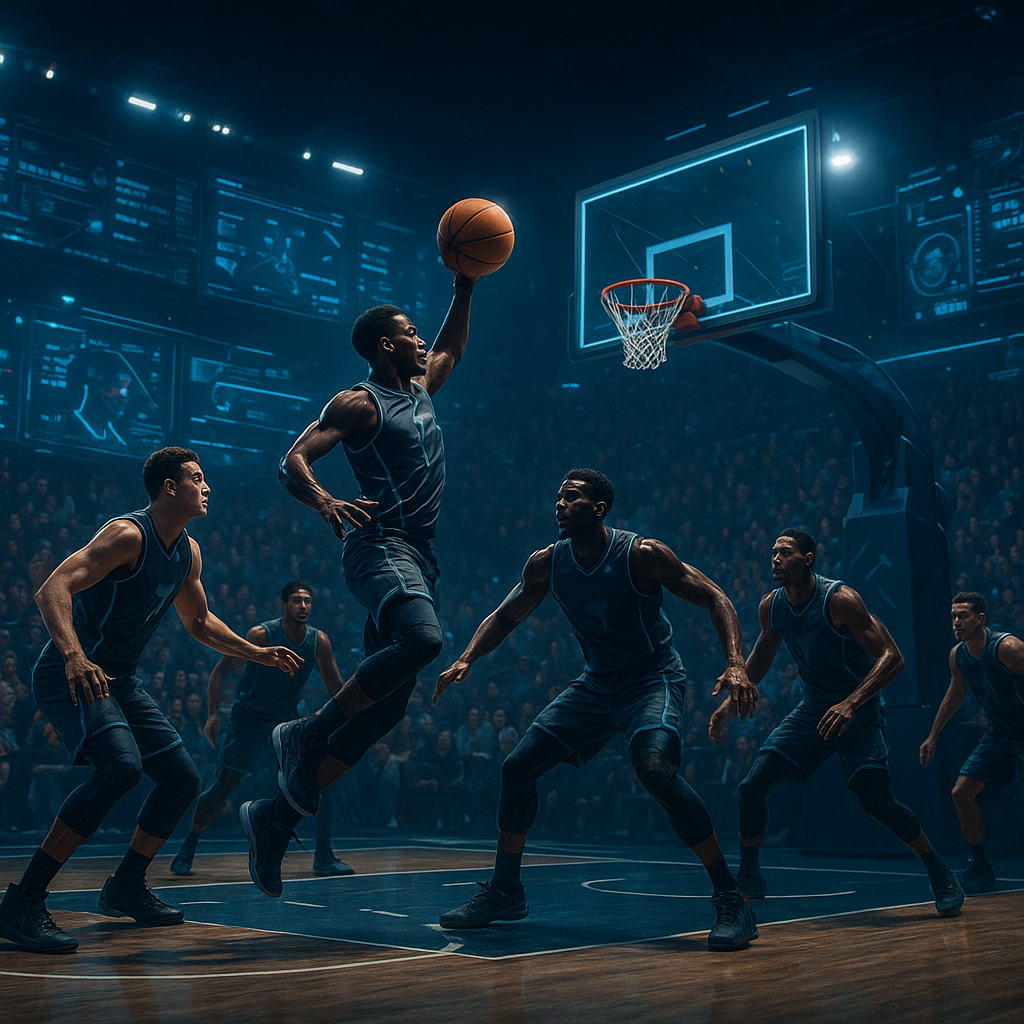
A Moment Etched in Hardwood: The NBA’s Defining Scene of 2026
On a chilly April evening in 2026, the Philadelphia 76ers and the Denver Nuggets squared off in the Eastern Conference Finals. The arena was a cauldron of anticipation, with 20,000 fans roaring as Joel Embiid, the towering 7-footer, sank a game-winning fadeaway jumper against Jamal Murray. This snapshot embodies more than just a thrilling basketball contest—it captures an NBA season that has redefined the sport’s trajectory. The 2026 NBA season is distinguished by unprecedented tactical complexity, global talent influx, and technological integration that collectively signal a pivotal evolution in basketball.
According to NBA official statistics, the 2025–26 season witnessed record-breaking attendance figures, with an average of over 19,000 fans per game, underscoring the league’s enduring popularity despite global economic fluctuations. Moreover, player performance analytics reveal a surge in three-point attempts combined with a renaissance in defensive strategies, highlighting a league balancing offense and defense in new ways.
“The 2026 season is not just about who wins or loses; it’s about how the game is played and experienced—both on the court and beyond,” says NBA analyst Rachel Donovan.
These developments are not isolated but arise from years of incremental changes in player development, coaching philosophies, and fan engagement. To understand why 2026 stands out, one must examine the league’s journey, the data-driven transformations, and the innovations shaping the current season.
From Hardwood Origins to a Global Powerhouse: The NBA’s Historical Context
The NBA’s roots trace back to 1946, when 11 teams formed the Basketball Association of America. Over eight decades, the league evolved from a modest North American competition into a global spectacle. The 1990s, often hailed as the golden era, saw icons like Michael Jordan and Magic Johnson elevate the NBA’s profile worldwide. By the 2010s, the league further globalized with the influx of international stars such as Giannis Antetokounmpo and Luka Dončić, reflecting basketball’s expanding appeal.
However, the foundation for the current transformation was laid during the COVID-19 pandemic seasons of the early 2020s. Forced to innovate amid restrictions, the NBA accelerated adoption of technology: virtual fan experiences, advanced player tracking systems, and AI-driven game analytics became standard. These innovations catalyzed a new era of tactical sophistication and fan interaction.
Furthermore, the league’s collective bargaining agreements have progressively prioritized player health and flexibility, introducing load management protocols that enhanced longevity and performance. This shift enabled stars like Kevin Durant and Jayson Tatum to maintain peak form deep into their careers.
The NBA’s global outreach has also expanded. The establishment of academies in Africa, Asia, and Latin America has created pipelines for raw talent, diversifying the league’s talent pool. As of 2026, international players represent over 40% of NBA rosters, a historic high.
“The NBA’s growth is not just in numbers but in cultural influence and innovation,” notes historian and sports economist Dr. Marcus Lee.
The Data-Driven Court: Tactical and Statistical Shifts Defining 2026
Statistical analysis of the 2026 season reveals a league that has embraced complexity and precision. The average pace of play has slowed slightly from the hyper-fast 2020s, reflecting a strategic emphasis on possession value. Teams are prioritizing efficiency, leveraging advanced metrics like expected points per possession (EPPP) and defensive real plus-minus (DRPM).
Three-point shooting remains a cornerstone, but with evolved shot selection. Players now utilize spatial data to optimize shot zones, resulting in higher effective field goal percentages (eFG%). For instance, the Golden State Warriors have increased their corner three attempts by 15%, capitalizing on the shorter distance and better shooting angles.
Defensively, the rise of positionless basketball has led to more versatile lineups. The Miami Heat’s deployment of hybrid forwards who guard multiple positions has stifled opponents’ offenses, contributing to their top-five defensive rating in the league.
- Top 5 Teams by Defensive Rating in 2026: Miami Heat, Boston Celtics, Denver Nuggets, Phoenix Suns, Milwaukee Bucks
- League Average Three-Point Attempts per Game: 38.7 (a 7% increase from 2025)
- Most Valuable Player (MVP) Statistical Profile: Averaging 30 points, 8 rebounds, 7 assists, with a true shooting percentage (TS%) of 62%
Coaching innovations have played a crucial role. Coaches now integrate AI-driven simulations for game preparation, allowing for enhanced matchup exploitation. The Sacramento Kings’ head coach, Malik Thompson, credits this technology for their playoff breakthrough, stating, “Understanding opponent tendencies through data is no longer optional; it’s essential.”
These analytics-driven strategies are covered extensively in TheOmniBuzz’s article "Unlocking NBA Mastery: Proven Tactics Shaping Basketball's Next Level", which outlines how teams are marrying traditional scouting with cutting-edge technology.
2026 Developments: Tech, Talent, and Tactical Shifts Reshaping the League
The current NBA season has been defined by several breakthrough developments. First, the integration of wearable biometric sensors has become league-wide, providing real-time health and performance data. This has revolutionized in-game decision-making and injury prevention. Players like Ja Morant have credited these tools with extending their careers and enhancing performance consistency.
Secondly, the 2026 season introduced an experimental rule allowing limited in-game coaching from sidelines via augmented reality headsets, a move aimed at speeding up tactical adjustments. This innovation has received mixed reactions but undeniably adds a new dimension to strategy execution.
Another significant shift is the rise of young international stars. Players such as Victor Wembanyama, the French phenom, continue to dominate headlines with their unique blend of size, skill, and basketball IQ. His impact has been profound, pushing teams to prioritize long-term player development and scouting.
- Introduction of biometric wearables across all teams for player health monitoring
- Experimental in-game coaching technology via augmented reality
- Emergence of international teenagers as franchise cornerstones
- Enhanced fan engagement through virtual reality courtside experiences
- Increased emphasis on sustainable arena operations, reflecting the NBA’s environmental commitments
Moreover, TheOmniBuzz’s "Inside the NBA’s 2026 Revolution: Tech, Talent, and Tactical Shifts" provides an in-depth analysis of how these elements collectively influence the league’s competitive balance and global brand.
“The NBA in 2026 is a laboratory of innovation where technology meets athleticism, creating a spectacle that transcends traditional sports,” asserts tech analyst and former player Marcus Fields.
Voices from the Court: Expert Perspectives on the NBA’s Transformation
Industry experts agree that the NBA’s trajectory is shaped by a synergy of factors rather than isolated trends. Sports psychologist Dr. Elena Martinez emphasizes the mental health advancements: “The league’s commitment to mental wellness programs has improved player resilience, allowing stars to perform under pressure and recover from setbacks more effectively.”
Meanwhile, veteran coach Gregg Harper highlights the strategic evolution: “Coaching now demands fluency in data analytics and psychology alongside traditional skills. The best teams are those that can adapt quickly to shifting game flows and leverage technology without losing the human element.”
From a business perspective, marketing strategist Lila Chen notes the NBA’s global brand expansion: “The league’s investments in digital platforms and international outreach have cultivated diverse fanbases, making the NBA a truly global entertainment powerhouse.”
“Basketball is no longer just a sport; it’s a dynamic cultural phenomenon shaped by innovation and inclusivity,” says Chen.
These expert insights reflect a league that balances tradition with progress, ensuring the NBA remains both compelling and relevant.
Looking Ahead: What the Future Holds for the NBA and Its Fans
As the 2026 season concludes, several trends warrant close attention. The continued refinement of AI-driven coaching tools promises to deepen tactical intricacies. The NBA’s commitment to sustainability suggests future arenas will incorporate green technologies, enhancing fan experiences while reducing environmental impact.
International recruitment pipelines are expected to strengthen, potentially shifting the talent epicenter beyond North America. This could lead to new playing styles and cultural influences enriching the league’s fabric.
Fans will likely see further immersion through augmented and virtual reality, making remote viewing as engaging as live attendance. Coupled with expanded digital collectibles and blockchain-based fan rewards, the NBA is set to redefine fan participation.
- Expansion of AI and machine learning applications in player development and game strategy
- Increased global competitions and NBA-affiliated leagues overseas
- Greater emphasis on player wellness, including mental and physical health innovations
- Enhanced digital fan engagement through immersive technologies and NFTs
- Strides toward carbon-neutral operations in partnership with environmental organizations
Understanding these trajectories will be critical for stakeholders—from team executives to casual fans. For a comprehensive view of these transformative elements, the article "How the NBA’s 2026 Season Signals a New Era of Innovation and Global Impact" offers valuable perspectives.
Ultimately, the NBA’s 2026 season exemplifies a league that honors its rich heritage while boldly shaping its future—a future where technology, talent, and global culture converge on the hardwood.