For a long time, businesses depended on traditional accounting setups such as in-house teams, manual entries, spreadsheets, and frequent follow-ups. While this approach worked earlier, today’s business environment demands faster insights, tighter compliance, and better cost control. Rising expenses, changing regulations, and the need for real-time financial clarity have pushed many companies to rethink how they manage accounts. This is where an outsource accounting service becomes a practical solution.
Instead of handling everything internally, businesses now rely on outsourced accounting professionals to manage bookkeeping, payroll, reporting, tax preparation, and related tasks. This approach removes the burden of maintaining a full-time team while offering reliable financial support that adapts as the business grows.
Many owners ask why they should outsource accounting service functions when they already have internal staff. The simple reason is that growth requires flexibility, expertise, and systems that traditional models often fail to provide. This blog explains why outsourcing accounting is becoming the preferred choice and how it helps businesses move beyond outdated accounting practices.
What Does an Outsource Accounting Service Mean for Your Business?
An outsource accounting service means partnering with an external accounting team that manages part or all of your financial operations. Instead of building and maintaining an internal department, businesses work with experienced professionals who already have the right tools, systems, and processes in place.
For your business, this means:
- No delays in hiring
- No ongoing training costs
- Reduced dependency on a single employee
- Access to skilled accountants
- Support that scales with business growth
Outsourced accounting services are flexible by design. Businesses can start with basic support and expand services as needs increase, without adding internal complexity.
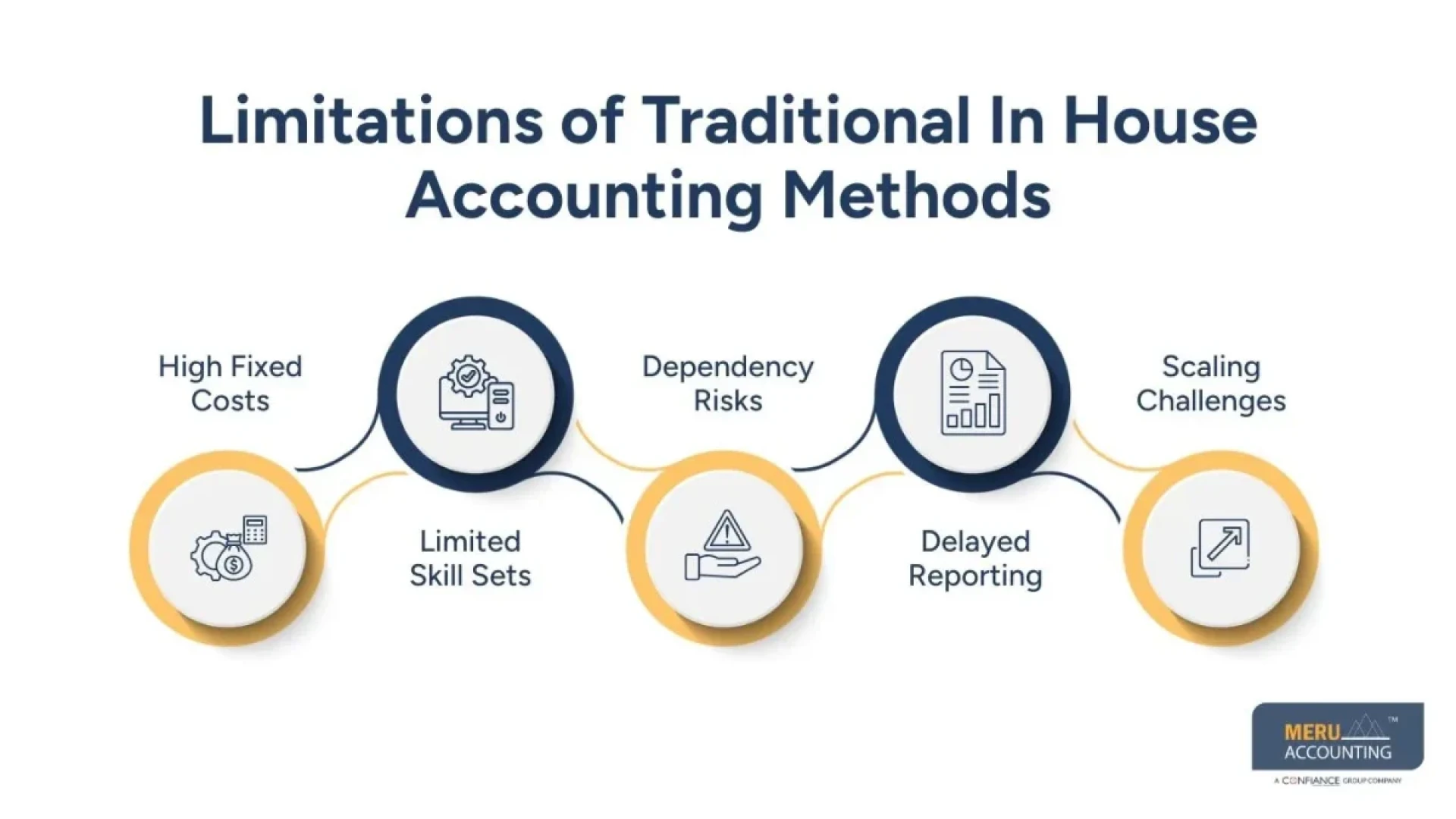
Limitations of Traditional In-House Accounting Methods
Traditional accounting structures were created for slower, less complex business environments. Today, they often create obstacles rather than efficiency.
High Fixed Costs
In-house accounting requires salaries, benefits, office space, software licenses, and training. These expenses remain fixed regardless of workload. An outsource accounting service offers cost flexibility by aligning expenses with actual business needs.
Limited Skill Coverage
A single accountant or small team cannot cover all areas such as taxation, compliance, reporting, and system upgrades. Outsourced accounting service providers bring collective expertise from working with multiple businesses and industries.
Dependency Risks
When a key employee leaves, knowledge gaps can disrupt operations. An outsource accounting service minimizes this risk through shared teams and documented processes.
Delayed Reporting
Manual workflows and overloaded staff often lead to late reports. Outsourced accounting service providers focus on timely and accurate reporting to support informed decision-making.
Scaling Difficulties
As businesses grow, accounting requirements increase. In-house teams struggle to scale quickly, while an outsource accounting service adjusts resources without delay.
Why Outsource Accounting Service Instead of Keeping Accounting In-House
Many businesses hesitate before outsourcing, but the advantages quickly become clear once implemented.
Cost Control
One of the main reasons to outsource accounting service tasks is predictable and controlled costs. Businesses pay only for required services without long-term overhead commitments.
Access to Expertise
An outsource accounting service provides access to professionals who stay current with regulations, tools, and best practices. Businesses benefit from shared knowledge rather than relying on one individual.
Focus on Core Activities
Accounting is essential, but it is not the primary focus for most businesses. Outsourcing allows leaders to concentrate on growth, customers, and operations.
Accuracy and Compliance
Outsourced accounting service providers follow structured checks and controls, reducing errors and compliance risks.
Flexibility and Scalability
Businesses can increase or reduce support based on workload, seasonal needs, or expansion plans.