
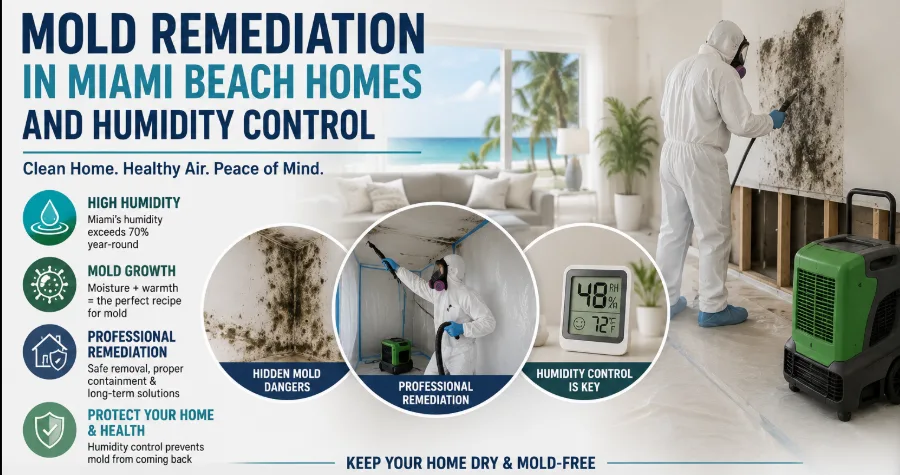
Living in Miami Beach is kind of a dream—coastal breezes, beautiful ocean views , and sun soaked days. But that pretty Atlantic back drop also comes with this quiet, always around roommate: brutal humidity. Since South Florida’s relative humidity sits at well over 70% for most of the year, indoor spaces are constantly battling moisture getting in. When warm, moisture loaded air collides with the cooler surfaces inside an air conditioned place, condensation shows up—then it turns into this absolute playground for fungal spores.
If you are dealing with a musty smell in your living room or noticing dark spots spreading across a drywall panel or ceiling, you are not alone. Addressing this challenge effectively requires professional mold remediation in miami, coupled with robust, everyday humidity control and specialized care like mold treatment for wood to protect your home's structural framing and valuable furniture.
This guide covers how mold gains a foothold in coastal homes, what professional remediation actually looks like, and how you can manage indoor moisture to protect your property and health.
Why Miami Beach Homes Are Prone to Mold
Mold spores exist everywhere in nature, completely harmless until they find moisture, warmth, and an organic food source. Unfortunately, a typical Miami Beach home provides all three in abundance if indoor climate controls aren't perfectly balanced.
Several factors make our coastal properties particularly vulnerable:
- The AC "Cold Wall" Effect: We love keeping our homes cool to escape the midday heat. However, when highly humid outdoor air slips through window seals, doors, or drywall, it hits those cool, AC-conditioned surfaces. This temperature drop causes moisture to drop out of the air as liquid water—a process called condensation.
- Microclimates in Wall Cavities: Exterior walls are constantly baked by the sun while the interior is chilled by HVAC systems. This temperature differential turns wall cavities into high-humidity breeding grounds, often hiding extensive mold growth out of sight.
- Elevated Salt and Moisture Levels: High ambient salt in coastal air can actually attract and hold moisture on exterior and semi-porous surfaces, speeding up the degradation of protective coatings and letting moisture seep inward.
The Core Process of Mold Remediation in Miami
If you find an active mold colony covering more than a small, easily cleanable patch (roughly a 3-by-3-foot area), DIY scrubbing simply won't cut it. In fact, tackling a large area without proper containment usually backfires by sending millions of invisible spores airborne, contaminating your entire HVAC system and other rooms.
For homeowners facing a persistent outbreak, hiring a licensed specialist for mold remediation in miami ensures the problem is solved safely and permanently.
How the Professional Process Works
Professional remediation follows strict protocols set by the Institute of Inspection, Cleaning and Restoration Certification (IICRC):

- Source Identification & Inspection: Technicians use moisture meters and infrared thermal imaging to trace the moisture path—whether it is a slow-leaking pipe behind the shower or simple humidity condensation on a cold duct.
- Containment: Using heavy-duty plastic sheeting and negative air pressure machines, professionals seal off the contaminated area. This ensures that when they disturb the mold, the spores are drawn into a filter rather than blowing into your master bedroom.
- HEPA Air Filtration: Industrial air scrubbers run continuously during the cleanup process, capturing microscopic spores, dust, and debris down to 0.3 microns.
- Controlled Demolition & Removal: Porous materials like drywall, carpet, and insulation that have absorbed mold must be carefully cut out, bagged, and discarded.
- Drying and Sanitization: Once the mold is physically removed, the remaining framing and hard surfaces are treated with professional-grade EPA-registered antimicrobials, scrubbed, and thoroughly dried with commercial dehumidifiers.
Protecting Organic Surfaces: Mold Treatment for Wood
One of the biggest challenges with South Florida properties is protecting wood. Whether it’s the pine studs inside your walls, subflooring, or even that beautiful teak dining set out of the sun, wood is incredibly porous and it contains cellulose, which is basically the ultimate food source for hungry mold.
When you’re dealing with mold on wooden surfaces, standard bleach should be avoided. The chemical structure in bleach, doesn’t really let it penetrate deep into porous wood fibers. It kind of stays on the surface, killing only the very top layer of mold, and then the water portion in the bleach ends up sinking in, actually feeding the roots, (mycelium) below.
Instead, an effective mold treatment for wood relies on deep-penetrating agents and mechanical removal:
- For Structural Wall Studs: If the framing behind your drywall has surface mold, professionals will vacuum the wood with HEPA-filtered vacuums to remove loose spores. They then apply specialized borate-based solutions or deep-penetrating fungicides that soak into the wood fibers, killing the root structure and leaving behind a protective residue that prevents future spore germination.
- For Hardwood Furniture & Fixtures: If you have solid wood furniture affected by mold, start by moving it outdoors (if possible) to prevent indoor cross-contamination. Vacuum it thoroughly with a HEPA vacuum, then wipe it down using a soft-bristle brush dipped in a solution of warm water and white vinegar or hydrogen peroxide. These natural acids penetrate deep enough to kill the mold without ruining the wood.
- Sanding & Sealing: For deeply embedded mold stains on unfinished wood, light sanding is often required. Once clean and entirely dry, applying a mold-resistant sealer or a protective polyurethane coating closes off the pores, keeping future moisture from sinking in.
Managing the Root Cause: Humidity Control in Coastal Florida
Removing the mold solves your immediate problem, but if your home’s relative humidity remains above 60%, the spores will return in a matter of weeks. True defense requires a proactive approach to managing your indoor climate.

1. Optimize Your HVAC System
Your air conditioner is actually your home’s primary dehumidifier. However, many homeowners make the mistake of buying an oversized AC unit. A system that is too large for your home will cool the space down incredibly quickly and shut off before it has completed a full cycle. Because it runs in short bursts, it never stays on long enough to pull water vapor out of the air, leaving your home cold but incredibly clammy.
- Set the Fan to "AUTO," Not "ON": Setting your thermostat’s fan to "ON" keeps the fan blowing constantly, even when the cooling cycle stops. This blows air over the wet condensation coils inside your AC unit, pushing all that evaporated moisture right back into your living space. Keep it on "AUTO."
- Invest in a Smart Thermostat: Many modern thermostats allow you to prioritize dehumidification, running the system on a lower fan speed to squeeze more moisture out of the air even if the temperature target has already been met.
2. Introduce Whole-Home Dehumidifiers
If your HVAC system struggles to keep indoor humidity under 50% during the hottest part of summer, a whole home dehumidifier can be a real game changer. These units sort of get integrated right into your existing ductwork, so they work with what you already have. They pull air in from your return vents, extract extra moisture, and then push that drier air back through your home. That helps stop mold from getting a foothold, and it also means you can set your thermostat a couple degrees higher while still feeling comfortable, which usually translates into lower utility costs.
3. Spot Ventilation
High-moisture activities like cooking and showering inject gallons of water vapor into your indoor air daily.
- Bathrooms: Run your exhaust fan during every shower and leave it running for at least 20 minutes afterward. Ensure these fans vent entirely to the outside of your home, not just into the attic or ceiling joists.
- Kitchen: Use your range hood whenever you are boiling water or cooking, and clean the grease filters regularly to maintain strong airflow.
Frequently Asked Questions
What is the ideal indoor humidity level to prevent mold in Miami Beach?
You should aim to keep your indoor relative humidity between 30% and 50%. Mold struggle to germinate and grow when relative humidity levels remain consistently below 50%. You can easily monitor this with an inexpensive digital hygrometer placed in your main living areas.
Can I use bleach to clean mold off my wooden kitchen cabinets?
It is not recommended. Bleach is highly chemical and mostly water-based. While the chlorine kills surface mold, the water penetrates the wood, creating a damp environment that can encourage the deep roots of the mold to return stronger. Use white vinegar, hydrogen peroxide, or a dedicated, professional-grade mold treatment for wood instead.
How do I know if my musty smell is actually hidden mold?
If you smell a persistent damp, earthy, or musty odor but can't see anything, you likely have hidden mold. In Miami Beach homes, this is frequently found inside AC ductwork, behind drywall on cold exterior walls, or under floorboards. A professional inspection with thermal imaging and air quality testing is the best way to locate the source without tearing down walls unnecessarily.
Why is mold spreading so fast in my vacation home while I am away?
A lot of seasonal folks turn off their AC units, or set the thermostat to 85°F, when they head out for summer. But once the AC stops doing its regular cycles, that muggy coastal air moves in fast and, basically, the whole place feels like a greenhouse. If you’re going to leave your home vacant, try setting the AC no higher than 78°F, leave the fan on "AUTO" , and think about putting in a dedicated dehumidifier with a direct drain line, so it can run steady without having to empty a bucket every so often.
Keeping Your Coastal Home Safe
Dealing with mold in Miami Beach is kind of an everyday side effect of enjoying our beautiful tropical climate. Still, it doesn’t have to mess with your property’s value, or your peace of mind. If you spot the visible problems early, and choose certified mold remediation in miami , then you can stop things from escalating. Also use the right mold treatment for wood on vulnerable areas, because that’s where it tends to hide quietly. Then keep your indoor humidity tightly, like really strictly controlled, and your home stays healthy, dry, and comfortable all year.
So, keep an eye on your indoor climate, handle any leaks as soon as they show up, and let your AC do most of the work it was meant for, day after day.