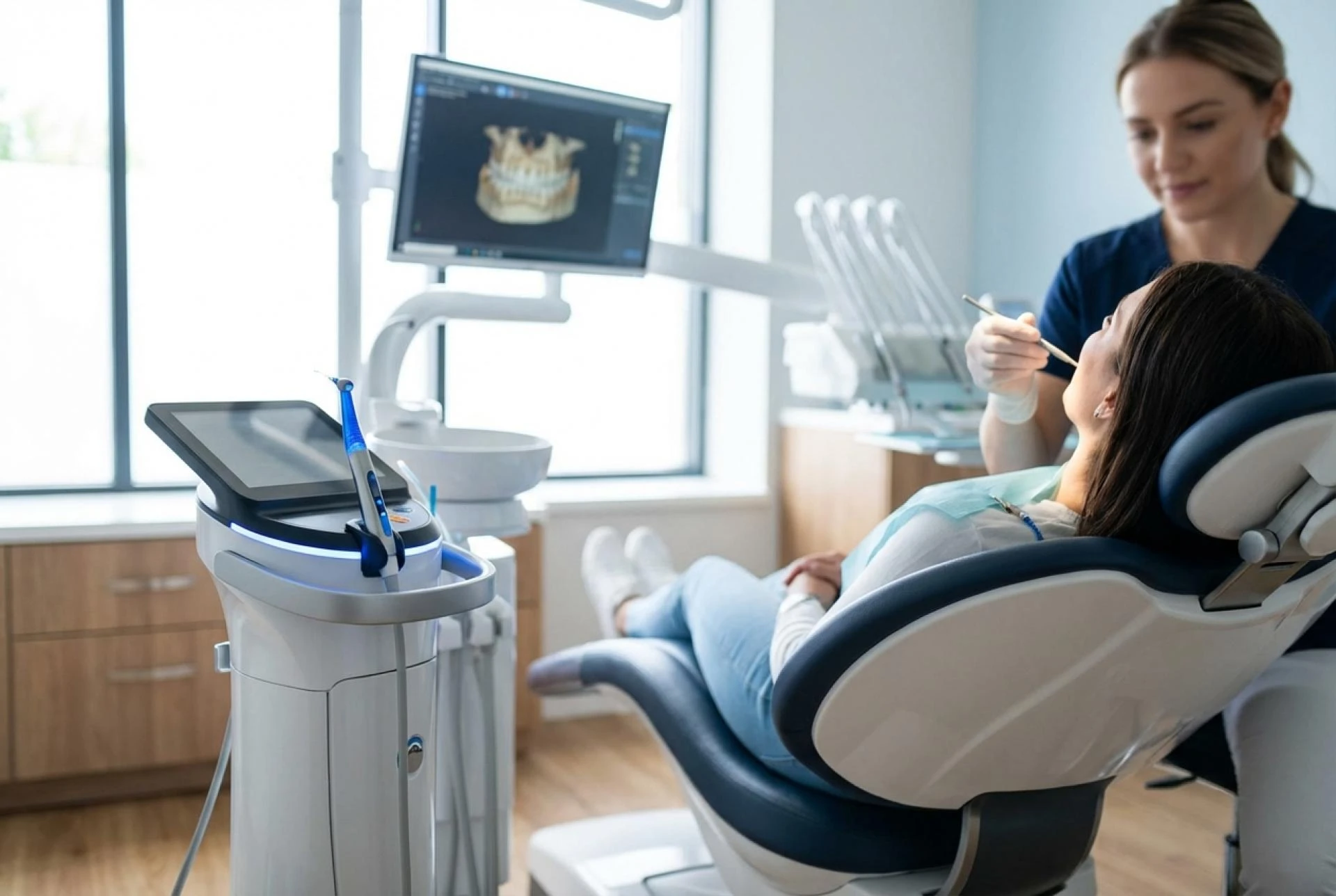
The sound of a dental drill is enough to make most people grip their armrests. That high-pitched whine, the vibration against your teeth, the pressure building in your jaw: it's an experience that has defined dentistry for generations. But here's something that might surprise you: millions of dental procedures now happen without that drill ever touching your mouth. Modern laser treatments for gentle dental procedures have quietly transformed what happens in the dentist's chair, offering an alternative that many patients describe as dramatically less stressful. These light-based tools can reshape gum tissue, prepare cavities, and treat infections with a precision that traditional instruments simply cannot match. For anyone who has ever postponed a dental appointment out of fear, understanding how these technologies work might change your relationship with oral care entirely.
The Evolution of Laser Technology in Modern Dentistry
Dental lasers first appeared in clinical settings during the 1990s, though the technology remained limited and expensive for years. Early adopters used them primarily for soft tissue work, treating gum problems and performing minor surgical procedures. The equipment was bulky, required extensive training, and cost practices hundreds of thousands of dollars.
Fast forward to today, and the landscape looks completely different. Laser systems have become more compact, more versatile, and significantly more affordable. Many general dentistry practices now incorporate laser technology as a standard tool rather than a specialty offering.
How Dental Lasers Work
Dental lasers operate by emitting concentrated beams of light energy at specific wavelengths. Different wavelengths interact with different types of tissue. Some lasers target water molecules within soft tissue, while others focus on the minerals in tooth enamel.
When the laser contacts tissue, it can cut, vaporize, or reshape the target area with remarkable accuracy. The beam essentially cauterizes as it works, sealing blood vessels and nerve endings simultaneously. This explains why many laser procedures cause less bleeding and reduced post-operative discomfort compared to traditional methods.
The Shift from Traditional Drills to Light Energy
Traditional dental drills work through mechanical friction. A rotating burr physically grinds away tooth structure or tissue. This approach generates heat, vibration, and that distinctive sound patients dread.
Laser energy operates on fundamentally different principles. There is no physical contact in the traditional sense, no vibration traveling through your jaw, and significantly less noise. The shift represents more than a technological upgrade: it changes the entire sensory experience of dental treatment, making many patients more comfortable when they visit Burwood Diamond Dental.
Common Gentle Laser Procedures for Teeth and Gums
The range of procedures suitable for laser treatment has expanded considerably. What started as a tool primarily for soft tissue work now addresses both gum and tooth concerns.
Soft Tissue Contouring and Gum Disease Treatment
Gum reshaping represents one of the most common laser applications. Patients with "gummy smiles" or uneven gum lines can have tissue precisely contoured in a single visit. The laser removes excess tissue while simultaneously sealing the wound, often eliminating the need for sutures.
Periodontal disease treatment has also benefited enormously. Lasers can:
- Remove infected tissue from deep gum pockets
- Kill bacteria below the gum line
- Stimulate healthy tissue regeneration
- Reduce pocket depth without traditional surgery
Many patients who previously faced invasive gum surgery now have laser-based alternatives that require less downtime and cause considerably less discomfort.
Hard Tissue Applications: Cavity Preparation and Fillings
Treating tooth decay with lasers seemed impossible for years because enamel is so hard. Newer laser systems have changed this limitation. Certain wavelengths can now effectively remove decayed tooth structure while leaving healthy enamel intact.
The precision here matters enormously. Traditional drills often remove some healthy tooth material along with decay because controlling the cutting area is difficult. Lasers can target decay more selectively, preserving more of your natural tooth structure. For smaller cavities, this approach often eliminates the need for anesthesia entirely.
Key Benefits of Choosing Laser Over Traditional Methods
Understanding why patients and dentists increasingly prefer laser treatments requires examining specific advantages in detail.
Reduced Anxiety and Minimal Need for Anesthesia
Dental anxiety affects roughly 36% of the population, with another 12% experiencing extreme fear. The drill is often the primary trigger. Removing that stimulus changes everything for anxious patients.
Many laser procedures require no anesthesia at all. Without the vibration and pressure of mechanical cutting, the sensation simply feels different. Patients frequently report feeling warmth and slight pressure rather than the discomfort associated with drilling. For those who fear needles as much as drills, avoiding anesthesia injections provides additional relief.
Precision Targeting and Preservation of Healthy Structure
Laser beams can be focused to incredibly small areas, sometimes fractions of a millimeter. This precision means dentists can work on damaged tissue while leaving healthy tissue immediately adjacent completely untouched.
Consider a small cavity between two teeth. A traditional approach might require removing some healthy enamel to access and treat the decay. A laser can often target only the compromised area. Over a lifetime of dental care, this conservation of healthy tooth structure adds up significantly.
Faster Healing Times and Lower Infection Risk
The cauterizing effect of laser energy creates a sterile wound site. Blood vessels seal immediately, reducing bleeding. Nerve endings are also sealed, which explains the reduced post-operative pain many patients experience.
Studies consistently show faster healing after laser procedures compared to traditional surgery. Reduced swelling, less bruising, and quicker return to normal eating are commonly reported benefits. The lower infection risk comes from the sterilizing effect of the laser itself, which kills bacteria on contact.
Enhancing Patient Comfort and Post-Operative Recovery
The comfort advantages extend beyond the procedure itself. Patients undergoing gentle laser dental procedures typically experience a notably different recovery.
Without the tissue trauma caused by mechanical cutting, inflammation stays minimal. Many patients return to work the same day after procedures that would traditionally require a day or two of recovery. Eating restrictions are often shorter, and the need for prescription pain medication decreases substantially.
Children especially benefit from laser dentistry. Treating cavities without the scary drill and often without needles makes the experience far less traumatic. Building positive associations with dental care early can influence oral health habits for life.
The psychological impact deserves mention too. Patients who have avoided dental care due to anxiety often find they can tolerate laser procedures comfortably. This opens the door to addressing long-neglected dental issues and establishing regular care routines.
Safety Standards and What to Expect During Your Visit
Dental lasers are FDA-cleared devices with established safety protocols. Dentists using lasers complete specialized training beyond standard dental education. The equipment itself includes multiple safety features preventing accidental activation or incorrect settings.
During your visit, you will wear protective eyewear designed for the specific laser wavelength being used. The dentist and staff wear similar protection. You might notice a slight odor during the procedure: this is normal and comes from the vaporization of tissue or tooth material.
The actual sensation varies by procedure. Soft tissue work often feels like mild warmth. Hard tissue procedures might produce a popping sensation as the laser interacts with tooth structure. Most patients describe both as significantly more comfortable than traditional alternatives.
Not every procedure is suitable for laser treatment. Your dentist will evaluate your specific situation and recommend the best approach. Sometimes traditional methods remain the better choice, and a good practitioner will be honest about those circumstances.
The Future of Minimally Invasive Dental Care
Laser technology continues advancing rapidly. Newer systems combine multiple wavelengths in single devices, expanding the range of treatable conditions. Artificial intelligence integration is beginning to appear, helping dentists optimize settings for individual patients.
Research into photobiomodulation shows lasers may eventually help regenerate damaged tooth structure rather than simply removing it. Early studies on stimulating dentin growth suggest possibilities that seemed like science fiction a decade ago.
For patients, the trajectory is clear: dental care is becoming gentler, more precise, and less invasive. The days when visiting the dentist meant enduring significant discomfort are fading. Modern laser treatments for gentle dental procedures represent just one part of this broader shift, but they exemplify the direction the field is heading.
If anxiety has kept you from the dentist, ask about laser options at your next visit. You might discover that the experience you have been dreading no longer exists the way you remember it.