Setting the Scene: Minnesota’s Job Market in 2026
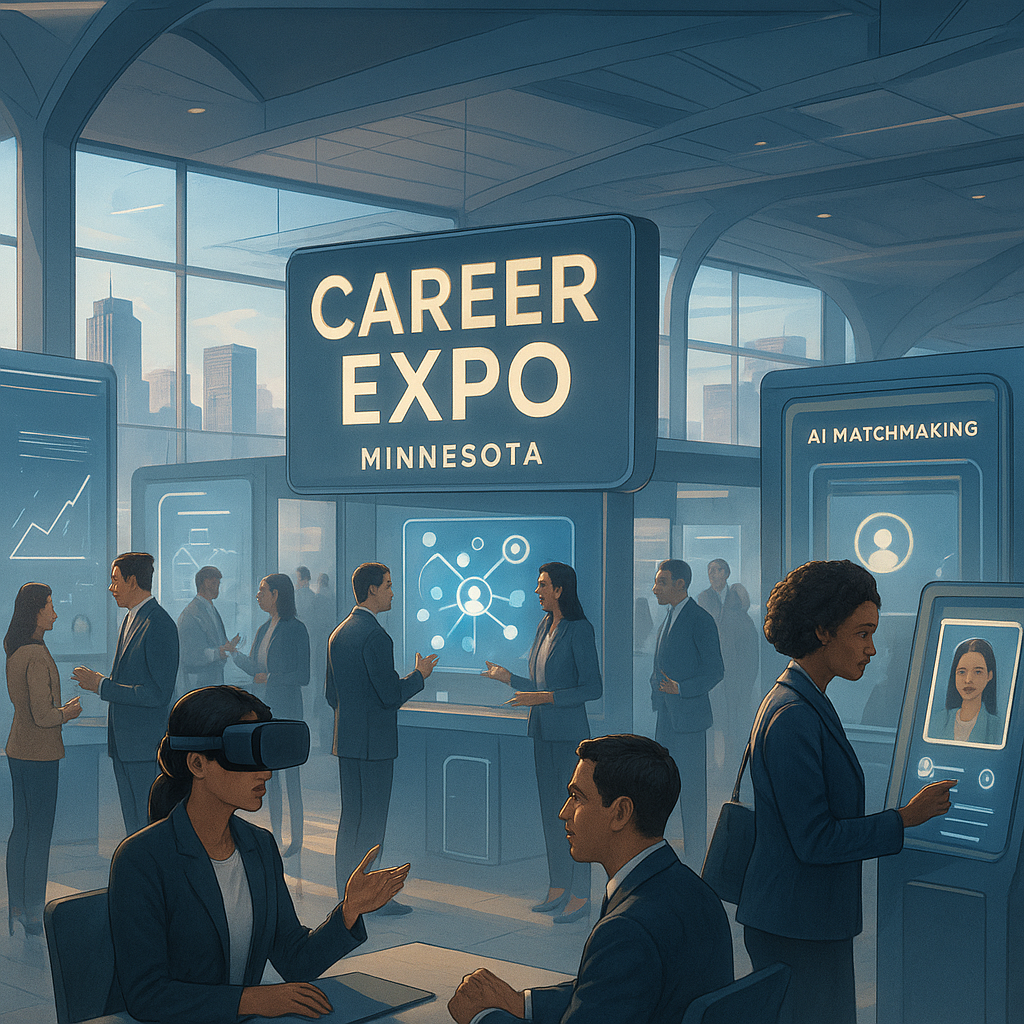
On a brisk spring morning in mid-April 2026, the Minneapolis Convention Center buzzed with palpable energy. Thousands of job seekers, from recent graduates to seasoned professionals, navigated the sprawling halls, each booth a gateway to opportunity. The Great Minnesota Career Expo, now in its fifth year, had become a beacon in a state grappling with an exceptionally competitive labor market. With unemployment rates hovering just above 3%, Minnesota’s workforce challenges are nuanced—not a lack of jobs but a mismatch between talent and employer demands.
According to the Minnesota Department of Employment and Economic Development (DEED), the state has seen a surge in demand for skilled workers in technology, healthcare, and advanced manufacturing sectors. Yet, employers report difficulty filling over 40,000 vacancies statewide, highlighting a fundamental gap in skills and connections. This annual career expo aims to bridge that divide, making talent acquisition and job placement faster and more effective than traditional hiring methods.
“The expo isn’t just about jobs—it’s about building relationships that last beyond the hiring event,” said Sophie Tran, DEED’s Director of Workforce Initiatives, emphasizing the event’s role in fostering meaningful career connections.
Historical Context: How Minnesota’s Hiring Challenges Evolved
To understand the significance of the 2026 expo, it helps to look back at Minnesota’s labor landscape over the past decade. The state’s economy, traditionally anchored by manufacturing and agriculture, has transformed dramatically with the rise of technology and health services. While this diversification has spurred growth, it has also created a dichotomy: high-demand, high-skill jobs on one side and a workforce still adapting to new requirements on the other.
Post-pandemic recovery efforts initially focused on re-employment of displaced workers. However, by 2024, employers increasingly struggled to find candidates with the technical expertise required for emerging roles. DEED and private sector partners responded by launching targeted training programs and expanding outreach efforts. The Great Minnesota Career Expo emerged from this ecosystem as a strategic intervention—a centralized space where employers, educators, and job seekers could converge.
Historically, Minnesota’s career fairs were largely localized and industry-specific. The shift to a large-scale, cross-sector expo reflects both the complexity of the modern job market and the need for scalable solutions. This transformation aligns with nationwide trends where traditional job fairs have been replaced by hybrid and tech-enabled hiring events, but Minnesota’s approach remains distinct for its emphasis on in-person networking and rapid hiring pipelines.
Data-Driven Insights: Measuring the Expo’s Impact in 2026
The Great Minnesota Career Expo’s success can be quantified through several key metrics demonstrating its role as a hiring accelerator. According to DEED’s latest report, the 2026 event facilitated over 8,500 first-round interviews and resulted in approximately 3,200 on-the-spot job offers. This represents a 25% increase in placement rates compared to the 2025 expo, underscoring its growing effectiveness.
Several factors contribute to these outcomes:
- Employer Diversity: Over 300 companies participated, spanning sectors like IT, healthcare, logistics, finance, and education.
- Applicant Reach: More than 20,000 attendees from across Minnesota and neighboring states, ranging from entry-level to executive candidates.
- Pre-Event Preparation: Workshops and resume clinics, offered both online and onsite, enhanced candidate readiness.
- Technology Integration: Advanced AI-powered matchmaking platforms connected job seekers with relevant employers before the event, optimizing time and engagement.
Comparative analysis shows that Minnesota’s expo outpaces similar regional events in Wisconsin and Iowa in terms of conversion rates. Industry experts attribute this to the event’s hybrid model, combining digital tools with robust in-person interactions.
“The expo’s data-driven approach, combined with its human touch, is what sets it apart in an otherwise crowded recruitment landscape,” commented Jake Morales, CEO of TalentLink Solutions, a recruitment analytics firm.
Current Trends Shaping the 2026 Expo Experience
Several 2026 developments have influenced how the Great Minnesota Career Expo operates and the opportunities it presents. First, the persistent rise of remote and hybrid work models reshapes employer demands. While many positions remain location-dependent, companies increasingly seek candidates who can adapt to flexible work environments. The expo now features dedicated zones for remote-friendly roles, complete with virtual interview pods and live streaming sessions.
Second, workforce diversity and equity have become central to hiring strategies. The expo actively promotes inclusivity, partnering with organizations representing underrepresented groups. This year’s event included specialized mentorship programs and panels on career advancement for women, BIPOC professionals, and veterans.
Third, the integration of AI and machine learning extends beyond matchmaking. Real-time analytics track applicant engagement and employer feedback, enabling organizers to fine-tune the event dynamically. Attendees report higher satisfaction levels, citing more meaningful interactions and reduced waiting times.
Finally, Minnesota’s educational institutions have deepened their involvement. Universities and technical colleges have set up interactive booths showcasing credential programs aligned with employer needs, facilitating direct pipelines from education to employment.
- Remote/hybrid job zones with on-demand virtual interviews
- Increased focus on diversity, equity, and inclusion initiatives
- AI-driven real-time event analytics enhancing experience
- Stronger university-employer partnerships for talent pipelines
Voices from the Field: Industry Experts Weigh In
To better gauge the expo’s significance, we spoke with several industry leaders. Mary Johnson, Chief Human Resources Officer at MedTech Innovations, highlighted the expo’s ability to compress hiring cycles. “We typically take months to fill specialized nursing and biomedical roles. The expo allowed us to identify and onboard qualified candidates within weeks, saving critical time and resources.”
Similarly, entrepreneur and tech recruiter Amir Patel praised the event’s hybrid format. “The blend of AI-driven candidate matching with face-to-face engagement addresses the core challenges of modern recruiting—speed without sacrificing quality.”
“What Minnesota has built is more than a job fair; it’s a community ecosystem that supports career growth and economic vitality,” noted Dr. Linda Chen, an economist at the University of Minnesota.
Employers also emphasize the expo’s role in talent retention. By fostering early connections and transparent communication, companies are seeing higher acceptance rates and reduced turnover. Candidates appreciate the opportunity to engage directly with hiring managers, gaining clearer insights into company culture and expectations.
Looking Ahead: What Minnesota’s Career Expo Means for the Future
As the labor market continues to tighten nationally, Minnesota’s Career Expo offers a replicable model for other regions aiming to accelerate hiring and deepen workforce connections. Organizers are already planning enhancements for the 2027 event, including expanded virtual reality interview rooms and AI-powered skills assessments integrated on-site to better evaluate candidate fit.
Key takeaways for job seekers and employers include:
- Proactive Preparation: Leveraging pre-event workshops and digital tools can dramatically improve hiring outcomes.
- Embracing Flexibility: Candidates who can demonstrate adaptability to hybrid work environments are more attractive hires.
- Networking Over Applications: Building genuine conversations during such expos yields better long-term career prospects than cold applications.
- Investing in Diversity: Inclusive hiring practices not only meet social imperatives but also enhance organizational performance.
The Great Minnesota Career Expo’s continued evolution will likely influence broader hiring practices and workforce development strategies across the Midwest. For more insights on how Minnesota is transforming hiring this year, see How Minnesota’s Career Expo Is Transforming Hiring in 2026’s Fierce Job Market and How Minnesota’s Career Expo Is Accelerating Hiring in a Cutthroat Job Market.
“The future of work depends on events like this—where technology meets human connection to unlock potential,” concluded Sophie Tran.