
Metal Matrix Composites (MMCs) are a class of advanced materials that combine the strength and thermal properties of metals with the lightness and flexibility of ceramics. MMCs are used in various applications where strength, lightweight, and high temperature resistance are crucial. These materials are transforming industries such as automotive, aerospace, electronics, and defense by improving performance and reducing energy consumption.
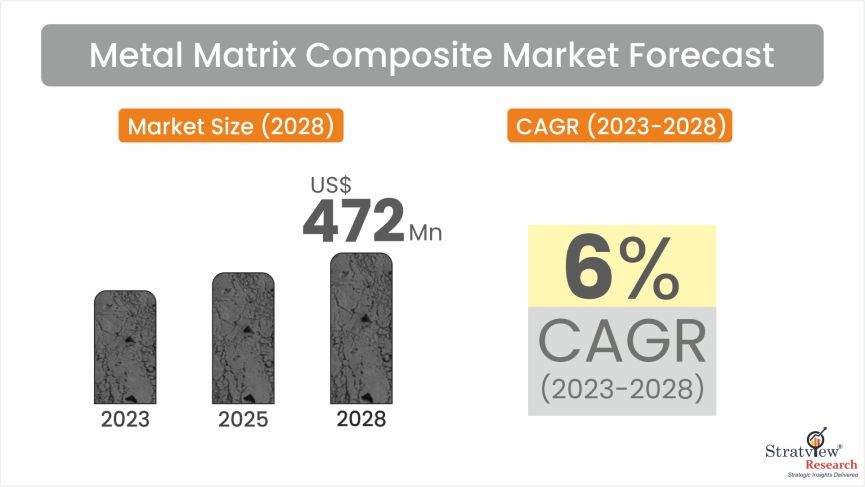
Stratview Research projects that the Metal Matrix Composite Market will grow at a CAGR of 6% from 2023 to 2028, reaching USD 472 million by 2028. This growth is driven by increasing demand for advanced materials in high-performance applications.
Download the sample report here, to uncover in-depth insights:
https://stratviewresearch.com/Request-Sample/798/metal-matrix-composite-market.html#form
What Are Metal Matrix Composites?
Metal Matrix Composites are materials that consist of a metal matrix, typically aluminum, magnesium, or titanium, reinforced with ceramic particles or fibers like silicon carbide (SiC) or boron. These composites combine the lightweight properties of ceramics with the thermal conductivity and strength of metals, making them ideal for applications in extreme environments.
Applications of Metal Matrix Composites
- Automotive Industry: MMCs are increasingly used in engine components, brake discs, and suspension systems in the automotive industry. Their ability to provide high strength-to-weight ratios and thermal resistance makes them ideal for improving fuel efficiency and performance in lightweight vehicles.
- Aerospace and Defense: In aerospace, MMCs are used in engine parts, structural components, and heat exchangers. The combination of lightweight and high temperature resistance makes MMCs suitable for applications in aircraft engines, spacecraft, and military vehicles where strength and thermal management are crucial.
- Electronics and Heat Management: MMCs are used in electronic devices such as heat sinks and thermal interface materials. Their thermal conductivity helps in dissipating heat from components, improving the performance and lifespan of electronic products.
Market Drivers for Metal Matrix Composites
- Demand for Lightweight, High-Strength Materials: The growing demand for lightweight, high-strength materials in industries like automotive and aerospace is a major driver of the MMC market. MMCs help reduce the overall weight of components without compromising strength, making them ideal for applications in electric vehicles (EVs) and fuel-efficient cars.
- Technological Advancements in Composite Materials: Innovations in reinforcement materials and matrix metals are improving the performance and cost-effectiveness of MMCs. Advances in manufacturing technologies are also increasing the scalability and versatility of MMCs for diverse applications.
- Increasing Focus on Sustainability: As industries focus on reducing their carbon footprints, the adoption of lightweight materials like MMCs is rising. MMCs are helping reduce the energy consumption of vehicles and aircraft, contributing to eco-friendly manufacturing processes.
Challenges in the Metal Matrix Composite Market
- High Manufacturing Costs: The production of MMCs requires advanced manufacturing techniques, such as casting, powder metallurgy, and casting processes, which can be costly. The high material and production costs limit the widespread adoption of MMCs, particularly in price-sensitive markets.
- Complex Manufacturing Process: The complexity of integrating ceramic fibers or particles with metals requires precise control over the manufacturing process, which can increase lead times and complicate large-scale production.
Conclusion
The Metal Matrix Composite Market is poised for growth, driven by demand for high-performance materials in sectors like automotive, aerospace, and electronics. As manufacturing techniques improve and costs decrease, MMCs will continue to play a significant role in advanced material solutions across multiple industries.