
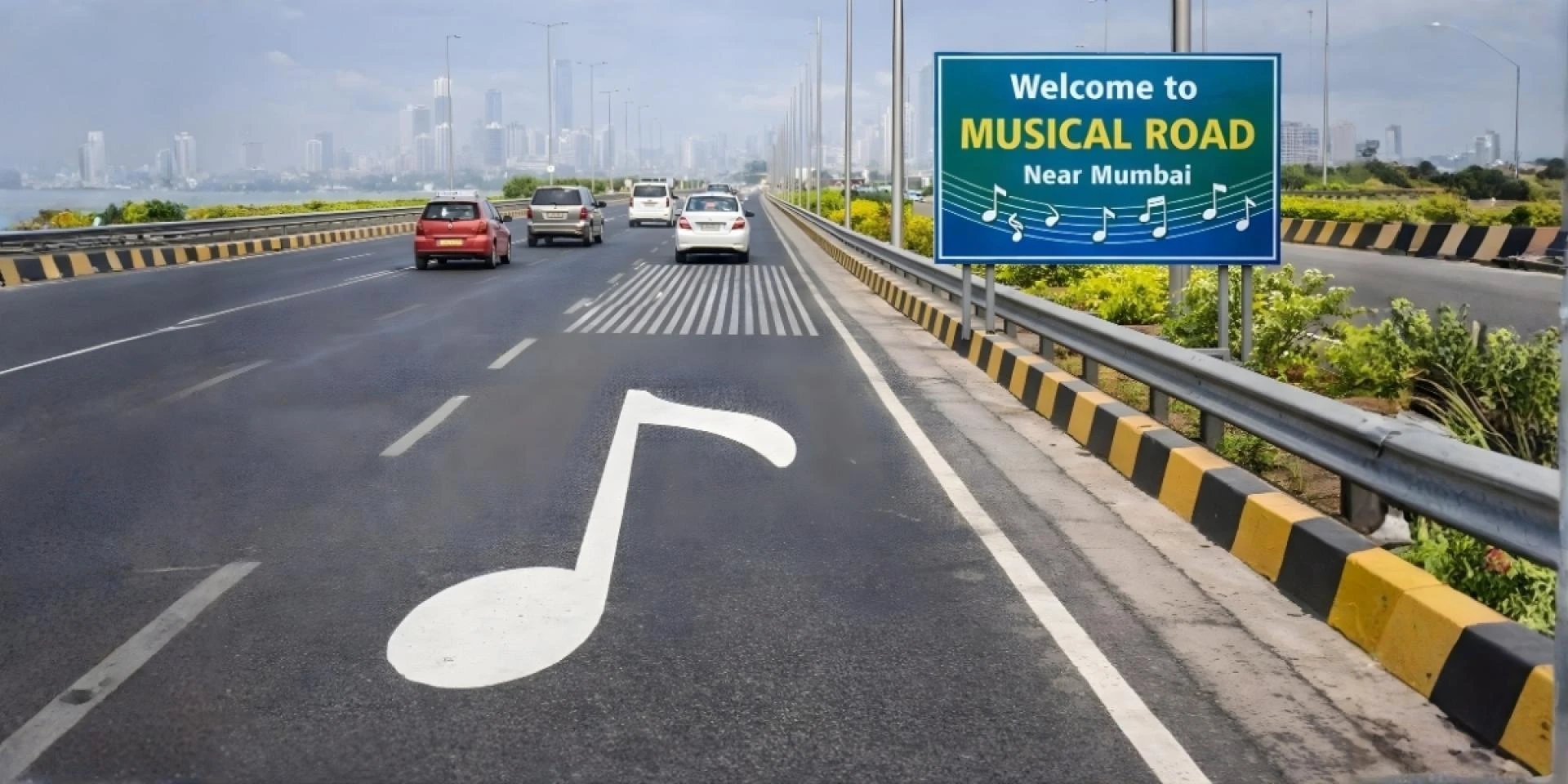
Musical roads in India, often referred to as melody roads, are a fascinating blend of technology, creativity, and road safety. These roads are designed in such a way that vehicles produce music while driving at a specific speed. What sounds like a fun experiment is actually a smart traffic management idea aimed at encouraging disciplined driving and reducing accidents. Over the last few years, musical roads have gained attention across the country, especially after successful pilot projects supported by road authorities.
Understanding the Concept of Musical Roads
A musical road works on a simple but precise engineering principle. Small grooves are cut into the road surface at calculated intervals. When a vehicle passes over these grooves at the recommended speed, the vibrations from the tires create sound waves. These sound waves combine to form a melody that drivers can hear clearly inside their vehicles. If the speed changes, the rhythm breaks, and the tune sounds distorted. This naturally motivates drivers to maintain the correct speed without external enforcement.
Why Melody Roads Matter in India
India faces serious road safety challenges due to overspeeding, driver fatigue, and lack of attention during long drives. Melody roads address these issues in a subtle and engaging way. Instead of warning signs or speed cameras, they use music as a behavioral tool. The sound instantly grabs the driver’s attention, reduces monotony, and helps maintain focus, especially on long and straight road stretches.
Mumbai Musical Road: The Iconic Jai Ho Road
The Mumbai musical road, widely known as the Jai Ho Road, was India’s first well-known melody road project. This road gained popularity for playing a patriotic tune inspired by A.R. Rahman’s “Jai Ho” when vehicles moved at an optimal speed. Videos of the road quickly spread online, making it a talking point across the country.
More than just viral fame, the Jai Ho Road proved an important concept: drivers were willingly adjusting their speed just to hear the melody properly. This behavioral change highlighted how musical roads can influence driving habits more effectively than traditional methods.
Nagpur Musical Road Project and NHAI Initiatives
Building on the success of Mumbai, the Nagpur musical road project was introduced as part of broader infrastructure innovation plans. The National Highways Authority of India (NHAI) explored the idea of incorporating musical roads into selected national highway stretches. Under the NHAI musical road project, Nagpur was identified as a strategic location due to its connectivity and traffic patterns.
NHAI’s involvement shows that musical roads are not limited to city experiments. They are being considered as a practical solution for national highways where speed regulation and driver alertness are critical.
Benefits of Musical Roads in India
One of the biggest advantages of musical roads is improved speed control. Drivers instinctively try to maintain the correct speed to enjoy the tune. These roads also help reduce driver fatigue, which is a common cause of accidents on highways. The interactive nature of melody roads keeps drivers mentally engaged.
Musical roads also add cultural and tourism value. A unique road that “plays music” becomes a point of interest, encouraging responsible driving while creating a memorable travel experience. Additionally, they promote positive discussions around innovative infrastructure and road safety awareness.
Challenges and Practical Limitations
Despite their appeal, musical roads are not suitable everywhere. They work best on smooth, straight stretches with consistent traffic flow. In crowded urban areas or roads with frequent stops, the musical effect is often lost. Heavy vehicles and weather conditions can also wear down the grooves over time, increasing maintenance requirements.
Cost is another factor. While musical roads are not extremely expensive, careful planning and precision are required during construction. Authorities must evaluate whether the safety benefits justify implementation on specific road sections.
The Future of Musical Roads in India
As India moves toward smart infrastructure and intelligent transport systems, musical roads could become part of a larger safety strategy. With better materials, improved design, and selective implementation, melody roads may soon appear on expressways, tourist routes, and accident-prone stretches.
Musical roads in India reflect a shift in thinking-from controlling drivers through strict enforcement to guiding behavior through innovation. From the Jai Ho Road in Mumbai to upcoming projects like the Nagpur musical road, these initiatives show how sound, science, and safety can come together to transform the way we experience highways.