Local governments together with private landowners and environmental organizations continuously face the challenge of lake aquatic vegetation management. The discussion around lake vegetation control focuses on two dominant approaches which are chemical treatment and mechanical harvesting. The control of overgrowth and lake usability represents a common objective for both methods yet they show major differences regarding their impacts and sustainability levels and long-term efficiency.
Mechanical harvesting stands ahead of chemical treatment as the preferred solution because of its advantages in both environmental impact and operational effectiveness. The modern innovations developed by Weedoo Boats have transformed aquatic vegetation management through safe efficient and environmentally responsible mechanical weed harvesters & workboats.
Understanding the Problem: Why Aquatic Vegetation Must Be Managed
Natural aquatic plants maintain their importance within a balanced lake ecosystem. The rapid expansion of invasive plant species hydrilla Eurasian watermilfoil and water hyacinth creates dense growth that restricts water paths while harming native ecosystems and depletes oxygen levels and hampers recreational activities.
The uncontrolled growth results in water quality deterioration and increased mosquito populations while leading to organic sludge accumulation.
Chemical Treatment: The Traditional Approach with Hidden Costs
Herbicides have been traditionally used as immediate solutions for invasive weed infestations. The treatment process involves applying herbicides either by spraying or injection to the infested areas for plant destruction. Several negative aspects exist with this approach despite its short-term success:
· Environmental Risks: Herbicides have a harmful effect on species which do not target their intended purpose including fish together with amphibians and native plant life.
· Oxygen Depletion: The decay of chemically treated plants leads to oxygen consumption that results in fish deaths and creates hypoxic areas.
· Temporary Relief: Weed regrowth occurs within a short period following treatment so multiple applications become necessary thus increasing both operational costs and environmental harm.
· Permitting and Regulation: The usage of chemicals for treatment needs official government authorization but faces restrictions when located near drinking water supplies and protected ecological areas.
The application of chemical treatment creates a temporary delay of problems but results in long-term damage to environmental systems.
Mechanical Harvesting: A Sustainable, Long-Term Solution
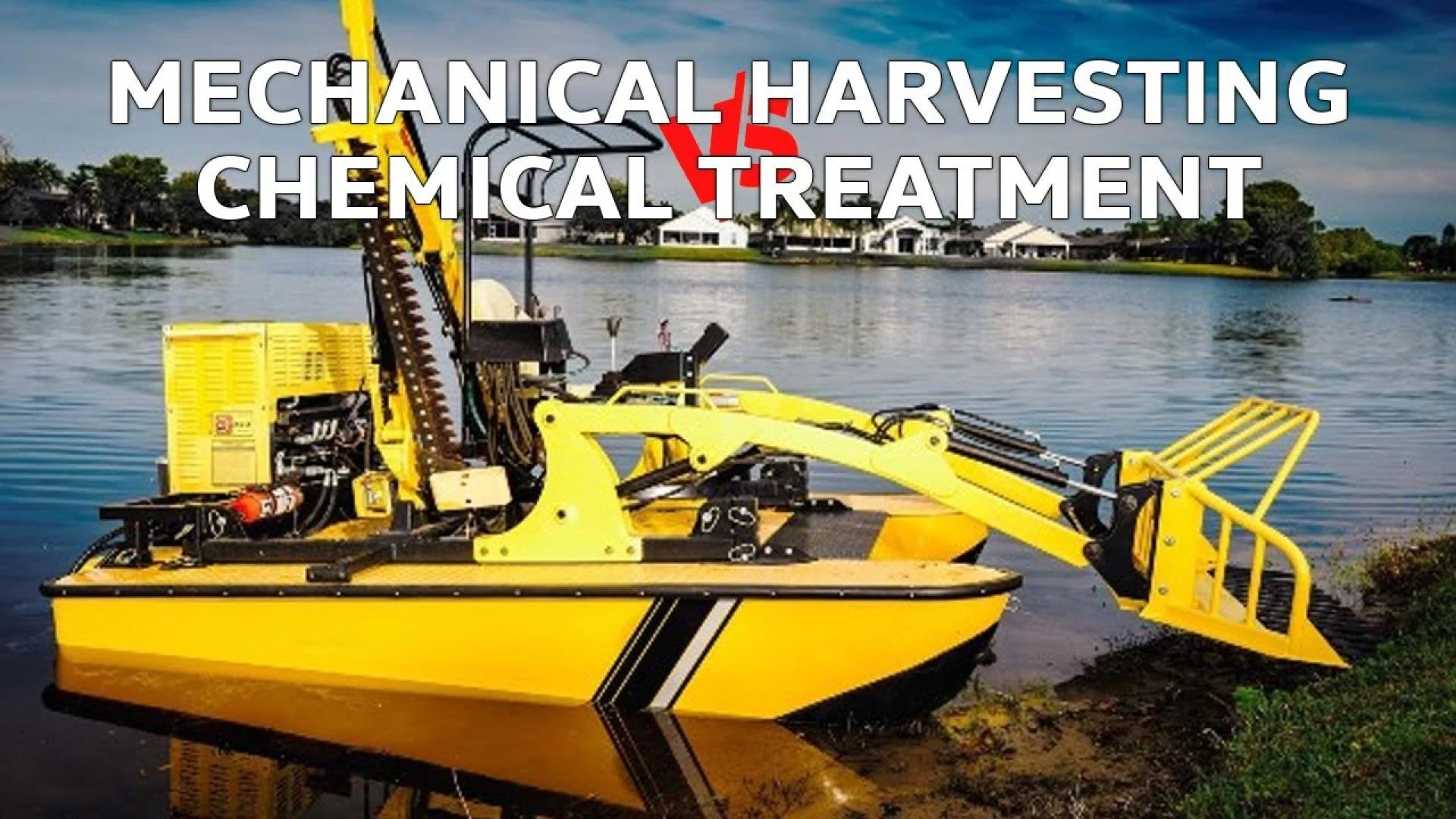
The method of mechanical harvesting employs specialized equipment to cut aquatic plants before extracting them from water. Weedoo provides a selection of weed harvesters and workboats that operate with high efficiency and feature operator-friendly design for lake and pond and marina maintenance.
Mechanical harvesting resolves the root of the problem because it cuts away the invasive vegetation physically.
Key Benefits of Mechanical Harvesting:
• Eco-Friendly: No harmful chemicals. Safe for humans, fish, and native vegetation.
• Prevents Oxygen Depletion: Removes biomass before decay sets in.
• Restores Water Flow: Clears dense growth that blocks water circulation.
• Supports Biodiversity: Targets invasive species while preserving beneficial plants.
• Immediate Results: Harvesters physically remove weeds from the water, providing visible, tangible improvements.
The product line from Weedoo includes amphibious workboats, and shoreline conveyors and trash skimmers which operate effectively in all challenging water environments including shallow depths and restricted areas and sensitive ecological zones. These machines ensure dependable outcomes during regular upkeep operations and seasonal removal tasks without damaging natural ecosystems.
Cost Efficiency and Public Perception
Investing in a Weedoo Workboat may come with a higher initial price tag, but it’s a capital investment that pays for itself over time—by eliminating the need for costly, recurring herbicide applications year after year.
The general public now shows greater opposition to chemical-based solutions. The majority of lake communities together with recreational users and environmental groups choose non-toxic aquatic weed control methods particularly when drinking water sources or wildlife habitats are involved.
The Verdict: Mechanical Wins, With Weedoo Leading the Way
The practice of mechanical weed removal provides a safer alternative which also delivers smarter solutions and sustainable management for maintaining healthy lakes.
Weedoo Boats takes a leadership position in this emerging trend through their innovative weed harvesters & workboats which enable lake managers and contractors and municipalities to handle aquatic vegetation effectively and naturally.