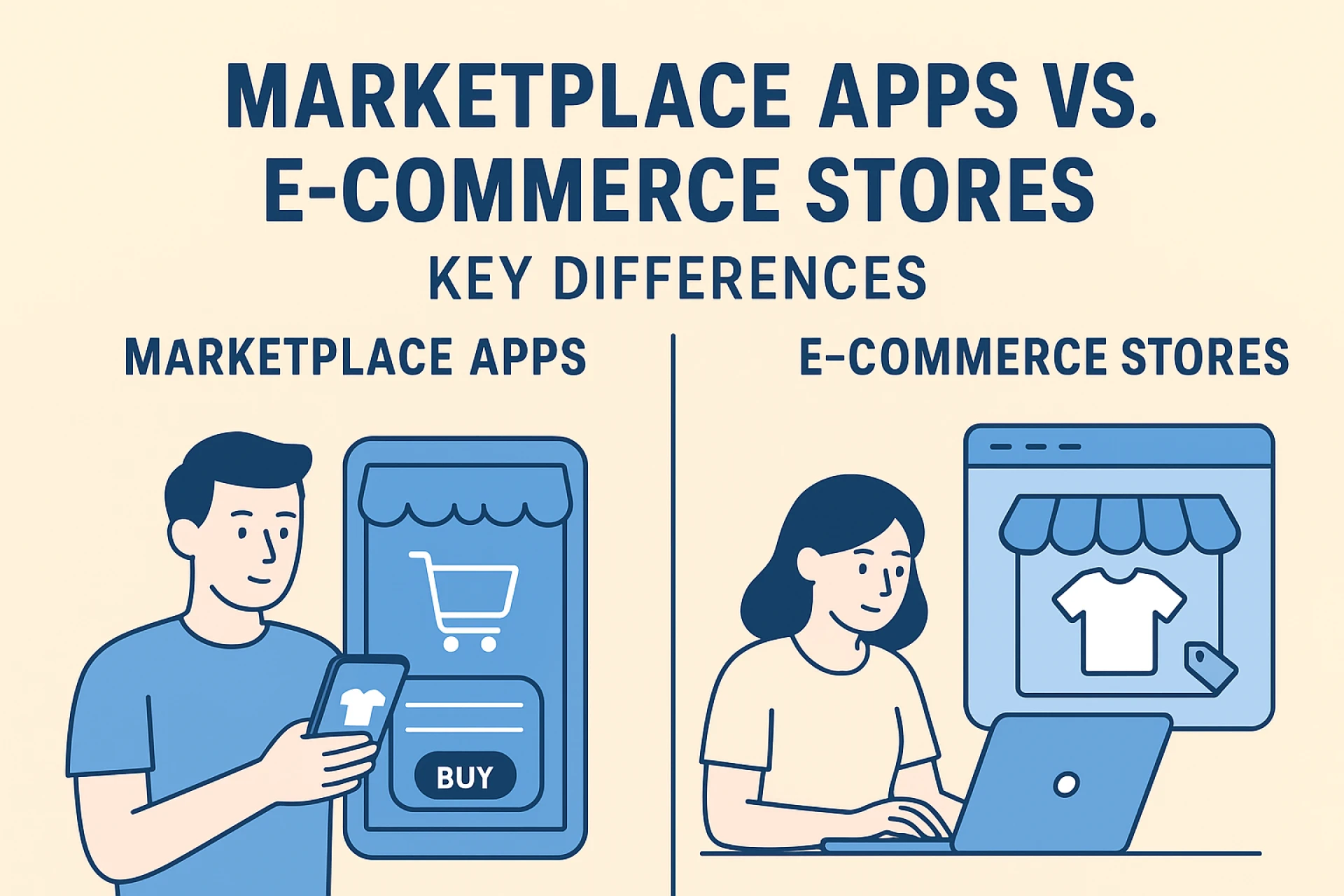
The digital economy has dramatically changed the way people shop, sell, and run businesses. With smartphones in every hand, two powerful platforms dominate the online retail space: marketplace apps and e-commerce stores. Although they may look similar on the surface—both enable buyers to browse products and complete transactions—they operate very differently. Understanding these differences is crucial for entrepreneurs, startups, and enterprises aiming to launch their own online retail solutions.
In fact, many businesses today are exploring e-commerce app development to create platforms tailored to their customers’ needs. Whether it’s a standalone store app or a multi-vendor marketplace, the development approach can influence user experience, scalability, and business growth.
What Is an E-commerce Store?
An e-commerce store is a digital version of a traditional retail shop. It usually represents a single brand or seller offering products directly to customers. Think of it as a virtual shopfront where the company owns the inventory, controls pricing, and manages the customer experience from end to end. Examples include brands like Nike or Zara that have their own dedicated online store apps.
Key Traits of E-commerce Stores:
Single Seller Model: All products come from one business.
Controlled Experience: The brand manages pricing, promotions, and policies.
Direct Relationship with Customers: Businesses own the customer data and can build loyalty.
Inventory Ownership: Companies often stock, ship, and handle returns themselves.
For businesses with a strong product line, an e-commerce store offers complete control and consistent branding.
What Is a Marketplace App?
A marketplace app connects multiple buyers and sellers under one platform. The app owner doesn’t usually own the products but acts as a facilitator. Instead, independent vendors list their products or services, and customers can choose from various sellers. Popular examples include Amazon, Etsy, and Uber Eats.
Key Traits of Marketplace Apps:
Multi-Seller Model: Different vendors can sell through one app.
Revenue through Commissions: The platform usually charges sellers a fee per transaction.
Greater Variety for Shoppers: Customers get access to multiple brands in one place.
Vendor Autonomy: Sellers handle inventory, pricing, and logistics (in most cases).
For startups, marketplaces provide scalability and faster expansion since the platform doesn’t require managing its own inventory.
Marketplace Apps vs. E-commerce Stores: The Key Differences
Let’s break down the most important distinctions between these two platforms:
1. Business Model
E-commerce Store: Relies on direct product sales. Profit comes from markup on goods.
Marketplace App: Generates revenue from commissions, subscriptions, or listing fees charged to vendors.
2. Inventory & Logistics
E-commerce Store: The business must manage inventory, warehousing, shipping, and returns.
Marketplace App: Inventory is decentralized. Sellers handle stock and logistics, reducing operational overhead for the platform owner.
3. Scalability
E-commerce Store: Growth depends on the company’s ability to expand its product line and operations.
Marketplace App: Growth comes from onboarding more sellers and attracting buyers.
4. Customer Trust & Relationship
E-commerce Store: Customers associate quality and reliability with the single brand.
Marketplace App: Trust is built through vendor ratings, reviews, and the platform’s dispute resolution systems.
5. Revenue Potential
E-commerce Store: Profits can be higher per sale, but expansion requires heavy investment.
Marketplace App: Lower per-transaction revenue, but massive scale is possible due to multiple sellers.
When businesses consider which option to pursue, many consult a marketplace app development company to evaluate which model aligns better with their long-term goals.
Which One Should You Choose?
The choice between an e-commerce store and a marketplace app depends on:
Business Size: Small brands with niche products often benefit from a focused e-commerce store.
Growth Ambitions: Entrepreneurs looking to build large-scale ecosystems may prefer a marketplace model.
Budget & Resources: Running an e-commerce store requires inventory management; marketplaces need investment in technology and vendor acquisition.
User Expectations: Marketplaces provide variety, while e-commerce stores provide brand consistency.
For example, a fashion label might launch its own branded app to build loyalty, while an entrepreneur targeting home services could build a marketplace app connecting customers to various providers.
Technology Behind Both Models
While the user interface may seem similar, the backend systems for marketplace apps and e-commerce stores differ significantly.
E-commerce App Development typically focuses on product catalog management, secure checkout, payment gateways, and customer relationship tools.
Marketplace App Development requires more complex features like multi-vendor dashboards, commission tracking, seller onboarding, and dispute resolution systems.
Developers must ensure both buyers and sellers have seamless, secure, and intuitive experiences—making the choice of technology stack and development partner crucial.
Future of Online Commerce
Both marketplaces and e-commerce stores are here to stay. Trends suggest that marketplaces will continue to dominate in terms of scale and variety, while e-commerce stores will thrive in specialized niches. The rise of hyperlocal marketplaces, AI-driven personalization, and integration of logistics solutions will further shape the industry.
Interestingly, hybrid models are emerging too. Some brands start as single-vendor e-commerce apps and gradually open up to third-party sellers, effectively transforming into marketplaces. Amazon itself is a classic example—it began as an online bookstore and evolved into one of the world’s largest multi-vendor marketplaces.
Conclusion
Marketplace apps and e-commerce stores may serve the same purpose—helping people shop online—but their operational models, growth potential, and technological needs are worlds apart. For businesses stepping into the digital commerce space, the decision comes down to strategy, scale, and resources.
Choosing the right development partner is crucial. Whether you need tailored ecommerce app development or want to collaborate with an experienced custom marketplace development solutions, aligning your vision with the right technology can make the difference between success and failure.