Manufacturing industries are increasingly adopting automation technologies to improve productivity, reduce operational costs, and maintain consistent production quality. One of the most important components supporting automated manufacturing processes is the solenoid valve. These valves play a critical role in controlling the flow of liquids, gases, air, steam, and other media within industrial systems.
Due to their fast response time, reliability, and compatibility with automated systems, solenoid valves have become a preferred choice across a wide range of manufacturing industries. From packaging plants and food processing units to chemical facilities and automotive production lines, solenoid valves contribute significantly to efficient and uninterrupted operations.
Mark and Aira provides advanced industrial automation and flow control solutions designed to meet the evolving needs of modern manufacturing facilities. As a trusted Solenoid Valve Supplier, the company supports industries with reliable products that enhance process efficiency and operational performance.
What Is a Solenoid Valve?
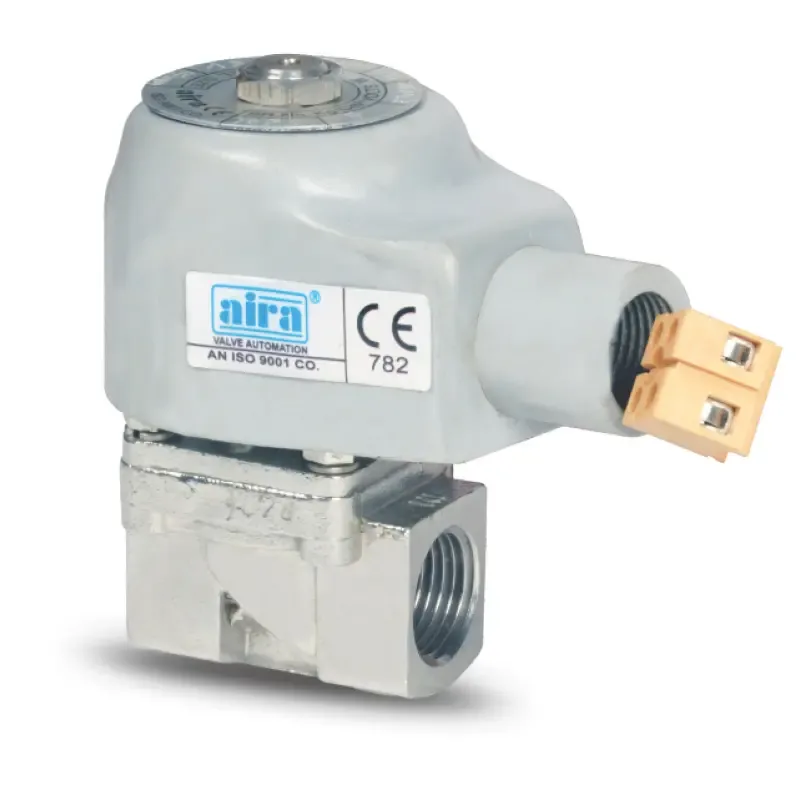
A solenoid valve is an electromechanical valve that uses an electric current to control the opening and closing of the valve. When the solenoid coil is energized, it creates a magnetic field that moves an internal plunger, allowing or stopping the flow of media.
Solenoid valves are commonly used for:
- Fluid control
- Airflow regulation
- Gas management
- Water distribution
- Process automation
Their simple design and dependable operation make them ideal for industrial automation applications.
Importance of Solenoid Valves in Manufacturing
Modern manufacturing facilities require precise control over production processes. Solenoid valves help automate these operations by enabling fast and accurate control of process media.
Benefits include:
- Improved production efficiency
- Reduced manual intervention
- Better process consistency
- Enhanced operational reliability
As manufacturing systems become more automated, solenoid valves continue to play an increasingly important role.
Fast Response Time
One of the biggest advantages of solenoid valves is their ability to operate quickly. They can open and close within milliseconds, allowing manufacturers to maintain precise control over industrial processes.
Fast response times help:
- Improve process accuracy
- Increase production speed
- Reduce cycle times
- Enhance equipment performance
This makes solenoid valves particularly useful in automated production environments.
Supporting Industrial Automation
Automation is a major driver of modern manufacturing growth. Solenoid valves integrate seamlessly with automated control systems, programmable logic controllers (PLCs), and industrial monitoring systems.
They support:
- Automated process control
- Remote operation
- Smart manufacturing systems
- Consistent production performance
A reliable Solenoid Valve Supplier can help manufacturers implement efficient automation solutions that improve overall productivity.
Improved Process Accuracy
Manufacturing industries often require precise control of liquids, gases, and compressed air. Even minor variations in flow can affect product quality and operational efficiency.
Solenoid valves provide:
- Accurate flow regulation
- Repeatable operation
- Consistent performance
- Better process stability
These capabilities help manufacturers maintain high-quality production standards.
Reduced Labor Requirements
Manual valve operation can be time-consuming and inefficient, especially in large-scale production facilities. Solenoid valves automate flow control processes, reducing the need for continuous operator involvement.
Benefits include:
- Lower labor costs
- Increased operational efficiency
- Reduced human error
- Improved workplace productivity
Automation allows employees to focus on higher-value tasks while maintaining smooth production operations.
Energy Efficiency
Many manufacturing facilities focus on reducing energy consumption and optimizing resource usage. Solenoid valves contribute to energy efficiency by providing accurate flow control and minimizing waste.
Advantages include:
- Reduced air loss
- Improved fluid management
- Lower operating costs
- Enhanced system efficiency
Efficient flow control systems support both sustainability goals and cost reduction initiatives.
Applications Across Various Manufacturing Industries
Solenoid valves are widely used in numerous manufacturing sectors due to their versatility and reliability.
Food and Beverage Industry
Used for controlling water, steam, and processing fluids while maintaining hygienic production standards.
Chemical Manufacturing
Support accurate chemical dosing and process automation.
Pharmaceutical Industry
Provide precise fluid control in highly regulated production environments.
Automotive Manufacturing
Used in assembly lines, pneumatic systems, and automated machinery.
Packaging Industry
Help manage air and fluid control systems that support high-speed packaging operations.
These applications demonstrate the broad usefulness of solenoid valve technology.
Reliable Performance and Low Maintenance
Manufacturing facilities require equipment that can operate continuously with minimal downtime. Solenoid valves are known for their durability and dependable performance.
Benefits include:
- Long service life
- Reduced maintenance requirements
- Improved system reliability
- Lower repair costs
Choosing a trusted Solenoid Valve Supplier ensures access to high-quality products designed for demanding industrial environments.
Enhanced Safety
Safety is a critical concern in manufacturing facilities. Solenoid valves help improve safety by enabling automated control of hazardous or high-pressure systems.
They contribute to:
- Better process control
- Emergency shut-off capabilities
- Reduced operator exposure
- Improved system reliability
These safety benefits are particularly important in industries handling chemicals, gases, or pressurized media.
Importance of Selecting the Right Solenoid Valve Supplier
The quality of a solenoid valve directly affects system performance and operational reliability. Working with an experienced Solenoid Valve Supplier helps manufacturers obtain products that meet their specific application requirements.
Key factors to consider include:
- Product quality
- Technical support
- Industry experience
- Reliability
- Customization capabilities
Selecting the right supplier helps ensure long-term success and improved operational performance.
Why Choose Mark and Aira
Mark and Aira is committed to delivering advanced industrial valve and automation solutions for modern manufacturing industries. The company focuses on providing reliable products that support efficiency, automation, and long-term operational reliability.
As a trusted Solenoid Valve Supplier, Mark and Aira works closely with customers to provide solutions that meet demanding industrial requirements while supporting productivity and process optimization.
Conclusion
Solenoid valves have become an essential component in modern manufacturing industries due to their speed, accuracy, reliability, and automation capabilities. They help manufacturers improve productivity, reduce labor costs, enhance process control, and support energy-efficient operations.
As industries continue investing in automation and smart manufacturing technologies, the demand for high-quality solenoid valve solutions will continue to grow. Partnering with a dependable Solenoid Valve Supplier ensures access to reliable products that support efficient and sustainable manufacturing operations.