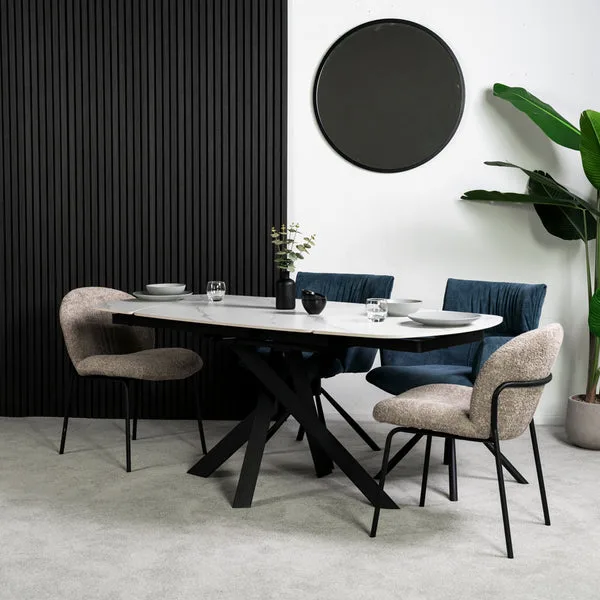
Choosing the right dining table can influence the appearance, functionality, and comfort of your dining room. It is often one of the most frequently used pieces of furniture in a home, serving as a place for family meals, social gatherings, celebrations, and everyday activities.
Two popular options offer different advantages: marble dining tables, which are valued for their sophisticated appearance, and extendable dining tables, which provide flexibility when seating requirements change.
Although these categories are not necessarily mutually exclusive—a marble-top table can also have an extending mechanism—they represent two useful considerations when choosing dining furniture. Understanding the differences can help you select a table that suits your space, lifestyle, and interior design preferences.
1. Understanding the Appeal of Marble Dining Tables
Marble has long been associated with elegant interiors. Its distinctive veining, smooth appearance, and varied natural patterns can make a dining table an attractive focal point.
A marble top dining table can complement contemporary apartments, sophisticated dining rooms, and interiors that combine neutral colours with contrasting materials.
White marble-effect finishes often work well with light walls, metallic accents, and upholstered seating. Darker finishes can create a dramatic appearance, particularly when paired with warm lighting and contrasting chair fabrics.
One advantage of marble is that its patterns introduce visual interest without requiring elaborate decoration. A table with a striking surface may need little more than simple tableware and a suitable centrepiece.
However, it is important to distinguish natural marble from marble-effect materials. Natural marble has unique mineral patterns and requires appropriate care, while engineered or ceramic alternatives may have different maintenance characteristics. Always check the product specifications before purchasing.
2. Maintenance Considerations for Marble Surfaces
The maintenance requirements of a dining table depend heavily on the material used.
Natural marble is porous and can be vulnerable to staining and etching from acidic substances such as lemon juice, vinegar, and certain cleaning products. Spills should be cleaned promptly, and suitable protective treatments may be recommended.
Use coasters, placemats, and appropriate cleaning products to help protect the surface. Avoid abrasive cleaners unless specifically approved by the manufacturer.
Marble-effect ceramic surfaces can offer a different combination of appearance and practicality. Some ceramic products provide strong resistance to scratches, heat, and stains, although performance varies according to construction and finish.
Before purchasing, check the manufacturer's guidance on cleaning, heat exposure, impact resistance, and general maintenance. These details are more useful than relying on the appearance of a surface alone.
3. Why Extendable Dining Tables Are Practical
An extendable dining table is designed to adapt to changing seating requirements. It can remain relatively compact for everyday meals and expand when additional space is needed.
This flexibility makes extendable dining tables particularly useful for households that occasionally entertain guests but do not want a permanently oversized table.
For example, a family might use a four-seat configuration during the week and extend the table for weekend gatherings. This arrangement can help preserve valuable floor space without sacrificing the ability to host larger groups.
Extendable designs are available in various shapes, materials, and finishes. Depending on the model, extension leaves may be stored separately, integrated into the table, or operated through a sliding mechanism.
When comparing options, check the table's dimensions in both its compact and extended configurations. The number of people it can accommodate comfortably depends on the table's length, width, shape, and chair dimensions.
4. Space Planning and Room Layout
The size of your dining room should play a central role in the decision.
A large fixed table can look impressive in a spacious room, but it may restrict movement in a smaller dining area. An extendable design offers more flexibility because the table can remain smaller when additional seating is unnecessary.
Marble tables can also be suitable for smaller rooms, provided their dimensions and visual proportions are appropriate. A lighter surface may create an open appearance, although the table's base, thickness, and overall size will influence how substantial it feels.
Measure the room carefully before shopping. Ideally, allow approximately 90 cm of clearance around the table wherever possible, taking account of walls, cabinets, and walking routes.
Remember to measure the extended table as well. An extension mechanism is only useful if there is enough room to operate it and accommodate the additional chairs.
5. Comparing Style and Interior Compatibility
Marble surfaces often suit interiors that emphasise refinement, contrast, and clean lines. They can work with contemporary furniture, metallic finishes, and carefully selected decorative accessories.
Extendable tables are available in a much broader range of aesthetic styles. Wooden finishes can create a warm, traditional atmosphere, while glass, ceramic, and minimalist designs can complement modern interiors.
Your choice should reflect the overall design of the room rather than current trends alone.
Consider the flooring, wall colours, lighting, and existing furniture. A table should complement these elements while remaining visually balanced.
You can introduce contrast through chair upholstery or table legs, but repeating a few colours and materials throughout the room will help maintain a cohesive appearance.
6. Comfort and Everyday Use
A dining table needs to be comfortable as well as attractive. Its height, width, leg placement, and shape all influence how easily people can sit around it.
Rectangular tables can work well in narrow rooms and larger family dining spaces. Round tables encourage conversation and may suit compact rooms, depending on their diameter and base design.
Extendable tables introduce an additional consideration: the mechanism should be straightforward to operate, and the extended surface should remain stable during use.
If you frequently host guests, consider whether the extension leaves create a continuous surface and whether the extra seating will interfere with nearby furniture.
For marble tables, pay attention to weight and delivery arrangements. Some designs are heavy and may require specialist handling or careful assembly.
7. Budget and Long-Term Value
The total cost of a dining table includes more than its purchase price. Delivery, assembly, maintenance, replacement components, and the cost of suitable chairs may all influence the overall investment.
Natural marble can be expensive, depending on the stone, dimensions, and construction. Marble-effect products offer alternatives at different price points.
Extendable tables also vary widely in price according to their materials and mechanisms. A well-designed extending system may justify a higher initial cost if it offers reliable operation and suits your household's changing needs.
Compare product specifications, warranties, and care requirements before making a decision. Focus on long-term suitability rather than choosing solely on appearance or the lowest price.
Conclusion
Marble dining tables and extendable dining tables offer different benefits, but the best choice depends on your priorities.
If distinctive surfaces and sophisticated styling are most important, a marble or marble-effect table may suit your interior. If seating flexibility and efficient use of space are priorities, an extendable design may be more practical.
You do not necessarily have to choose between these features. Some tables combine attractive stone-effect surfaces with extending mechanisms, allowing you to enjoy both style and flexibility.
By considering dimensions, materials, maintenance, comfort, and budget, you can find a dining table that complements your home and supports everyday living.