In the fast-paced digital era, enterprises rely heavily on robust, efficient, and secure network infrastructures to support daily operations, connect remote teams, and power a growing array of IoT devices. From IP cameras and wireless access points (WAPs) to VoIP phones and smart office equipment, modern businesses require a network solution that can deliver both data and power seamlessly while offering the control and flexibility to adapt to changing needs. This is where a Managed PoE Switch emerges as a game-changer. Unlike unmanaged PoE switches that offer basic plug-and-play functionality, managed PoE switches provide granular control, advanced security features, and real-time monitoring capabilities—making them the ideal choice for medium to large enterprises, campuses, and multi-location businesses. In this blog, we’ll dive deep into what a managed PoE switch is, its core features, the tangible benefits it brings to enterprises, and answer the most common questions to help you make an informed decision for your network.
What Is a Managed PoE Switch?
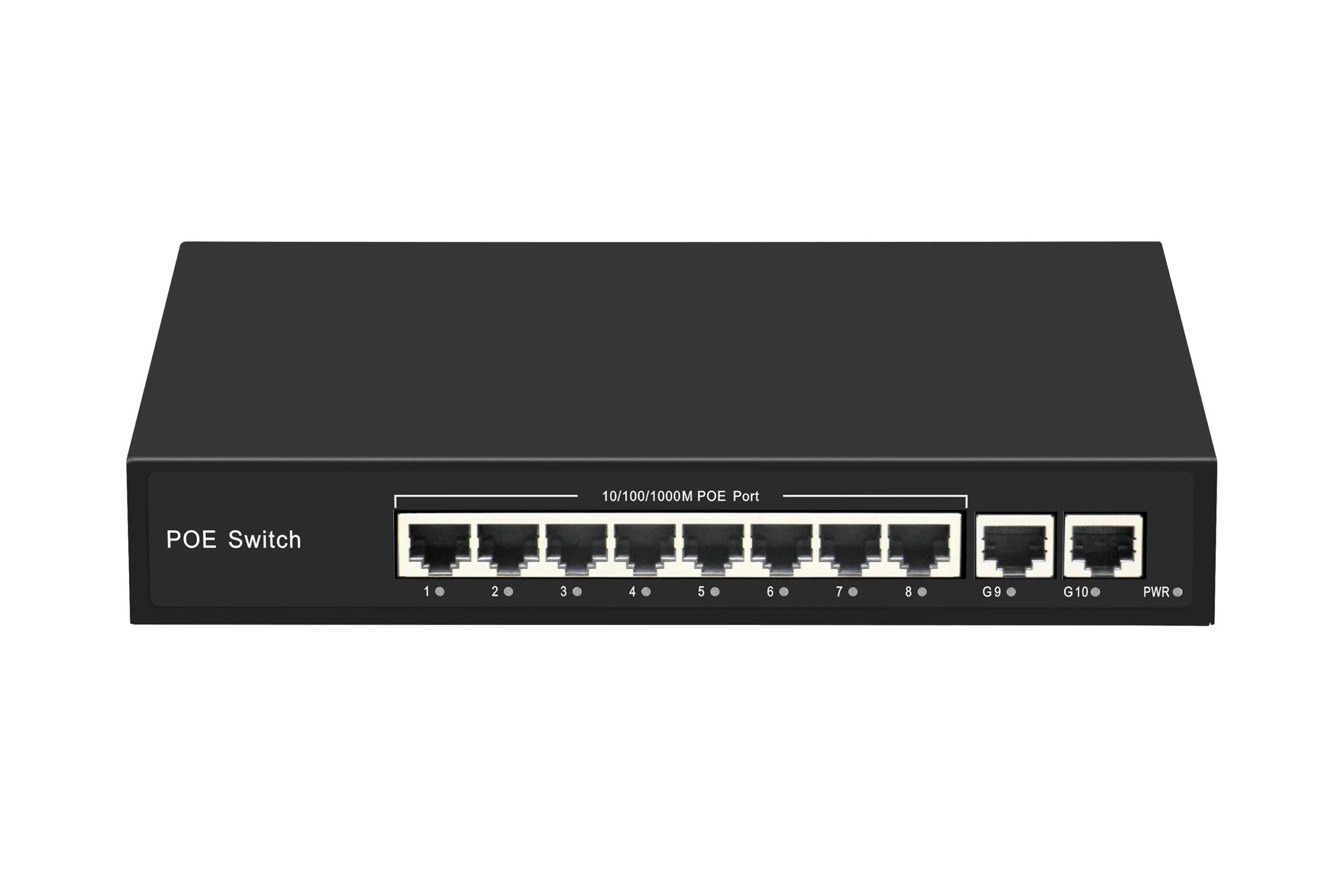
First, let’s break down the basics: PoE (Power over Ethernet) technology allows network cables to transmit both data and electrical power to compatible devices, eliminating the need for separate power cords and outlets. This simplifies deployment, reduces wiring costs, and enables flexible placement of devices in hard-to-reach areas—such as ceiling-mounted IP cameras or wall-mounted VoIP phones. A Managed PoE Switch takes this functionality a step further by adding intelligent management capabilities that give network administrators full control over the switch and the devices connected to it. Unlike unmanaged PoE switches, which operate on a “set-it-and-forget-it” basis, managed PoE switches can be configured, monitored, and optimized remotely, making them suitable for complex networks that require high availability, security, and performance.
At its core, a managed PoE switch acts as the “brain” of your network, allowing you to segment traffic, prioritize critical applications, monitor power usage, and troubleshoot issues in real time. It supports industry-standard protocols like SNMP (Simple Network Management Protocol), VLAN (Virtual Local Area Network), QoS (Quality of Service), and ACL (Access Control List)—all of which are essential for managing large-scale enterprise networks efficiently. Whether you’re running a corporate office, a university campus, or a chain of retail stores, a managed PoE switch provides the reliability and control you need to keep your network running smoothly.
Core Features of a Managed PoE Switch: What Sets It Apart
Managed PoE switches come packed with advanced features designed to address the unique needs of enterprise networks. Below are the most critical features that make them indispensable for modern businesses:
1. Centralized Management and Remote Access
One of the biggest advantages of a managed PoE switch is centralized management. Administrators can access the switch’s web-based interface, CLI (Command Line Interface), or network management software (NMS) from anywhere with an internet connection. This means you can configure ports, adjust power settings, monitor network traffic, and troubleshoot issues without being physically present at the switch location. For businesses with multiple locations, this feature saves time and resources by eliminating the need for on-site IT support at each site. Many modern managed PoE switches also support cloud-based management, allowing you to manage all your switches from a single dashboard—simplifying network administration even further.
2. PoE Power Management and Budget Control
Managed PoE switches offer precise control over PoE power delivery, including a dedicated PoE budget (the total amount of power the switch can supply to connected devices). Administrators can monitor the power usage of each port in real time, set power limits for individual devices, and prioritize power to critical equipment—such as security cameras or emergency VoIP phones—ensuring they never lose power during peak usage. This level of control prevents power overloads, reduces energy waste, and extends the lifespan of connected devices. For example, if a switch has a 370W PoE budget, you can allocate 30W to each of 12 IP cameras (totaling 360W) and reserve 10W for a backup VoIP phone, ensuring optimal power distribution.
3. Advanced Security Features
Enterprise networks face constant threats from cyberattacks, unauthorized access, and data breaches. Managed PoE switches address these risks with robust security features, including VLAN segmentation, ACLs, 802.1X authentication, and DHCP snooping. VLAN segmentation allows you to divide your network into separate virtual networks, isolating sensitive data (such as financial records) from general traffic (such as employee internet usage) and reducing the risk of unauthorized access. ACLs let you control which devices can access specific parts of the network, while 802.1X authentication requires users and devices to provide credentials before connecting—preventing rogue devices from accessing your network. DHCP snooping protects against DHCP spoofing attacks, ensuring that only authorized DHCP servers can assign IP addresses to devices.
4. QoS (Quality of Service) Prioritization
In enterprise networks, not all traffic is equal. Critical applications like VoIP calls, video conferencing, and real-time data transfer require high bandwidth and low latency to function properly, while non-critical traffic (such as email or web browsing) can tolerate slight delays. Managed PoE switches use QoS to prioritize traffic, ensuring that critical applications get the bandwidth they need. Administrators can set QoS rules based on device type, application, or IP address—for example, prioritizing VoIP traffic over web browsing to ensure clear, uninterrupted calls. This feature is especially important for businesses that rely on real-time communication or cloud-based applications.
5. Scalability and Flexibility
As businesses grow, their network needs evolve. Managed PoE switches are designed to scale with your business, supporting additional ports, higher PoE budgets, and advanced features as your network expands. Many managed PoE switches offer stackable design, allowing you to connect multiple switches together and manage them as a single unit—reducing complexity and increasing scalability. They also support future PoE standards (such as PoE+ and PoE++) to power newer, high-power devices like 4K IP cameras, AI-enabled sensors, and smart lighting systems. This flexibility ensures that your network can adapt to new technologies and growing demands without requiring a complete overhaul.
Please visit E-Lins Technology Co, Ltd. for more details.