I vividly remember standing on a muddy construction site, holding a set of blueprints, and realizing I had hit a frustrating professional ceiling. I desperately wanted to move into advanced structural design, which required a master's degree. However, the thought of abandoning my job and pausing my career for two years to sit in a physical classroom felt entirely impossible.
That is exactly why I decided to take a completely different path and enroll in an Online Civil Engineering Degree. If you are standing at this exact same crossroads, wondering if digital learning can truly replace a traditional campus, you are in the right place.
Today, I am sharing my honest, firsthand experience of making this massive academic switch. I will detail my early failures, the specific study workflows I improved, and the incredible career milestones I ultimately achieved.
The Crossroads: Leaving the Site vs. Logging Online
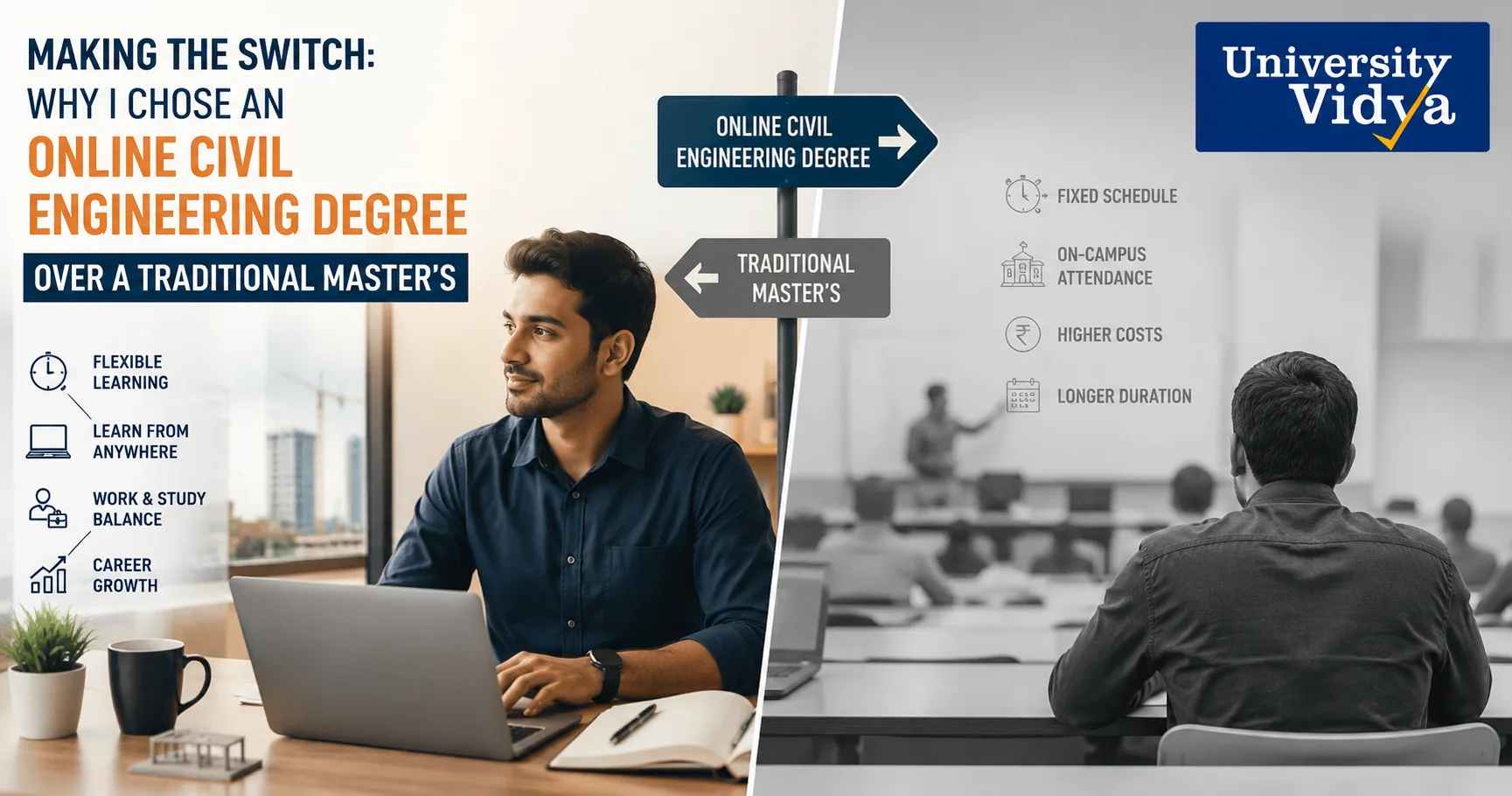
Initially, the traditional master's route seemed like the only "safe" option because it was what everyone else in my firm had done. I spent months researching local universities, but the rigid daytime schedules completely clashed with my mandatory site inspections. I realised that traditional academia was simply not built for working professionals already on the ground.
Choosing remote education was a massive leap of faith. I worried about the lack of physical labs and face-to-face mentorship. However, the ability to keep earning my salary while upgrading my credentials ultimately pushed me to log in online.
My Early Failures: The Illusion of "Easy" Distance Learning
I will be completely transparent; my first semester was an absolute disaster. Because there was no professor physically checking my attendance, my ego convinced me that remote learning would be highly relaxed and easy. That was my first major failure.
I treated my advanced structural dynamics lectures like a casual weekend hobby. I would try to cram three weeks of complex mathematics into a single Sunday afternoon. Unsurprisingly, I completely failed my first major exam, which served as a terrifying, humbling wake-up call.
Distance learning is not a shortcut; it requires significantly more self-discipline than a traditional classroom. I knew I had to completely dismantle my lazy approach and rebuild a highly structured daily routine.
How I Improved My Study Workflow
To salvage my grades, I treated my digital classroom with the exact same respect I gave my corporate job. Here are the specific, actionable pointers that transformed my academic performance:
- The 5 AM Strategy: I stopped studying at night when I was exhausted and began waking up at 5 AM to tackle heavy math while my mind was fresh.
- Active Digital Engagement: I forced myself to ask at least two questions per live virtual session to ensure I stayed actively involved in the material.
- Micro-Learning on Site: I utilized my 30-minute lunch breaks in the site trailer to review digital flashcards on soil mechanics.
Traditional vs. Online: A Reality Check
To give you a clearer picture, I often compare my experience with a colleague who took the traditional route. Here is a breakdown of how the two formats actually play out in the real world:
FeatureTraditional Master's DegreeOnline Civil Engineering DegreeSchedule FlexibilityHighly rigid; strictly dictates your working hours.Highly flexible; adapts entirely to your professional life.Real-World ApplicationDelayed; applied only after graduation.Immediate; theories applied to the job site the very next day.Networking ScopeLocalized; mostly limited to a single geographical area.Global; connects you with diverse professionals worldwide.Expanding My Network Across the Digital Campus
One of my biggest fears about switching to a digital format was the potential academic isolation. I assumed I would be studying completely alone in a vacuum. I was incredibly wrong; the online ecosystem is actually deeply interconnected.
During a virtual elective seminar on industrial infrastructure, I was placed in a group with brilliant minds from entirely different sectors. I collaborated with a project manager who was pursuing Online Mining Engineering, which completely changed how I viewed deep-earth excavation safety. I also regularly debated grid resilience with a peer enrolled in Online Electrical Engineering.
Cross-Disciplinary Insights
The digital format allows for seamless cross-training that traditional silos often prevent. For example, understanding material corrosion was a massive struggle for me until I connected with a student taking an Online Chemical Engineering Course. Her insights into molecular degradation drastically improved my concrete structural designs, making me a much more well-rounded engineer.
What I Achieved: Applying Theory to the Concrete
Once my study habits clicked, the return on investment was almost instantaneous. I did not have to wait two years to use my degree. When we covered advanced hydrological modeling in class on a Thursday, I literally applied that exact framework to a site drainage issue on Friday.
My managers immediately noticed this rapid upskilling. Before I even finished my final semester, I was promoted to Lead Structural Coordinator, a role previously reserved strictly for traditional graduates. I achieved this milestone because I proved I could self-manage complex tasks without hand-holding.
Finding the right university was the catalyst for all of this success. I used University Vidya to expertly navigate the overwhelming sea of digital programs and find a fully accredited curriculum that respected my working hours. Their platform saved me from enrolling in subpar institutions and set me up for immediate success.
Blueprinting Your Next Career Phase
Looking back, abandoning the traditional university route was the most intimidating, yet highly rewarding, decision of my entire career. The digital classroom tested my resilience, broke my bad habits, and ultimately shaped me into a highly autonomous engineering leader. You do not have to pause your life to build a better future.
If you are ready to stop delaying your career goals and start taking action, your next step is crucial. Leverage trusted platforms like University Vidya to discover the perfect academic match for your unique lifestyle. Grab your hard hat, log in to your virtual portal, and start engineering the executive career you truly deserve.