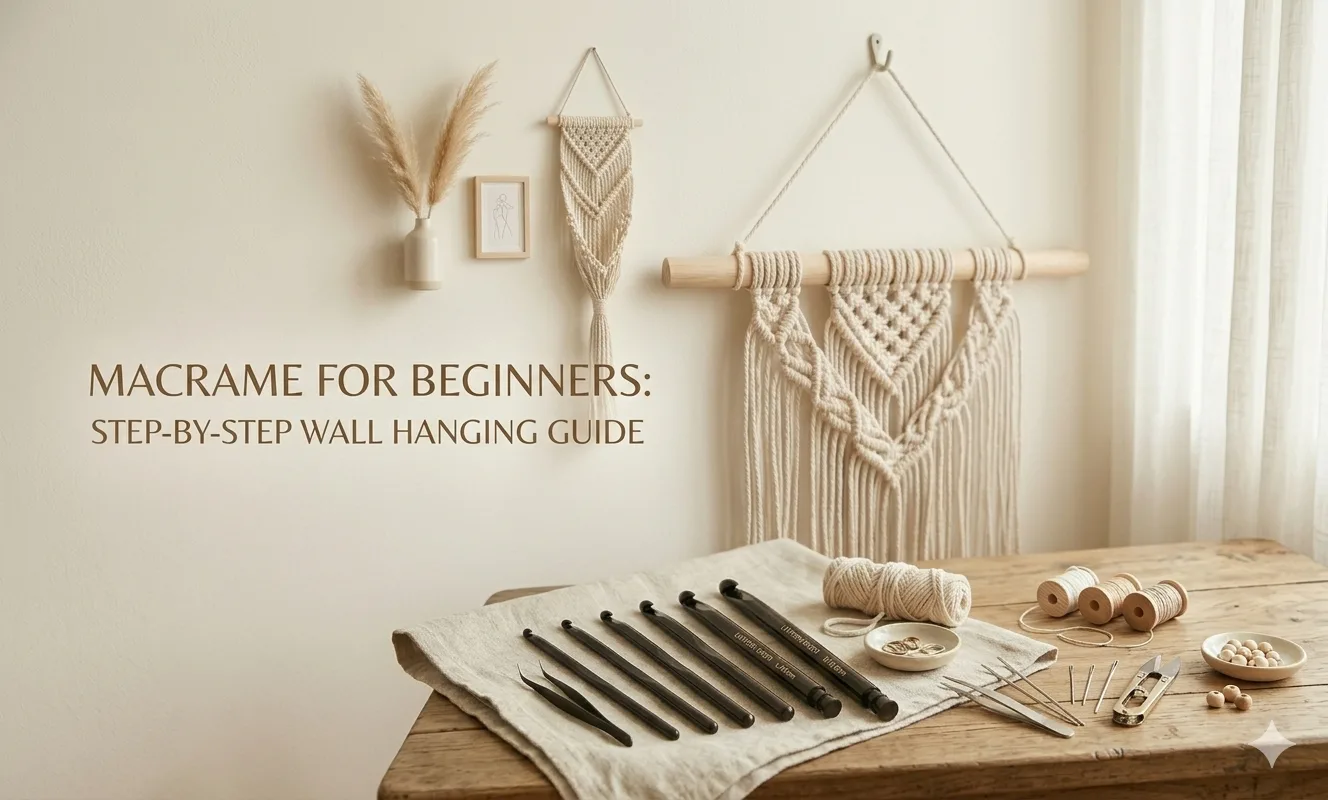
Have you looked at the boho-chic wall hanging and thought of making it? Don't think that it's too complicated. This is Macrame, which is basically tying simple knots.
It is a beautiful piece of art, so if you know how to knot shoelaces, you can become a master in Macrame too. It’s one of the most rewarding, meditative, and calming crafts out there. You don't need crochet hooks, needles, or any fancy tools to make it; it just requires your hands, some cord, and a little bit of patience.
Get ready to explore this timeless craft. This step-by-step guide explains everything you need to know to start macramé today, even if you’ve never tried it before.
What is Macrame?
This beautiful art is creating textiles using knotting techniques rather than knitting or weaving. Macrame is not just a home decor, but a sensory experience. It is a traditional art, but has made a comeback in modern homes. What you will get after creating it:
- The repetitive nature of knotting, like knitting and crocheting, is a form of hand yoga, which strengthens the muscles.
- For this art, you don't require a dedicated studio. A door handle or a clothing rack is your workspace.
- Once you know the basic knot, you can make everything from jewelry to home decor.
Want to know more about knitting and crochet? Read our blog: Knitting & Crochet Tools for Beginners: First Loop to Final Stitch.
Tools That You Actually Need
The biggest mistake that beginners make is buying the wrong type of "string". Let's discuss each tool that you need:
1. Macramé Cord (The Star of the Show)
Cords are available in three main varieties. For beginners, we recommend a 3-ply twisted cotton cord (4mm or 5mm thickness).
TypeBest ForBeginner Friendly?Single TwistFringy, soft wall hangingsNo3-Ply TwistedPlant hangers, sturdy decorYesBraidedModern, chunky looksYes
2. Wooden Dowel or Stick
You can use it as a base for the project.
- Driftwood
- Metal rings
- Branches
3. Sharp Scissors: Cotton cord can be surprisingly tough.
4. Measuring Tape: Macramé uses more cord than you think.
Understanding the Basic Macramé Knots
You can create most of the projects by just learning three basic knots:
1. The Lark’s Head Knot
This is how you attach your cord to your dowel or ring.
- Step A: Fold your cord in half.
- Step B: Push the folded loop over the dowel.
- Step C: Pull the two loose ends through the loop and tighten.
2. The Square Knot
The "bread and butter" of macramé. It requires four strands of cord.
- Step A: Take the left outer cord and cross it over the two middle cords, forming a "4" shape.
- Step B: Take the right outer cord, place it over the tail of the left cord, then tuck it under the middle cords and pull it up through the "4" loop. Pull tight. (This is a Half Square Knot).
- Step C: Repeat the process starting from the right side to "lock" the knot.
3. Half Hitch Knot
- Want to create those beautiful DNA-style twists? Just keep doing Steps A and B of the Square Knot over and over without switching sides. The cord will naturally start to rotate!
Step-By-Step Simple Macrame Wall Hanging
Let's create a first piece:
Step 1: Cut Your Cords
- Cut 8–10 cords, each about 1.5–2 meters long.
Tip: Always cut longer than you think; you can trim later.
Step 2: Attach Cords to the Dowel
- Use the Lark’s Head Knot to attach each cord to your stick.
- You should now have multiple strands hanging down.
Step 3: Start with Square Knot
- Group cords in sets of four
- Tie square knots across the row
- Repeat for 2–3 rows
Step 4: Add Design with Half Hitch Knots
- Create diagonal or curved lines
- Use one cord as a guide and knot the others around it.
Step 5: Create a Fringe
- Leave the bottom loose and trim evenly.
Step 6: Final Touches
Trim your design into a shape:
- Triangle
- V-shape
- Straight line
Tips for Successful Macramé Beginners
Starting something new can feel tricky, but these tips will help you improve quickly:
- Before working on a full project, practice each knot until it feels natural.
- Try to keep your knots consistent, not too tight, not too loose.
- Work on a table or hang your project on a hook for better control.
- Your first project may not be perfect, and that’s okay. Macramé improves with practice.
More links: How Crafting Builds Patience and Skill
Final Conclusion
Macramé is one of the most accessible and rewarding crafts you can learn. With just a few basic knots and simple materials, you can create beautiful handmade pieces that reflect your personal style.
Start small, practice consistently, and don’t worry about perfection. Every knot you tie brings you one step closer to mastering this timeless art.
So grab some cord, find a quiet spot, and start your macramé journey today. You might be surprised at what you can create.