
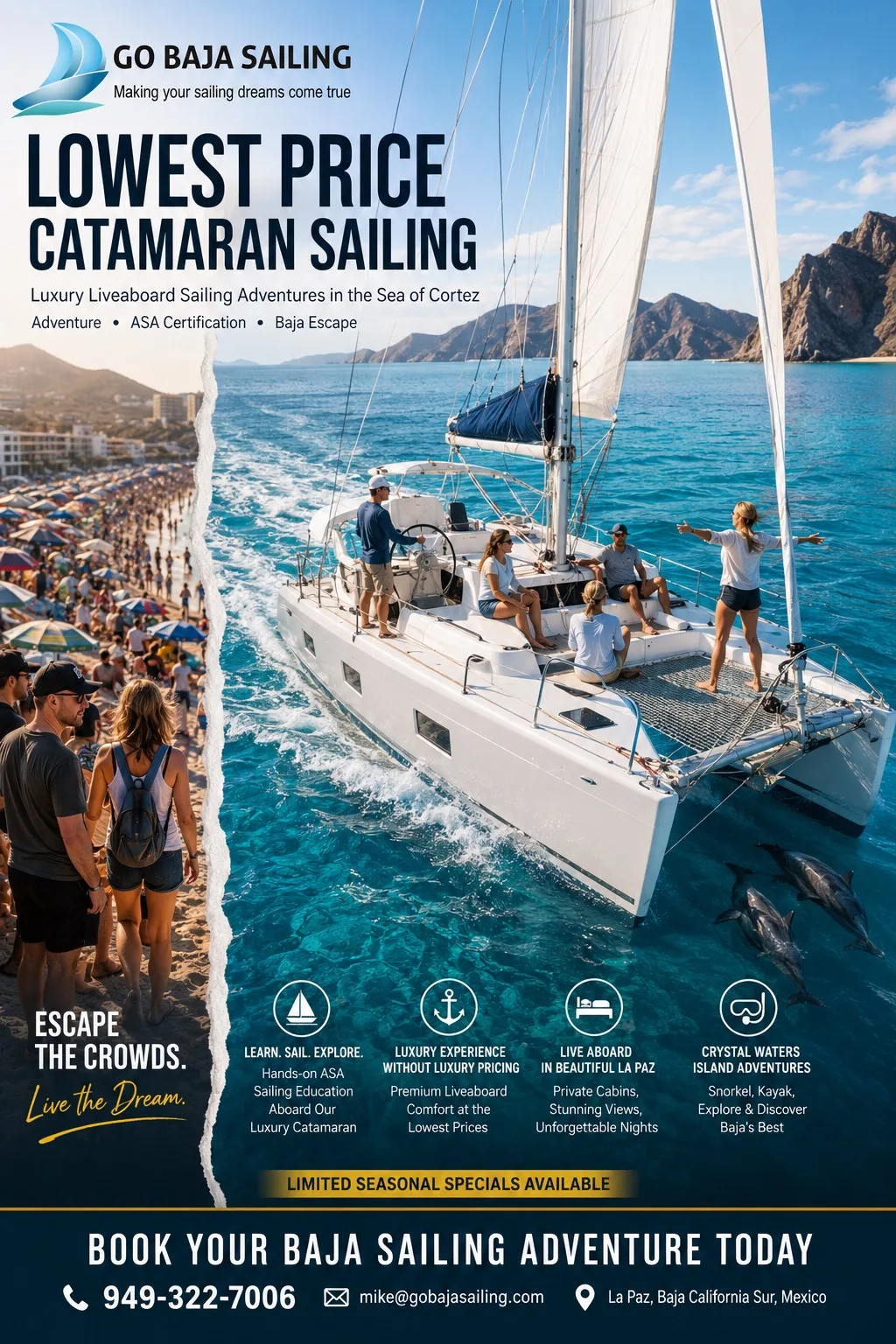
Finding an affordable catamaran experience is not always as simple as comparing the headline boat rate. A seemingly inexpensive charter can become considerably more expensive after fuel, marina fees, cleaning, provisioning, deposits, skipper costs, and other trip expenses are added. The more useful question is not simply “What is the lowest price?” but “What does the total sailing experience actually cost?”
For sailors considering Baja California Sur and the Sea of Cortez, that distinction matters. Catamaran sailing can involve bareboat chartering, skippered cruising, sailing instruction, or a liveaboard certification course. Each option has a different cost structure and delivers a different experience.
What does the lowest price catamaran sailing option actually mean?
The Lowest price Catamaran Sailing option is the sailing choice with the lowest relevant total cost for a specific trip, not necessarily the lowest advertised boat rate. Comparing the complete cost requires looking at the vessel, duration, included equipment, crew requirements, fuel, marina charges, provisioning, instruction, and other expenses associated with the sailing plan.
A lower advertised rate may make sense for one traveler while a slightly higher package can represent better overall value for another.
For example, consider two seven-day options:
Cost categoryBoat-only charterSailing course/liveaboardBoat rateWeekly charter feeCourse or package priceFuelUsually additionalMay be included or structured differentlyMarina expensesMay be additionalCheck package inclusionsCleaningMay be additionalCheck termsSkipper/instructorAdditional if requiredInstructor includedSailing educationNot normally includedCore part of experienceMealsUsually separateMay be included depending on packageEquipmentDepends on charterOften specified in course inclusionsCertificationNot includedMay be included when course requirements are metThe comparison shows why price alone can be misleading. Two seven-day sailing experiences may have very different inclusions and purposes.
What costs should you compare before choosing a catamaran?
The real cost of a catamaran trip includes more than the vessel rate. Travelers should identify every mandatory and likely expense before comparing offers. Fuel, marina charges, provisioning, skipper fees, cleaning, security deposits, transportation, and optional activities can all affect the final budget.
A practical comparison should examine these categories:
- Boat or course rate: The starting price for the sailing experience.
- Fuel: Particularly important for longer itineraries and vessels with significant engine use.
- Marina and port fees: These vary according to itinerary and marina arrangements.
- Cleaning fees: Some charter companies include them while others charge separately.
- Skipper or instructor: Essential to calculate when the traveler is not qualified or does not want to operate the vessel independently.
- Food and provisioning: Consider whether meals are self-managed, catered, or included.
- Transportation: Airport transfers, taxis, rental cars, and local transportation can add to the trip budget.
- Equipment: Dinghies, paddleboards, snorkeling gear, linens, and other equipment should be checked individually.
- Deposit or insurance: These may affect the amount of money required before departure even when they are not final trip expenses.
This checklist is particularly useful when comparing a conventional charter with a sailing school experience.
How does bareboat catamaran sailing compare with a sailing course?
Bareboat sailing and sailing instruction serve different purposes. A bareboat charter generally focuses on giving qualified sailors use of the vessel, while a sailing course combines boat access with structured instruction and practical training. The appropriate comparison therefore depends on whether the traveler wants independent cruising, professional support, certification, or a combination of these goals.
For someone researching Bare Boat Catamaran La Paz options, qualification requirements deserve as much attention as the price.
Bareboat charter
A bareboat arrangement generally means the customer operates the vessel without a professional skipper. Depending on the operator and local requirements, evidence of sailing competence or relevant credentials may be required.
This model can work well for experienced sailors who want control over their itinerary and are comfortable handling navigation, anchoring, docking, safety procedures, and onboard responsibilities.
Sailing course
A liveaboard sailing course has a different structure. Students spend several days aboard the vessel while learning practical sailing skills under instructor supervision.
An ASA sailing program, for example, can combine classroom concepts with hands-on activities such as:
- Sail trim and points of sail
- Tacking and gybing
- Navigation
- Anchoring
- Docking and maneuvering
- Safety procedures
- Boat systems
- Crew communication
For a beginner or developing sailor, the value may therefore come from the instruction and certification pathway rather than simply having access to a catamaran.
Is a catamaran always more expensive than a monohull?
Not necessarily. A catamaran may have a higher overall vessel rate, but cost per person can change substantially when several people share cabins and common spaces. Accommodation capacity, trip duration, included services, and the number of travelers all influence the effective cost of a sailing experience.
A simple per-person calculation is:
Total trip cost ÷ number of travelers = approximate cost per person
However, that calculation should use the complete trip cost rather than only the advertised boat rate.
A four-person group, for example, may evaluate a different option from a couple traveling alone. A catamaran's multiple cabins, wider living areas, and additional onboard space can also change how travelers perceive the value of the accommodation.
The important point is to compare like with like.
What should you look for in a Baja catamaran charter?
When evaluating a Catamaran Charter Boat Baja option, look beyond the vessel photograph and weekly price. Check the boat's specifications, sleeping arrangements, equipment, operating requirements, cruising area, inclusions, and cancellation terms before deciding whether the quoted price is genuinely comparable.
A useful pre-booking checklist includes:
- What type and size of catamaran is provided?
- How many cabins and bathrooms are available?
- Is a skipper required or optional?
- What sailing qualifications are accepted?
- Are fuel and marina charges included?
- Is cleaning included?
- What safety equipment is provided?
- Are dinghy and outboard use included?
- Are snorkeling or paddle equipment included?
- What deposit, insurance, or damage terms apply?
These questions can reveal substantial differences between apparently similar offers.
What makes the Sea of Cortez different for catamaran sailing?
The Sea of Cortez offers a distinctive cruising environment where itinerary planning, anchorage selection, weather awareness, and local knowledge can be important parts of the sailing experience. Conditions can vary by season and location, so travelers should consider the intended route and operating experience rather than selecting an option based solely on price.
For sailors researching a bareboat charter sea of cortez, practical preparation matters.
The Sea of Cortez is known for island cruising, sheltered anchorages in some areas, clear-water destinations, and varied marine environments. At the same time, sailors need to understand local navigation, weather patterns, anchoring conditions, and the capabilities of their vessel.
That makes the distinction between a vacation charter and an educational sailing experience especially relevant.
Someone learning to sail may benefit from having an instructor aboard rather than being responsible for every operational decision from the beginning.
Can a sailing course be a cost-effective alternative to a charter?
A sailing course can be financially meaningful when the traveler wants both a sailing vacation and structured instruction. Instead of paying separately for a vacation and later booking training, a liveaboard course can combine practical sailing, accommodation, and education into one trip, depending on what the package includes.
This is where the phrase “lowest price” needs context.
If the objective is simply to occupy a catamaran for several days, a boat-only charter may be the relevant comparison.
If the objective is to develop sailing skills and work toward certification, a course should be compared using a different set of criteria:
- Instructor time
- Hands-on sailing hours
- Certification pathway
- Accommodation
- Meals or provisioning
- Sailing equipment
- Course duration
- Group size
- Practical experience
For aspiring sailors, combining these elements can make a liveaboard educational trip fundamentally different from renting a boat.
What mistakes should you avoid when comparing catamaran prices?
The most common mistake is comparing headline rates without checking what each price includes. Travelers can also overlook qualification requirements, seasonal operating periods, additional fees, cancellation policies, and the difference between a private charter and a shared instructional experience.
Watch for these common comparison errors:
Comparing different trip lengths.
A five-day experience and a seven-day experience should not be compared using the headline price alone.
Ignoring group size.
The same boat rate can produce very different per-person costs depending on occupancy.
Forgetting additional fees.
Fuel, cleaning, marina charges, provisioning, and transportation can alter the final budget.
Comparing unlike experiences.
A bareboat charter, skippered vacation, and sailing course are not interchangeable products.
Focusing only on the vessel.
A newer boat is only one part of the experience. Instructor expertise, safety procedures, equipment, itinerary, and support also matter.
How can you calculate the real sailing budget?
Start with the advertised price, then build a complete trip budget around it. Separate mandatory expenses from optional spending and calculate the final amount for the entire group before dividing it into a per-person figure.
A practical formula is:
Estimated trip cost = base rate + mandatory fees + fuel + marina costs + provisioning + transportation + optional expenses
Then calculate:
Estimated cost per person = total trip cost ÷ number of travelers
For example, if a group is comparing two sailing packages, the cheaper headline rate should not automatically be selected. First determine whether both options provide comparable accommodation, equipment, duration, support, and services.
This approach produces a much more meaningful comparison.
What should beginners consider before booking?
Beginners should prioritize the experience they need rather than searching only for the lowest numerical price. If they have little or no sailing experience, supervised instruction can provide a structured introduction to vessel handling, navigation, safety, and seamanship while allowing them to experience life aboard a cruising catamaran.
A beginner should ask:
- Will an experienced instructor be aboard?
- How much hands-on sailing will I receive?
- Is certification part of the program?
- What skills will I practice?
- How many students share the boat?
- What happens if weather changes the itinerary?
- What equipment is supplied?
These questions help distinguish a genuine learning experience from a simple boat rental.
How can you choose the right option for your trip?
The right choice depends on your sailing experience, group size, desired level of independence, certification goals, and total budget. Experienced sailors may focus on vessel specifications and charter conditions, while beginners may place greater importance on instruction, supervision, and practical training.
A simple decision framework is:
Choose a bareboat charter if you already meet the required qualifications and want to operate the vessel independently.
Consider a skippered charter if you want a private cruising experience but prefer professional handling and local knowledge.
Consider a sailing course if learning practical seamanship and pursuing certification are central to your trip.
Consider a liveaboard instructional experience if you want several days of immersive sailing rather than a short introductory lesson.
Go Baja Sailing operates in the sailing education space, where the emphasis is on combining hands-on instruction with an immersive cruising environment. For travelers comparing options in Baja California Sur, examining the complete package and course structure can be more informative than comparing advertised prices alone.
Is the lowest price always the best way to compare catamaran sailing?
The lowest advertised price is not necessarily the lowest total cost or the most appropriate option for a particular sailor. A useful comparison considers what is included, what additional expenses apply, who operates the boat, what qualifications are required, and whether the trip includes instruction, certification, accommodation, meals, or equipment.
The better question is:
“What am I receiving for the total amount I will spend?”
That question keeps the comparison focused on actual value without assuming that the most expensive or least expensive option is automatically preferable.
For travelers considering sailing education in La Paz, a company such as Go Baja Sailing can be evaluated by the same practical criteria: course structure, instructor involvement, vessel, inclusions, certification pathway, itinerary, and total trip requirements.
Frequently Asked Questions
What is the cheapest way to sail a catamaran?
The lowest-cost approach depends on group size, trip length, vessel type, season, and what is included. A shared or instructional sailing experience may have a different cost structure from a private bareboat charter. Compare the complete trip cost—including mandatory fees and services—rather than choosing solely from the advertised vessel rate.
Is bareboat catamaran sailing cheaper than a skippered charter?
It can be, because a bareboat charter does not necessarily include a professional skipper. However, it requires the appropriate experience and qualifications, and the traveler assumes responsibility for operating the vessel. A skippered charter adds professional crew costs but may provide navigation, boat handling, and local cruising support.
What is included in a catamaran charter price?
Inclusions vary considerably. The base price may cover the vessel and standard equipment, while fuel, marina fees, cleaning, provisioning, skipper services, insurance, and optional equipment may cost extra. Always request a complete list of inclusions and additional charges before comparing two charter prices.
Is La Paz a good place to learn catamaran sailing?
La Paz is an established sailing destination in Baja California Sur and provides access to cruising areas in the Sea of Cortez. For beginners, the important consideration is not only the destination but also the structure of the training program, instructor experience, vessel, safety procedures, and amount of practical sailing time.
What is the difference between a sailing course and a catamaran charter?
A charter primarily provides access to a vessel for cruising, while a sailing course is designed around education and skill development. A liveaboard course can combine accommodation, practical sailing, instruction, and potentially certification. The two options should therefore be compared according to their different purposes rather than price alone.
How do I compare catamaran prices between companies?
Use the same checklist for every provider: vessel size, trip duration, group size, cabins, bathrooms, fuel, marina fees, cleaning, skipper or instructor, equipment, provisioning, deposits, insurance, and cancellation terms. Then calculate the estimated total and cost per person. This creates a more reliable comparison than headline rates.
Does a larger catamaran always cost more per person?
Not necessarily. A larger catamaran can have more cabins and accommodate more travelers, allowing the total cost to be distributed across a larger group. The actual per-person cost depends on the vessel rate, occupancy, trip length, inclusions, and additional expenses.
Can beginners book a bareboat catamaran?
Bareboat charters generally require the person responsible for operating the vessel to demonstrate suitable sailing competence. Requirements vary by operator, vessel, and jurisdiction. Beginners should not assume that booking a boat automatically provides permission or qualification to operate it independently.
What should I budget besides the catamaran price?
Budget for possible fuel, marina or port fees, cleaning, provisioning, transportation, insurance or deposits, and activities outside the sailing package. If you need a skipper or instructor, include that cost as well. The final budget should reflect the entire trip rather than the boat rate alone.
Is a liveaboard sailing course worth considering for a beginner?
A liveaboard course can be considered when the goal is to combine travel with concentrated practical sailing experience. Spending several days aboard a vessel provides opportunities to practice navigation, sail handling, anchoring, maneuvering, safety procedures, and crew coordination under instructor supervision, subject to the specific course structure and certification requirements.