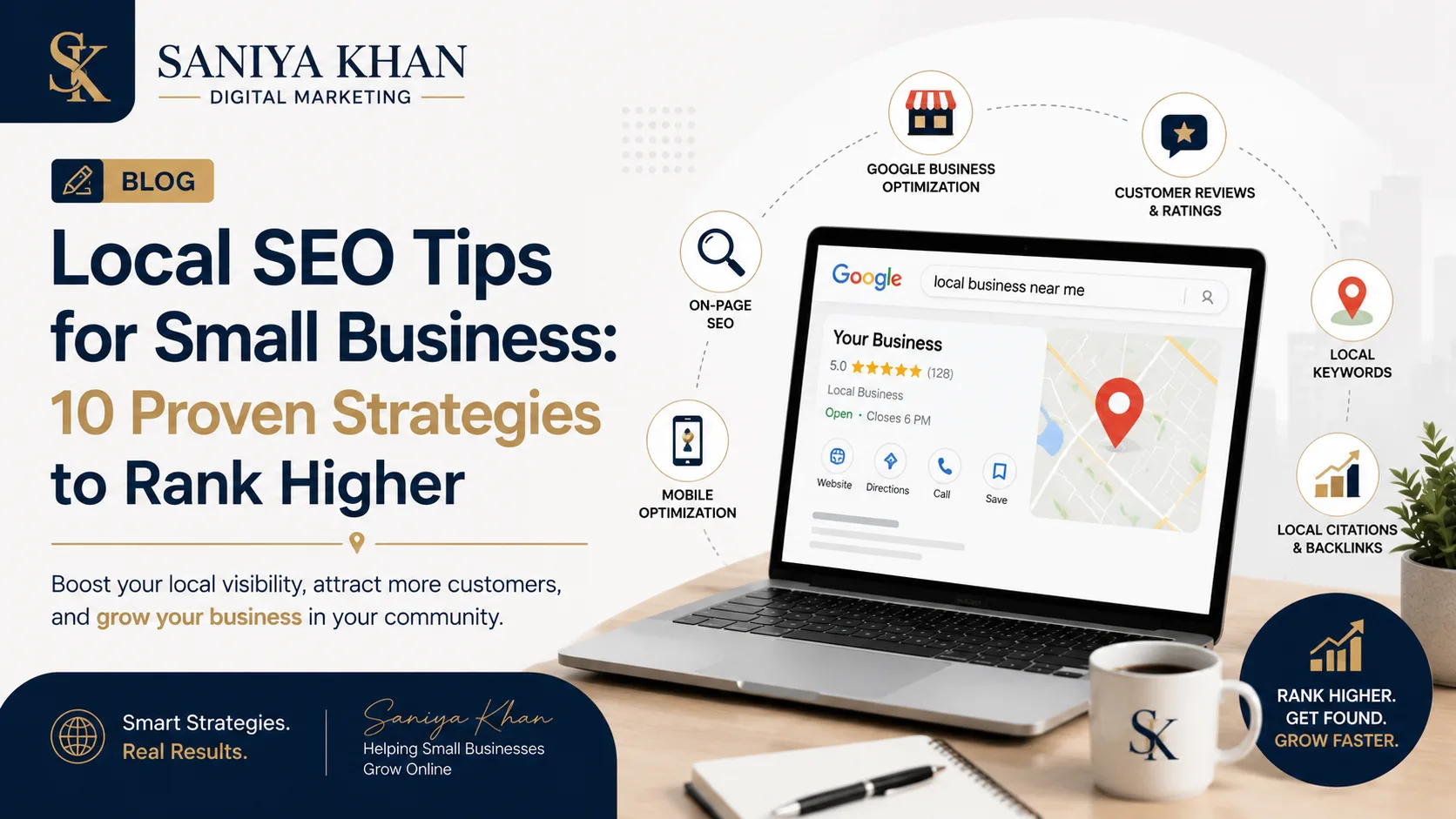
If you run a small business that depends on local customers — a café, salon, clinic, boutique, or service-based company — showing up when someone nearby searches for what you offer can make or break your growth. This guide covers practical local SEO tips for small business owners who want to attract nearby customers without needing a massive marketing budget.
These ten proven, beginner-friendly strategies will help your business rank higher in local search results and build a stronger online presence — written specifically for entrepreneurs aged 18 to 30 who are just getting started.
Why Local SEO Matters for Small Businesses
Before diving into strategies, it helps to understand why local search deserves your attention. When someone searches "coffee shop near me" or "best salon in [city]," search engines prioritize businesses that are relevant, trustworthy, and geographically close to the searcher.
If your business isn't optimized for these searches, you're invisible to a huge segment of potential customers — even if your product or service is excellent. Among all the digital strategies available, local SEO tips for small business owners tend to deliver the fastest, most direct return because they target people who are ready to buy, not just browse.
The Difference Between Local SEO and Traditional SEO
Traditional SEO focuses on ranking nationally or globally for broad keywords. Local SEO, on the other hand, focuses on ranking within a specific city, neighborhood, or service area. It relies heavily on signals like location, reviews, and local citations rather than just keyword-rich content alone.
Strategy 1: Claim and Optimize Your Google Business Profile
Your Google Business Profile (formerly Google My Business) is the single most important local SEO asset you have. It's what shows up in Google Maps and the local search results box when someone searches for businesses like yours nearby.
Fill Out Every Section Completely
Add your business hours, address, phone number, website, and category accurately. Incomplete profiles rank lower and appear less trustworthy to potential customers browsing search results.
Add Photos Regularly
Businesses with updated, high-quality photos tend to receive more clicks and calls than those with outdated or missing images. Show your storefront, products, team, and workspace to build familiarity before someone even visits.
Strategy 2: Use Location-Based Keywords Naturally
Incorporating your city or neighborhood name into your website content helps search engines understand exactly where you operate.
Where to Add Location Keywords
- Homepage title and headings
- Service page descriptions
- Blog posts and articles
- Image alt text
Avoid forcing location names into every sentence — this can feel unnatural to readers and may even hurt rankings if overdone.
Strategy 3: Collect and Respond to Customer Reviews
Reviews are one of the strongest trust signals for both search engines and potential customers. A steady stream of positive, recent reviews tells Google your business is active and reliable.
Make Leaving Reviews Easy
Send customers a direct link after a purchase or service, and ask politely rather than demanding a review. Simplicity increases response rates significantly.
Always Respond, Even to Negative Reviews
Responding professionally to criticism shows potential customers that you care about their experience, which often outweighs the negative review itself in their decision-making.
Strategy 4: Build Local Citations
A citation is any online mention of your business name, address, and phone number — even without a link. Consistency across these mentions strengthens your credibility in local search algorithms.
Keep Your NAP Consistent
Your Name, Address, and Phone number (NAP) should match exactly across your website, social media, and any directory listings. Even small inconsistencies, like abbreviating "Street" differently, can confuse search engines
List Your Business on Relevant Directories
Beyond Google, consider directories relevant to your industry or region, as these add legitimacy and additional pathways for customers to find you.
Strategy 5: Optimize Your Website for Mobile Users
Most local searches happen on mobile devices, often while someone is out and actively looking for a nearby solution. A slow or poorly designed mobile site can cost you a customer within seconds.
Prioritize Speed and Simplicity
Compress images, minimize unnecessary scripts, and ensure buttons like "Call Now" or "Get Directions" are easy to tap on smaller screens.
Strategy 6: Create Location-Specific Content
Publishing content relevant to your local audience helps establish authority while naturally reinforcing your area-based relevance. This is one of the more overlooked local SEO tips for small business owners, since it combines content marketing with location targeting.
Write About Local Events or Community Topics
Blog posts about local events, partnerships, or community involvement resonate with nearby audiences and often attract natural backlinks from other local sources.
Highlight Local Case Studies or Testimonials
Featuring stories from real, nearby customers builds relatability and reinforces that your business genuinely serves the local community.
Strategy 7: Leverage Social Media for Local Engagement
While social media isn't a direct ranking factor, it plays a supporting role in building local brand awareness and driving traffic to your website.
Tag Your Location in Posts
Adding location tags on platforms like Instagram or Facebook increases visibility among nearby users browsing location-based content or hashtags.
Engage With Local Followers and Businesses
Commenting on and sharing content from other local businesses builds community relationships that can lead to referrals and increased visibility
Strategy 8: Use Schema Markup for Local Businesses
Schema markup is code added to your website that helps search engines better understand your business details, such as hours, location, and reviews.
Why This Matters
Structured data can result in rich snippets — enhanced search results that display extra details like star ratings or hours directly in search results, increasing click-through rates.
Strategy 9: Monitor Your Local SEO Performance
Tracking your progress ensures you're investing time and effort into strategies that actually work.
Metrics Worth Watching
- Google Business Profile views and actions (calls, direction requests)
- Website traffic from local searches
- Keyword rankings for location-based terms
- Review quantity and average rating over time
Regularly reviewing this data allows you to refine your approach and focus on what's driving real results.
Strategy 10: Stay Consistent and Patient
Local SEO is not a one-time task — it's an ongoing effort. Search engines reward businesses that consistently update their profiles, publish relevant content, and maintain accurate information over time.
Set a Simple Routine
Dedicate a small amount of time each week to checking reviews, updating photos, or publishing new content. Small, consistent actions compound into meaningful visibility over months.
Common Mistakes to Avoid
Ignoring your Google Business Profile after setup — treat it as a living asset, not a one-time listing.
Inconsistent business information across platforms — this confuses both customers and search engines.
Focusing only on quantity of reviews, not quality of responses — engagement matters as much as volume.
Neglecting mobile experience — most local searchers are on their phones and expect fast, easy access to information.
Final Thoughts
Ranking higher in local search results doesn't require a massive marketing budget — it requires consistency, accuracy, and genuine engagement with your local community. These local SEO tips for small business owners work best when applied together rather than in isolation, since each strategy reinforces the others.
Start with the fundamentals — your Google Business Profile, consistent NAP information, and genuine customer reviews — before expanding into content and schema markup. Growth takes time, but every step covered in this guide brings your business closer to being the obvious