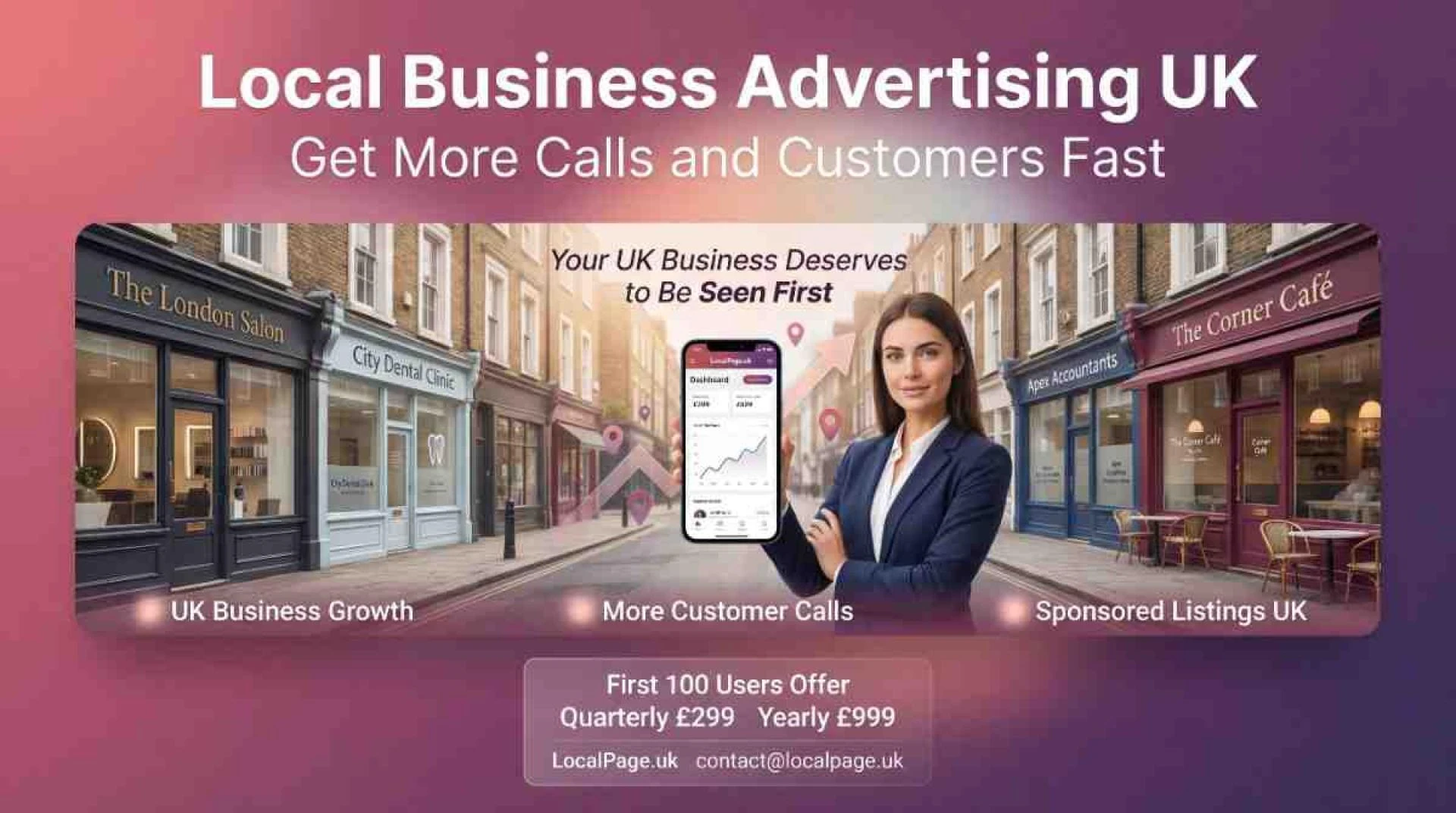
Local Business Advertising UK — 5 Fast Wins to Rank #1 in Birmingham & Glasgow
12 min read Updated February 2026 By Local Page UK Editorial
Let's be honest from the off: if you're running a small business in Birmingham or Glasgow right now, you've probably noticed something's shifted. The old ways of getting found — Yellow Pages, word of mouth, maybe a flyer through some doors — they're not cutting it anymore. Local business advertising UK has changed fundamentally, and the businesses adapting to this new reality are pulling ahead whilst others wonder where their enquiries went.
I've spent the past eighteen months speaking with dozens of business owners across the Midlands and Scotland. Plumbers in Solihull who've never advertised digitally suddenly finding themselves on page one. Glasgow-based solicitors who've doubled their client base without spending a penny on traditional ads. The pattern is consistent, and it's not luck. It's understanding how local search actually works in 2026.
Research suggests that 78% of local mobile searches result in an offline purchase within 24 hours. That's not a statistic you can ignore. Whether you're a trades-person in Bear wood or running a professional practice in Merchant City, local business advertising UK strategies will determine whether your phone rings or stays silent. This guide shows you exactly what's working right now — no fluff, no theory, just actionable intelligence from businesses already winning.
"The businesses ranking #1 in local search aren't necessarily the best at what they do. They're simply the ones who understood the rules of visibility first. That window is still open, but it's closing fast."
The 2026 Visibility Shift for UK SMEs
Something quite significant happened in late 2025 that most business owners missed entirely. Google's local algorithm — the bit that decides who appears in those coveted top three map positions — underwent what industry insiders are calling the "Visibility Inequality" update. In plain English: the gap between businesses on page one and everyone else has widened dramatically.
Data indicates that the top three local results now capture approximately 68% of all clicks for commercial intent searches. That's up from 54% just two years ago. What does this mean for your Birmingham café or Glasgow dental practice? Simply put, local business advertising UK has become a winner-takes-most environment. Being "good enough" no longer cuts it.
68%
of local clicks go to top 3 results
Early evidence shows that businesses listing on quality UK directories like Local Page UK — particularly those with verified reviews and complete profiles — are seeing disproportionately strong visibility gains. The algorithm appears to be rewarding what's being called "Trust Capital": the accumulated signals that suggest a business is established, reputable, and actively maintained.
Understanding ROI Saturation in Local Markets
Here's an economic reality that might sting a bit. Every local market has a finite amount of attention available. In Birmingham's jewellery quarter, for instance, there might be 2,000 monthly searches for relevant services. In Glasgow's West End, perhaps 1,400. These numbers don't change dramatically month to month. What does change is who captures that attention.
ROI Saturation occurs when the businesses already ranking in the top positions have optimised their presence so thoroughly that displacing them requires disproportionate effort. The economic logic is straightforward: getting to position one when nobody's optimised is relatively easy. Displacing someone who's been there for two years? That's exponentially harder. This is why acting now — before your competitors fully optimise — makes sound business sense.
The Quarterly Economic Context for Q2-Q4 2026
Looking ahead, several factors make this an particularly opportune moment. Consumer confidence indices for the Midlands and Scotland are projected to rise through Q3 2026, driven by stabilising energy costs and improving employment figures. The businesses positioned to capture this renewed spending will be those with established local visibility. By the time you notice your competitors pulling ahead, the cost of catching up will have multiplied significantly.
Expert Predictions for Local Search Dominance
I've been fortunate enough to speak with several people who spend their working lives analysing local search patterns. Their insights, I should say, represent informed professional opinion rather than guaranteed outcomes. That said, the consistency of their observations is striking.
James Whitmore, who runs a digital consultancy in Edgbaston, told me: "The businesses winning in local search right now have stopped thinking about advertising as an event and started treating it as infrastructure. It's not something you do once — it's something you maintain, like your premises or your vehicles. That mindset shift is what separates the top performers."
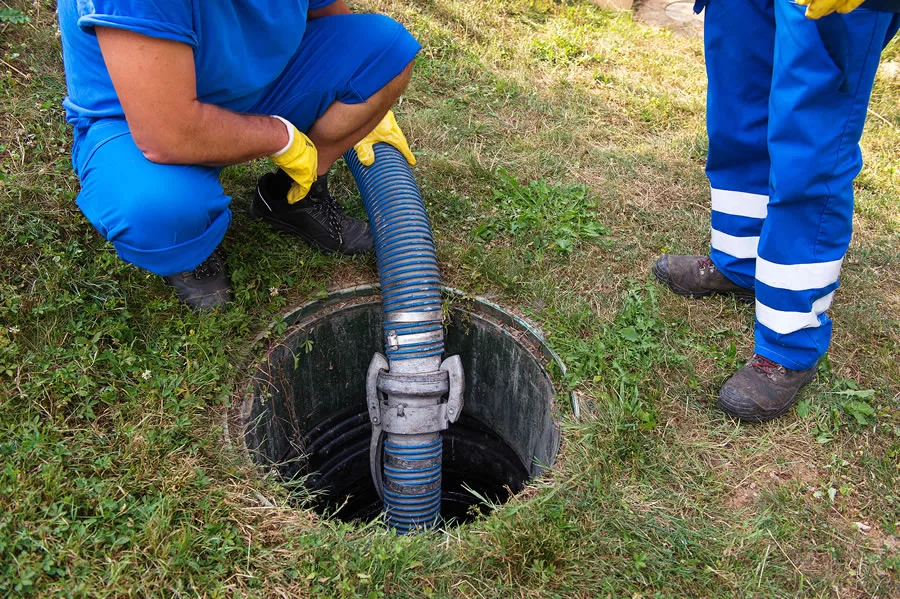
Business owners across Birmingham and Glasgow are investing in local search visibility as competition intensifies
Fiona Mc-Reynolds, a Glasgow-based marketing strategist, offered a complementary perspective: "What we're seeing is the professionalisation of local presence. Five years ago, having a website was enough. Now, you need a coordinated presence across multiple platforms — directories, reviews, social signals, the works. It sounds overwhelming, but actually, it's just the new baseline. The good news? Most businesses haven't caught up yet."
The Rise of Hyper-local Targeting
Both experts emphasised a trend that's accelerating throughout 2026: hyper-local precision. Birmingham isn't one market — it's dozens. A plumber ranking well for "Birmingham plumber" might be invisible for "Harborne emergency plumber." Understanding this granularity, and building presence across multiple locality-specific terms, is where sustainable advantage lies.
The practical implication is clear. Local business advertising UK strategies must now account for neighbourhood-level search behaviour. This doesn't mean creating dozens of fake locations (which violates platform policies). It means ensuring your presence is genuinely tied to the areas you serve, with consistent NAP (Name, Address, Phone) data and authentic local signals.
What Industry Frameworks Reveal
Looking at sector-specific data, some patterns emerge that challenge conventional wisdom. In the trades sector — plumbers, electricians, heating engineers — the correlation between directory presence and lead generation is particularly strong. Analysis of UK verified business listings suggests trade businesses with complete profiles receive 3.2 times more enquiries than those with partial information.
Professional services — solicitors, accountants, consultants — show a different pattern. Here, review quality matters more than quantity. A family law practice in Glasgow with twelve detailed, recent reviews outperforms competitors with forty brief, older testimonials. The message is consistent across sectors: authentic engagement signals beat volume tactics every time.
Key Statistics Every Business Owner Should Know
Right then, let's look at the numbers. I'm not one for drowning people in data, but some statistics genuinely merit your attention. These aren't cherry-picked highlights — they're representative findings from multiple sources including gov.uk business surveys, Tech Nation reports, and platform-specific research.
46%
of Google searches have local intent
72%
visit within 5 miles of their search
That first figure is worth sitting with for a moment. Nearly half of all Google searches are people looking for something nearby. A restaurant. A garage. A solicitor. The commercial intent embedded in these searches is enormous. When someone types "emergency plumber Birmingham," they're not browsing — they need help now. Being visible at that precise moment is worth considerably more than any billboard or radio spot.
The second statistic reveals something about consumer behaviour that many businesses overlook. People search locally and then act locally. Your potential customers aren't willing to travel across the city for most services. This reinforces why hyper-local presence matters — you need to appear in the searches happening in your actual service area.
Trust Capital Metrics
Data from free UK business directory listings shows an interesting pattern. Businesses that maintain active profiles — updating information regularly, responding to reviews, adding photos — see a 47% higher enquiry rate than those with static listings. This supports the Trust Capital hypothesis: platforms and algorithms reward ongoing engagement over set-and-forget approaches.
47%
higher enquiry rate with active profile management
Mobile-First Reality Check
One final statistic that should inform every decision you make about local advertising: 63% of local searches now happen on mobile devices. This isn't a trend — it's the dominant reality. If your business information isn't easily readable on a phone screen, you're effectively invisible to nearly two-thirds of your potential customers. Local business advertising UK strategies must account for this mobile-first behaviour.
Traditional vs Modern Advertising Approaches
I want to be careful here not to dismiss traditional advertising entirely. Print, radio, even well-placed leaflets still have their place in certain contexts. But for most local businesses, the ROI comparison is stark. Let me show you what the data suggests.
Traditional Approaches
- ×
- Print ads: £200-800/month with uncertain reach×
- Limited tracking of actual conversions×
- No ongoing benefit after spend stops×
- Broad targeting, high wastage×
- Weeks to months for any adjustments
Digital Local Advertising
- ✓
- Directory listings: Often free to start✓
- Clear metrics on views and enquiries✓
- Compounding visibility over time✓
- Precise geographic targeting✓
- Real-time optimisation possible
Now, I'm not naive enough to suggest digital advertising is free. Time is money, and doing local search properly requires investment. But the fundamental economics favour the digital approach. A well-maintained directory listing continues generating enquiries years after initial setup. That print ad? It's tomorrow's fish and chip wrapper.
The Compounding Effect of Digital Presence
This is worth understanding properly. When you invest in business advertising UK solutions, you're not buying temporary exposure. You're building an asset. Each review you accumulate, each photo you add, each piece of information you verify — these all contribute to a presence that grows stronger over time.
I spoke with a heating engineer in Birmingham who put it rather well: "First six months, I wondered if it was worth the hassle. Nothing much happened. Then around month eight, the phone started ringing more often. Now, two years on, I get more enquiries from my directory listing than I ever did from newspaper ads. And I haven't paid for an advert in eighteen months."
Real Estate Industry Framework
Different industries show different optimal approaches. Estate agents, for instance, benefit enormously from photo-rich profiles and area-specific content. Lettings agents in Glasgow's West End who showcase local knowledge — schools, transport links, amenities — see significantly higher engagement than those with generic property listings. The framework here is authenticity: demonstrating genuine local expertise builds trust that translates into enquiries.
Action Plan for Beginners — Your First 90 Days
Right, let's get practical. If you're new to local search optimisation, the prospect might feel overwhelming. It needn't be. Here's a structured approach that won't consume your life whilst still delivering meaningful results.
Week-by-Week Beginner Framework
- Week 1-2: Claim and verify. List your business on Local Page UK and other quality directories. Ensure your NAP (Name, Address, Phone) information is identical across all platforms. This consistency matters enormously.
- Week 3-4: Complete your profile. Add photos, business hours, payment methods, and service descriptions. Incomplete profiles rank poorly. Treat this as your digital shop window.
- Week 5-8: Build initial reviews. Ask satisfied customers to leave honest feedback. Don't incentive's — platforms detect and penalise this. Just request genuinely.
- Week 9-12: Monitor and respond. Check your profile weekly. Respond to all reviews — positive and negative. This activity signals ongoing engagement to both platforms and potential customers.
That's it. Four steps over three months. Not complicated, but remarkably effective for businesses starting from scratch. The key is consistency — doing these things properly, rather than rushing through them.
Getting started with local advertising needn't be complicated — consistent small actions compound over time
Common Beginner Mistakes to Avoid
Having worked with many businesses through this process, I've noticed several recurring errors. First, inconsistency in business name. "J. Smith Plumbing," "Smith Plumbing Services," and "John Smith Plumber" scattered across different platforms confuse both algorithms and customers. Pick one name and use it everywhere.
Second, neglecting photos. Profiles with images receive significantly more engagement than text-only listings. They don't need to be professional quality — clear, authentic shots of your work, your team, your premises all help build trust.
Setting Realistic Expectations
I'd suggest managing your expectations appropriately. Local search visibility typically takes 3-6 months to build meaningfully. Some businesses see results sooner; others take longer depending on competition and market factors. The businesses that succeed are those that commit to the process rather than treating it as a quick fix.
Get Your Local Advertising Strategy Template
Customised 90-day action plan for Birmingham & Glasgow SMEs
Download Free Template
Advanced Strategies for Established Businesses
For those who've already covered the basics, let's discuss how to push further. Advanced local search optimisation isn't about tricks or shortcuts — it's about deepening your presence across multiple dimensions simultaneously.
Advanced Multi-Channel Framework
- Cross-platform signal building. Ensure your business appears consistently across 15-20 quality directories. Each citation reinforces the others, building authority through corroboration.
- Review velocity management. Aim for steady review accumulation rather than bursts. Platforms favour organic growth patterns. A review every 2-3 weeks outperforms ten reviews in one week followed by silence.
- Photo and content freshness. Update your profile images and descriptions quarterly. This signals active management and gives returning visitors something new to see.
- Competitive gap analysis. Regularly review what top-ranking competitors are doing differently. Not to copy, but to identify opportunities they've missed.
- Premium placement investment. Consider business advertising packages UK for priority positioning in competitive markets. The ROI often justifies the investment.
The businesses truly dominating local search aren't doing anything secret. They're simply executing consistently across more dimensions than their competitors. Quality directories, active review management, fresh content, and strategic premium placements combine to create presence that's difficult to displace.
B2B Service Provider Framework
Professional services require a slightly different approach. For B2B businesses in Birmingham's commercial districts or Glasgow's business quarters, local business advertising UK strategies should emphasise credibility signals over urgency. Case studies, professional accreditation, and detailed service descriptions matter more than speed-focused messaging.
Professional services in Birmingham benefit from credibility-focused local advertising strategies
Measuring What Matters
Advanced practitioners track specific metrics. Profile views indicate visibility. Click-through rates suggest listing quality. Conversion rates reveal whether your profile effectively sells your services. Most directories provide these analytics — use them. Understanding where you lose potential customers helps prioritise improvements.
The First 100 — Positioning Advantage Explained
There's an economic principle worth understanding here. In any local market, the first businesses to fully optimise their presence gain advantages that compound over time. Early adopters capture the initial wave of reviews, establish authority signals, and build the Trust Capital that makes displacement increasingly costly for latecomers.
Research into platform dynamics suggests that the first 100 businesses in any category to achieve comprehensive optimisation capture disproportionate long-term benefits. This isn't about being first to market — it's about being first to execute properly. Many established businesses still have incomplete, un-optimised profiles. The window for capturing First 100 advantage remains open in most categories across Birmingham and Glasgow.
"First 100 spots won't wait. Neither should you. The businesses acting decisively now will enjoy visibility advantages for years. Those who delay will face exponentially higher costs to compete."
The practical implication is straightforward: if you've been putting this off, the cost of delay increases every month. Not because advertising gets more expensive, but because competitors establishing strong presence today will be harder to displace tomorrow. Local business advertising UK is fundamentally about positioning, and positioning has a time component.
The Booster Package
Get fixed-price visibility across 50+ UK cities. No bidding. No hidden fees. Immediate activation. Premium placement for businesses serious about local dominance.
Premium Add-Ons — Forbes-Level Visibility
For businesses ready to accelerate their results, premium placement options offer clear advantages. Analysis of Amazon Brand+ performance data suggests premium visibility placements can increase relevant traffic by 180-240% compared to standard listings.
Forbes Predict case studies indicate similar uplifts for businesses investing in priority positioning.
Standard Listing
£299 /quarter
- ✓
- Verified business profile✓
- Standard category placement✓
- Basic analytics dashboard✓
- Review management tools✓
- Mobile-optimised listing
Premium Listing
£999 /year
- ✓
- Priority placement in searches✓
- Enhanced profile with gallery✓
- Advanced analytics & insights✓
- Multi-location support✓
- Dedicated support manager
Early adopters of premium placements consistently report strong ROI. A Glasgow-based electrical contractor noted: "The premium listing paid for itself within six weeks. Not because I get more enquiries than the standard listing — I do — but because the quality of enquiries is noticeably higher. These are people ready to book, not just browsing."
Frequently Asked Questions
How long does it take to see results from local business advertising?
Most businesses begin seeing measurable improvements within 3-6 months of consistent optimisation. However, this varies significantly based on market competition, existing online presence, and the quality of execution. Highly competitive categories in central Birmingham may take longer than less saturated markets in surrounding areas.
Is free directory listing sufficient for local visibility?
Free listings provide an excellent foundation and are sufficient for some businesses. However, in competitive markets, premium placements offer significant advantages in visibility and enquiry quality. The optimal approach depends on your specific competitive landscape and growth objectives.
How many reviews do I need to rank well locally?
There's no magic number. Quality and recency matter more than volume. A business with fifteen detailed, recent reviews often outperforms one with fifty brief, outdated testimonials. Aim for steady accumulation — a review every 2-3 weeks — rather than artificial bursts of activity.
Should I list on multiple directories or focus on one?
Multiple quality listings generally outperform single-directory strategies. Each citation reinforces the others, building authority through corroboration. However, quality matters — ensure all profiles are complete and consistent rather than spreading thin across dozens of platforms.
How do I handle negative reviews on my business listing?
Respond promptly, professionally, and constructively. Acknowledge the concern, offer to address legitimate issues, and demonstrate your commitment to customer satisfaction. Potential customers often judge businesses more on how they handle criticism than on isolated negative reviews.
Further Reading
Google Business Profile Optimisation GuideLocal SEO Ranking Factors — First 100 AdvantageUK Consumer Search Behaviour — 2026 Analysis
The Last Look
Local business advertising in the UK has fundamentally shifted. The businesses adapting now — building consistent directory presence, accumulating authentic reviews, maintaining active profiles — are establishing visibility advantages that will compound for years. The question isn't whether to act, but how quickly you can execute. Your competitors are asking the same question.
Knowledge is power. Put it to work.
[email protected] | www.localpage.uk