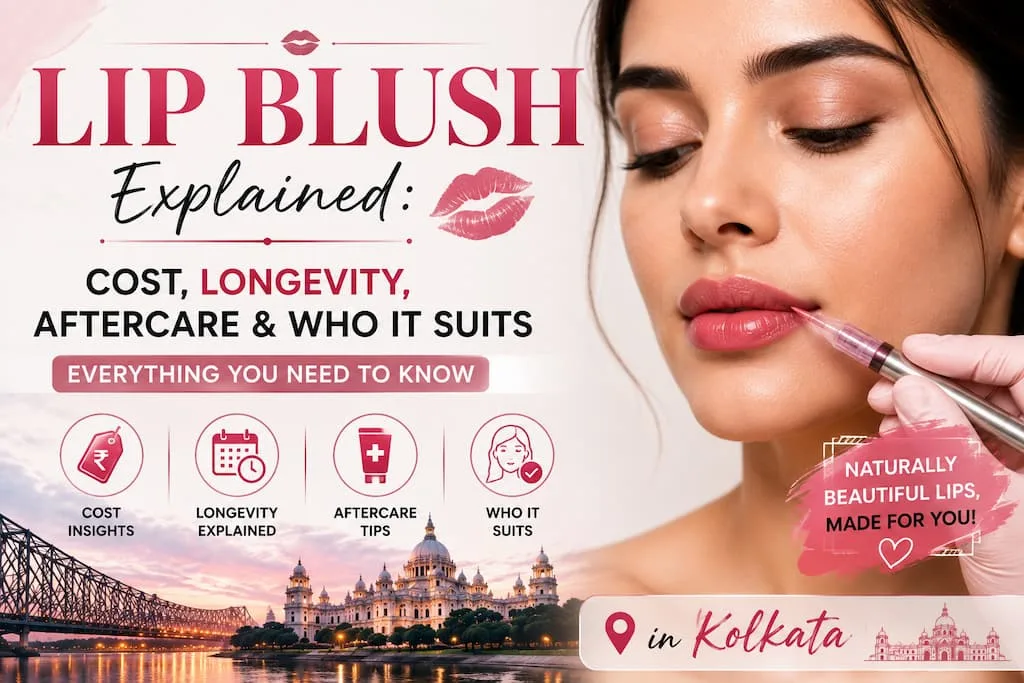
Lip Blush Explained: Cost, Longevity, Aftercare & Who It Suits
Lip blush has moved from a niche cosmetic tattoo procedure to one of the most requested treatments at permanent makeup studios, and most people asking about it have only a vague idea of what it actually does. Some assume it means a bold, solid lip color, permanently. Others assume it fades within weeks. Neither is accurate, and the gap between expectation and reality is where most disappointment with the treatment comes from.
Here is what lip blush actually involves, what a realistic result looks like at a studio such as Truly Permanent Beauty Clinic's lip blush service in Kolkata, and what decides whether it heals well or poorly.
What Lip Blush Actually Does
Lip blush is a form of semi-permanent makeup. A trained artist deposits cosmetic pigment into the upper layer of the lip using a fine needle, in a pattern that builds soft, even color rather than a flat block of tint. The goal is not to change the shape of the lips dramatically, it is to correct uneven tone, add definition to the border, and give the lips a naturally flushed look with or without lipstick on top.
It is not the same as a lip tattoo in the old sense. Traditional lip tattoos used deeper implantation and bolder pigment, which is why so many older lip tattoos look unnaturally dark or blue-toned years later. Lip blush pigment sits more superficially and is chosen specifically to fade evenly rather than shift color.
How Long It Actually Lasts
Most people get 18 to 30 months of visible color from a full lip blush treatment, though this varies by skin type, lifestyle, and how well the aftercare was followed. Oilier skin tends to hold pigment for a shorter window than dry or normal skin. Heavy sun exposure without lip SPF also speeds up fading.
A realistic pattern we have seen described by clinics doing this regularly: the color looks most saturated for the first two to three weeks post-healing, softens into a natural everyday tint by month two, and then fades gradually rather than disappearing all at once. Most clients book a touch-up between year one and year two, not because the treatment failed, but because gradual softening is expected, not a defect.
What It Costs
Pricing varies widely by city and studio reputation, generally landing between INR 6,000 and INR 25,000 in India depending on the artist's experience and whether a touch-up session is bundled in. At Truly Permanent Beauty Clinic in Kolkata, for example, lip blush sessions start from INR 5,900, which is fairly representative of a well-reviewed metro studio rate rather than a budget or premium outlier. The touch-up session, usually needed four to six weeks after the first appointment to fill in any patchy areas, is sometimes priced separately, so it is worth confirming that upfront rather than assuming it is included.
Who Is (and Isn't) a Good Candidate
- Good candidates: people with naturally uneven lip tone, a pale or undefined lip border, or lips that look washed out without makeup
- Proceed with caution: active cold sores or a history of frequent lip herpes outbreaks, since the procedure can trigger a flare-up
- Not recommended during: pregnancy, breastfeeding, or if you are on blood thinners without medical clearance
- Manage expectations: anyone expecting a dramatic shape change rather than a color and definition improvement, since lip blush is not filler
The Healing Process, Honestly
The first three to five days are the least flattering part of the process. Lips typically look darker and more saturated than the final result, followed by light peeling and flaking as the top layer sheds, usually around day four to seven. This is the stage where most people panic and assume the color came out wrong. It has not; the color underneath the peeling skin is not the final shade. True healed color only becomes visible after the surface layer has fully shed, generally by week two, and it continues to soften slightly for another two to four weeks after that.
Aftercare That Actually Affects the Result
The single biggest factor in how well lip blush heals is not the artist's technique, it is how closely the aftercare instructions are followed in the first ten days. The most common mistakes:
- Picking or peeling flaking skin instead of letting it shed naturally, which pulls out pigment unevenly and can leave patchy spots
- Skipping the recommended aftercare balm, letting lips dry out and crack
- Eating very spicy or acidic food in the first few days, which irritates healing tissue
- Sun exposure without lip SPF once healed, which is the leading cause of premature fading
Clinics that do this procedure regularly will usually give written aftercare instructions and a follow-up check window, since uneven healing from poor aftercare is far more common than a genuinely bad outcome from the treatment itself.
The Bottom Line
Lip blush is a low-drama way to correct uneven lip tone and add definition, provided expectations are set correctly going in: it is subtle, not a shape change, it fades gradually over one and a half to two and a half years, and the first two weeks of healing will look worse before they look right. Choosing a studio that is transparent about pricing, touch-up costs, and aftercare is a better predictor of a good result than chasing the cheapest quote.
About the author: This article was prepared with input from Shreya Banerjee, a Cosmetologist, Aesthetician, and PMU Expert, and founder of Truly Permanent Beauty Clinic in Kolkata, which offers lip blush and other permanent makeup treatments across its Ballygunge and Gariahat locations.