Safety at sea depends on preparation, reliability, and the quality of the equipment onboard. Whether it’s a commercial vessel, fishing boat, yacht, or offshore support craft, properly maintained marine safety equipment can make the difference between a controlled emergency and a life-threatening situation.
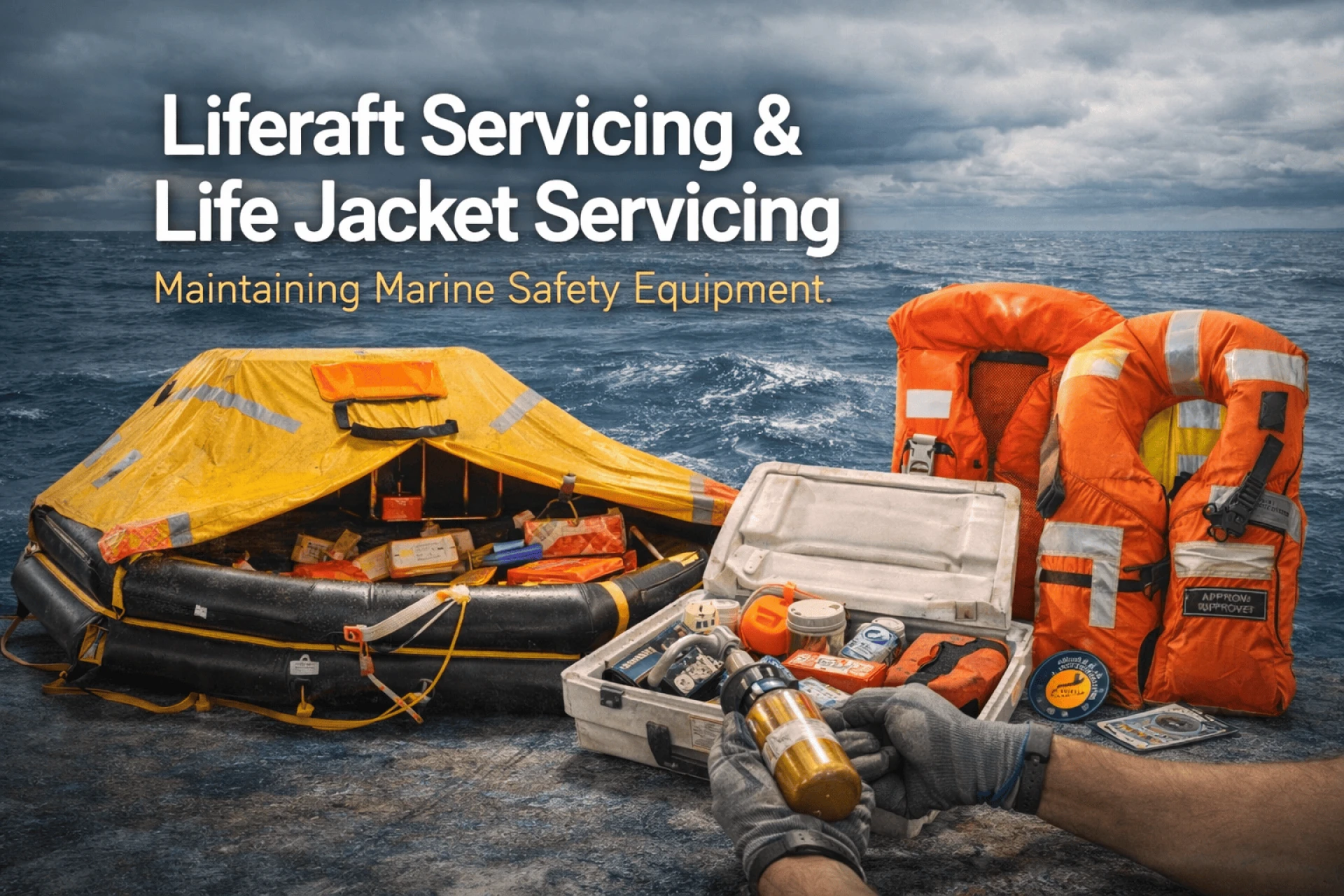
Among the most essential safety systems onboard are liferafts and life jackets. While these devices are designed to save lives, their effectiveness depends heavily on regular inspection and maintenance. This is why liferaft servicing and life jacket servicing are not optional—they are essential responsibilities for vessel owners and operators.
The Role of Marine Safety Equipment
Every vessel operating in coastal or offshore waters must carry a range of safety gear designed to protect crew members and passengers in emergencies. This equipment includes liferafts, life jackets, lifebuoys, distress signals, emergency radios, and first aid kits.
Organizations such as the International Maritime Organization and the International Convention for the Safety of Life at Sea establish international safety regulations to ensure vessels meet minimum safety standards.
These regulations emphasize two important principles:
- Safety equipment must be properly certified
- Safety equipment must be regularly serviced
Without routine inspections, even the most advanced safety gear can fail when it is needed most.
Liferaft Servicing: Ensuring Emergency Readiness
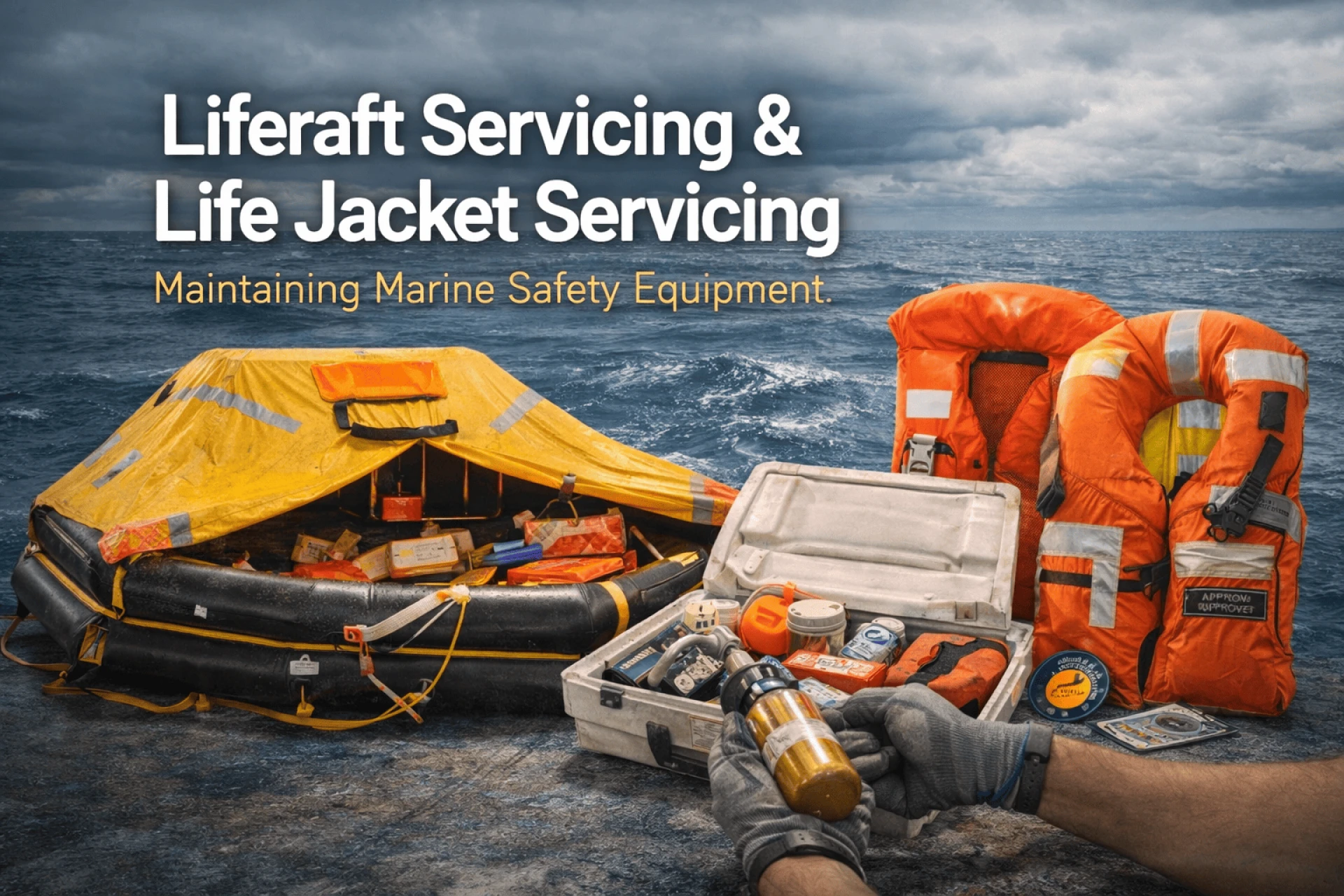
A liferaft is designed to provide a safe refuge if a vessel must be abandoned. Modern liferafts are packed with survival supplies such as drinking water, emergency rations, signaling equipment, and thermal protection.
However, liferafts remain stored in sealed containers for long periods, often exposed to salt air, temperature changes, and humidity. Over time, components like inflation cylinders, valves, and survival packs can deteriorate.
Professional liferaft servicing ensures that the equipment remains fully operational. During servicing, trained technicians perform several important checks, including:
- Testing the inflation system
- Inspecting gas cylinders and pressure levels
- Examining the raft fabric for wear or damage
- Replacing expired survival supplies
- Repacking the raft according to safety standards
Most maritime safety guidelines recommend liferaft servicing at approved intervals to ensure compliance and reliability.
Why Regular Servicing Matters
Marine environments are demanding. Saltwater corrosion, UV exposure, and humidity all contribute to the gradual deterioration of safety equipment. Without proper maintenance, equipment may appear functional but fail during an emergency.
Routine servicing offers several key benefits:
1. Safety Assurance
Servicing confirms that equipment will perform as expected when deployed.
2. Regulatory Compliance
Many maritime authorities require certified servicing to maintain vessel compliance.
3. Equipment Longevity
Professional maintenance helps extend the lifespan of marine safety equipment.
4. Peace of Mind
Crew members and passengers gain confidence knowing safety equipment has been professionally inspected.
Choosing Reliable Marine Safety Equipment
When purchasing or maintaining marine safety equipment, quality and certification should always be a priority. Equipment should meet recognized international safety standards and be serviced by trained technicians with approved facilities.
Reliable marine safety equipment suppliers typically offer:
- Certified liferaft servicing
- Professional life jacket inspections
- Replacement parts and safety accessories
- Compliance guidance for vessel operators
Working with experienced providers ensures that safety systems remain dependable throughout the vessel’s operating life.
Final Thoughts
The sea can be unpredictable, and emergencies can occur without warning. Properly maintained marine safety equipment provides critical protection when unexpected situations arise.
By prioritizing regular liferaft and life jacket servicing, vessel operators ensure their safety systems remain ready for immediate use. Routine inspections, professional maintenance, and adherence to maritime safety standards all contribute to a safer environment for everyone onboard.
In the world of marine operations, preparation is the strongest defense against risk. Investing in properly maintained safety equipment today can help protect lives tomorrow.