Life insurance has become an essential financial tool for securing the future of individuals and families in India. With the rapid expansion of digital services, the distribution of insurance products has also evolved significantly. One such important contributor to this ecosystem is the LIC Merchant, who acts as a bridge between customers and insurance services. The concept of www lic merchant has gained popularity due to its convenience and accessibility, especially in semi-urban and rural areas.
A LIC Merchant is an authorized individual or entity that provides premium collection services and assists customers with various insurance-related transactions. They play a vital role in enhancing customer experience by offering doorstep services and simplifying policy management.
What is a LIC Merchant?
A LIC Merchant is a service provider authorized by Life Insurance Corporation of India to collect insurance premiums on behalf of policyholders. These merchants operate through a digital platform and help customers pay premiums, check policy details, and perform other basic transactions.
Unlike LIC agents who primarily focus on selling policies, LIC Merchants are more service-oriented. They ensure that policyholders can conveniently pay their premiums without visiting a branch office.
Key Roles and Responsibilities of a LIC Merchant
LIC Merchants play multiple roles that contribute to improving customer satisfaction and operational efficiency. Some of their primary responsibilities include:
1. Premium Collection
The core responsibility of a LIC Merchant is to collect insurance premiums from policyholders through digital or offline modes.
2. Customer Assistance
They assist customers with queries related to policy status, due dates, and payment methods.
3. Policy Servicing Support
LIC Merchants help policyholders with minor servicing requests such as updating contact details or guiding them through online processes.
4. Digital Enablement
They promote digital transactions and help customers adopt online payment methods, especially in areas where digital literacy is low.
5. Expanding LIC Reach
By operating in remote locations, LIC Merchants help expand the reach of LIC services across the country.
Benefits of Becoming a LIC Merchant
Becoming a LIC Merchant offers several advantages, especially for individuals looking to start a low-investment business in the financial services sector.
1. Low Investment Requirement
You don’t need significant capital to become a LIC Merchant, making it an accessible opportunity for many.
2. Additional Income Source
Merchants earn commissions on every transaction, creating a steady source of income.
3. Flexible Working Hours
This role allows flexibility, making it suitable for students, small business owners, and professionals.
4. Business Growth Opportunity
With increasing insurance awareness, the demand for such services continues to grow.
5. Trust and Credibility
Being associated with Life Insurance Corporation of India enhances your credibility in the market.
Eligibility Criteria for LIC Merchant Registration
To become a LIC Merchant, applicants must meet certain eligibility conditions:
- Minimum age of 18 years
- Basic educational qualification (usually 10th pass or above)
- Basic computer knowledge
- Valid identity and address proof
- Bank account for transaction settlements
These requirements ensure that the merchant can effectively handle digital transactions and customer interactions.
LIC Merchant Registration Process
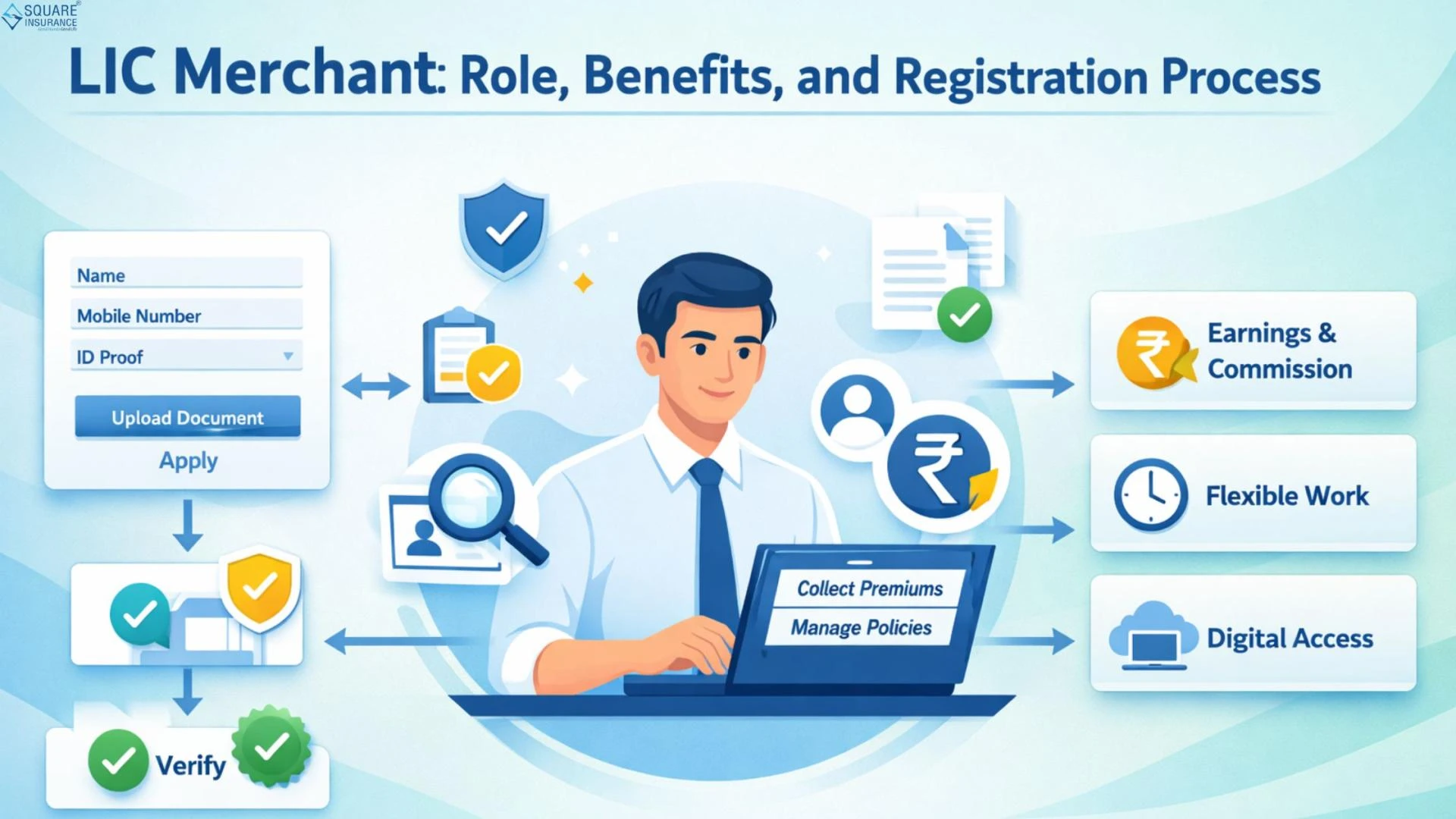
The registration process for becoming a LIC Merchant is simple and straightforward. Here’s a step-by-step guide:
Step 1: Contact LIC Office or Authorized Channel
Visit the nearest LIC branch or connect with authorized representatives for enrollment.
Step 2: Submit Application Form
Fill out the registration form with accurate personal and professional details.
Step 3: Document Verification
Provide necessary documents such as identity proof, address proof, and bank details for verification.
Step 4: Training and Onboarding
Some applicants may receive basic training to understand the system and services.
Step 5: Activation
Once approved, you will receive login credentials and access to the merchant platform.
Documents Required for LIC Merchant Registration
To complete the registration process, you will typically need:
- Aadhaar Card or PAN Card
- Passport-sized photographs
- Address proof (Electricity bill, Voter ID, etc.)
- Bank account details
- Educational qualification certificate
Ensuring all documents are valid and updated helps speed up the approval process.
How LIC Merchant Services Work
Once registered, LIC Merchants operate through a digital interface that enables them to:
- Accept premium payments
- Generate payment receipts
- Access policy details
- Track transaction history
The system is designed to be user-friendly, allowing merchants to serve customers efficiently without requiring advanced technical skills.
Challenges Faced by LIC Merchants
While the role offers numerous benefits, there are also some challenges:
- Dependency on internet connectivity
- Limited service scope compared to agents
- Need for continuous customer engagement
- Competition from online payment platforms
However, with proper training and dedication, these challenges can be effectively managed.
Future Scope of LIC Merchants in India
The future of LIC Merchants looks promising due to increasing insurance penetration and digital adoption. Government initiatives promoting financial inclusion have further boosted the demand for such services.
As more people seek convenient ways to manage their insurance policies, LIC Merchants will continue to play a crucial role in bridging the gap between technology and customers.
Frequently Asked Questions (FAQs)
Q1. What is the main role of a LIC Merchant?
A LIC Merchant primarily collects insurance premiums and assists customers with basic policy services.
Q2. Is there any investment required to become a LIC Merchant?
The investment is minimal, mainly involving basic infrastructure like a computer and internet connection.
Q3. Can a LIC agent become a LIC Merchant?
Yes, in some cases, LIC agents can also operate as merchants, depending on eligibility and guidelines.
Q4. How do LIC Merchants earn money?
They earn commissions on each premium collection and transaction they process.
Q5. Is training provided during registration?
Yes, basic training is usually provided to help merchants understand the platform and services.
Q6. Can LIC Merchants sell insurance policies?
No, their primary role is service-related, not sales-focused.
Conclusion
LIC Merchants have emerged as an essential part of India’s insurance ecosystem by simplifying premium payments and improving customer accessibility. Their role is especially significant in areas where digital adoption is still growing. By offering convenience, flexibility, and earning opportunities, this model continues to attract individuals looking to enter the insurance service sector.
If you are planning to explore opportunities in insurance services, you can also consider platforms like Square Insurance that provide innovative tools and support for insurance professionals to grow their business efficiently.
Please Note: Manage your policies seamlessly with Square Insurance POS apps on Google Play—access your insurance services anytime, anywhere.