
Strong leadership plays an important role in how organizations manage people, respond to challenges, and achieve business objectives. From guiding daily operations to making strategic decisions, leaders influence employee performance, workplace culture, and organizational effectiveness. As businesses evolve, the need for capable leaders extends beyond senior management to supervisors, team leads, and employees preparing for greater responsibilities.
However, effective leadership does not develop through job titles or experience alone. Employees need opportunities to strengthen their skills, gain practical experience, receive feedback, and learn how to manage different workplace situations. This is where leadership development becomes significant.
This article explores the importance of leadership development, the essential skills employees need, and how organizations can create effective programs to prepare their workforce for leadership responsibilities.
What is Leadership Development?
Leadership development is the ongoing process of helping individuals build the skills, knowledge, and capabilities required to guide teams, manage responsibilities, and contribute to organizational goals. It involves preparing employees to take on leadership roles while helping existing managers become more effective in their responsibilities.
Unlike approaches that focus only on formal management training, leadership development combines different learning experiences, including mentoring, coaching, practical assignments, workshops, feedback, and continuous learning.
The process can begin before an employee enters a management position and continue throughout their leadership career. For example, an organization may identify an employee with strong problem-solving and communication skills as a potential team lead. Through mentoring, project ownership, and structured learning opportunities, that employee can gradually develop the capabilities needed to manage a team.
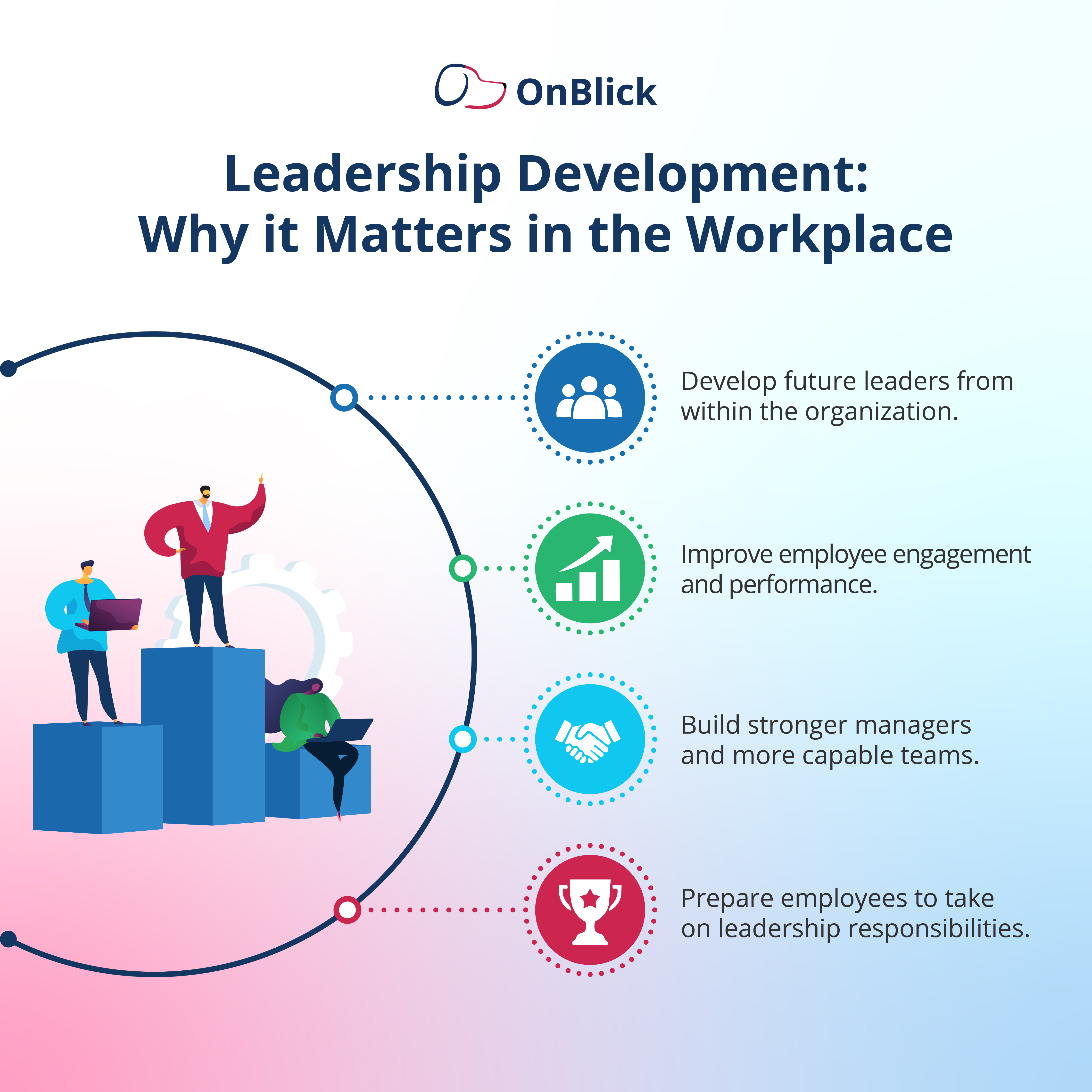
Why is leadership development important?
Leadership Development vs. Leadership Training
Although these terms are closely related,leadership development and leadership training have different scopes.
Leadership training is one component of a broader leadership development strategy. While training helps employees acquire specific knowledge, development focuses on applying those skills in real workplace situations and building long-term leadership capabilities.
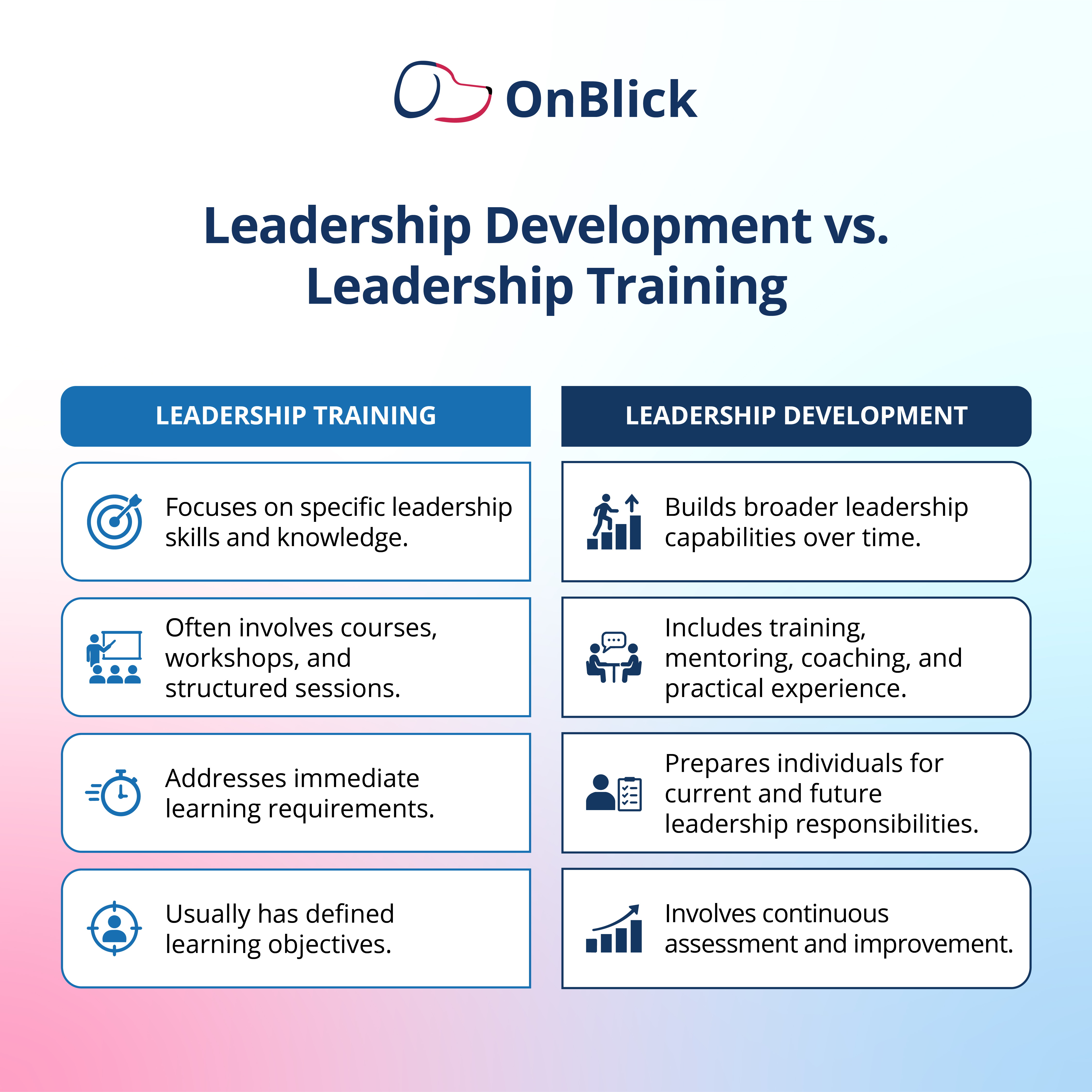
Leadership training and leadership management
Why is Leadership Development Important for Organizations?
Leadership influences how employees work, communicate, and respond to organizational expectations. Developing capable leaders can therefore benefit both individual employees and the wider organization.
Here are some important reasons businesses invest in leadership development.
1. Improves Employee Engagement
Managers influence employees' day-to-day workplace experiences. Leaders who communicate clearly, recognize contributions, provide feedback, and support professional development can create a more positive working environment.
Leadership development helps managers understand how their behavior affects employee motivation and engagement. It also equips them to build stronger relationships with their teams.
2. Strengthens Team Performance
Effective leaders help employees understand priorities, responsibilities, and expected outcomes. They coordinate activities, address challenges, and encourage collaboration across teams.
Developing leadership capabilities in supervisors and managers can improve how teams approach their work, manage deadlines, and remain accountable for results.
3. Supports Employee Retention
Employees often consider management quality when deciding whether to remain with an organization. Managers who provide constructive feedback, recognize employee contributions, and support career development can help create a workplace where employees feel valued.
Leadership development helps organizations prepare managers to support their teams and address workplace concerns more effectively.
4. Builds a Strong Succession Pipeline
Organizations need employees who can take on critical responsibilities when existing leaders move into new positions or leave the company.
A leadership development program helps identify employees with leadership potential and prepare them for future roles. This reduces dependence on external hiring for every management vacancy and supports continuity in important business functions.
5. Improves Organizational Adaptability
Business priorities, technologies, customer expectations, and workforce requirements continue to change. Leaders need to evaluate new situations, make informed decisions, and guide employees through transitions.
Leadership development strengthens the ability of managers to respond to uncertainty while keeping teams aligned with organizational objectives.
6. Encourages a Positive Workplace Culture
Leadership behavior influences how employees communicate, collaborate, and handle disagreements. Managers who demonstrate accountability, fairness, and respect can help establish consistent workplace expectations.
Developing these behaviors across management levels supports a more cohesive organizational culture.
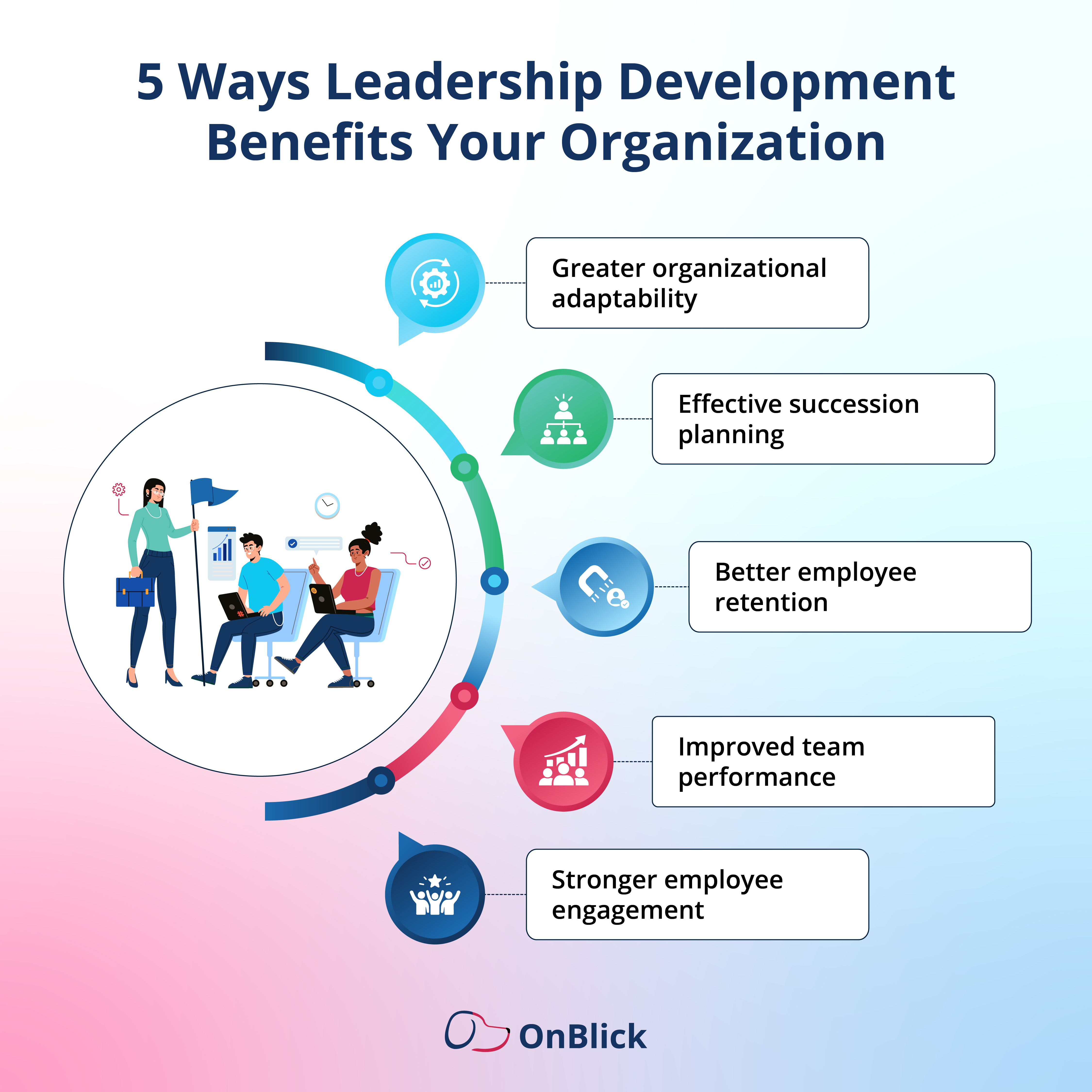
Leadership Development: Benefits
What Are the Essential Leadership Skills to Develop?
Effective leadership requires a combination of interpersonal, managerial, and strategic capabilities. Although the specific requirements vary across roles and industries, certain skills are important for individuals responsible for guiding teams.
1. Communication
Leaders need to communicate expectations, share information, provide feedback, and encourage open discussions. Clear communication helps employees understand their responsibilities and reduces misunderstandings.
2. Decision-Making
Managers regularly make decisions involving resources, deadlines, employee concerns, and business priorities. Strong decision-making involves evaluating available information, considering potential outcomes, and selecting appropriate actions.
3. Emotional Intelligence
Emotional intelligence helps leaders understand their own reactions and recognize the perspectives of others. It supports effective workplace relationships, constructive conversations, and better responses to employee concerns.
4. Conflict Resolution
Disagreements can arise from differences in expectations, communication styles, responsibilities, or priorities. Leaders need to identify the underlying issues, listen to different perspectives, and work toward constructive resolutions.
5. Delegation and Accountability
Effective leaders understand how to distribute responsibilities according to employees' capabilities and workload. Delegation also involves communicating expectations, providing necessary support, and following up on progress.
6. Strategic Thinking
Leaders need to understand how individual team activities contribute to broader organizational objectives. Strategic thinking helps them prioritize work, allocate resources, anticipate challenges, and identify opportunities for improvement.
7. Coaching and Mentoring
Developing other employees is an important leadership responsibility. Managers who provide guidance, share knowledge, and encourage professional learning help build stronger teams and prepare employees for future responsibilities.
8. Adaptability
Workplace requirements can change due to new technologies, organizational restructuring, customer needs, and market conditions. Adaptable leaders can reassess priorities and help employees respond to changing circumstances.
Organizations can incorporate these competencies into their leadership development plans and assess progress through feedback, performance discussions, and practical assignments.
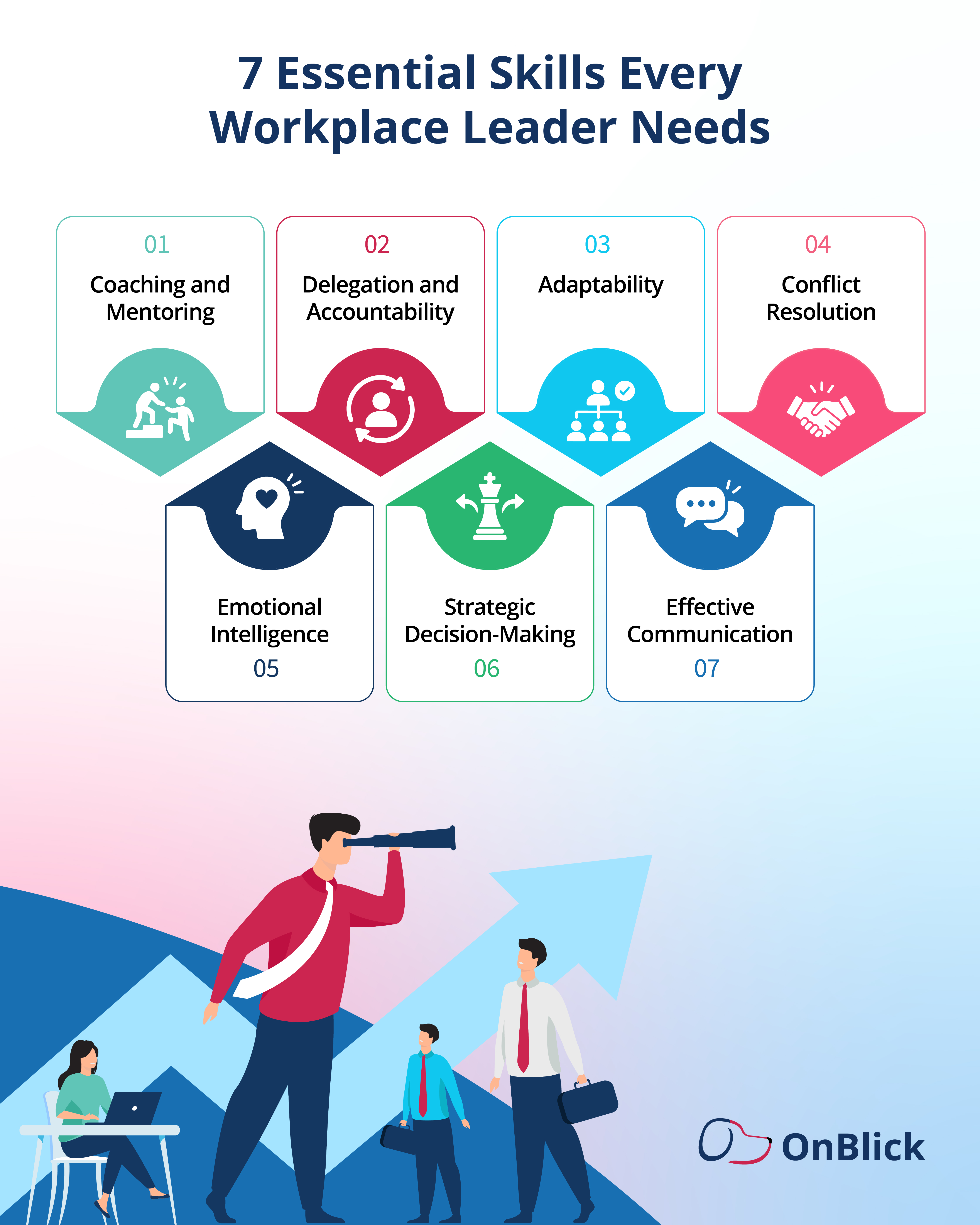
Skills Leaders Must Have
Leadership Development at Different Career Stages
Leadership development is not limited to employees who already hold management positions. Different career stages require different development priorities, and organizations benefit from preparing employees before they move into leadership roles.
Emerging Leaders
Employees who demonstrate initiative, accountability, problem-solving abilities, and collaboration skills may have the potential to become future leaders.
Development at this stage can include:
- Opportunities to lead small projects.
- Exposure to team coordination responsibilities.
- Communication and problem-solving workshops.
- Mentoring from experienced managers.
- Participation in cross-functional assignments.
First-Time Managers
Employees transitioning into management positions need support as they move from individual responsibilities to managing people and team outcomes.
Development priorities include:
- Delegation and workload management.
- Setting expectations and goals.
- Providing employee feedback.
- Handling workplace conflicts.
- Conducting performance discussions.
Mid-Level Managers
Mid-level managers often coordinate multiple teams or functions while translating organizational objectives into operational plans.
Their development can focus on:
- Strategic planning and decision-making.
- Cross-functional collaboration.
- Resource allocation.
- Change management.
- Team performance and accountability.
Senior Leaders and Executives
Senior leaders are responsible for broader organizational priorities, long-term planning, and business performance.
Development at this level may involve:
- Organizational strategy and vision.
- Executive decision-making.
- Leadership alignment.
- Organizational transformation.
- Succession planning and talent development.
A structured approach across these career stages helps organizations create a continuous leadership pipeline instead of addressing leadership requirements only when a vacancy arises.
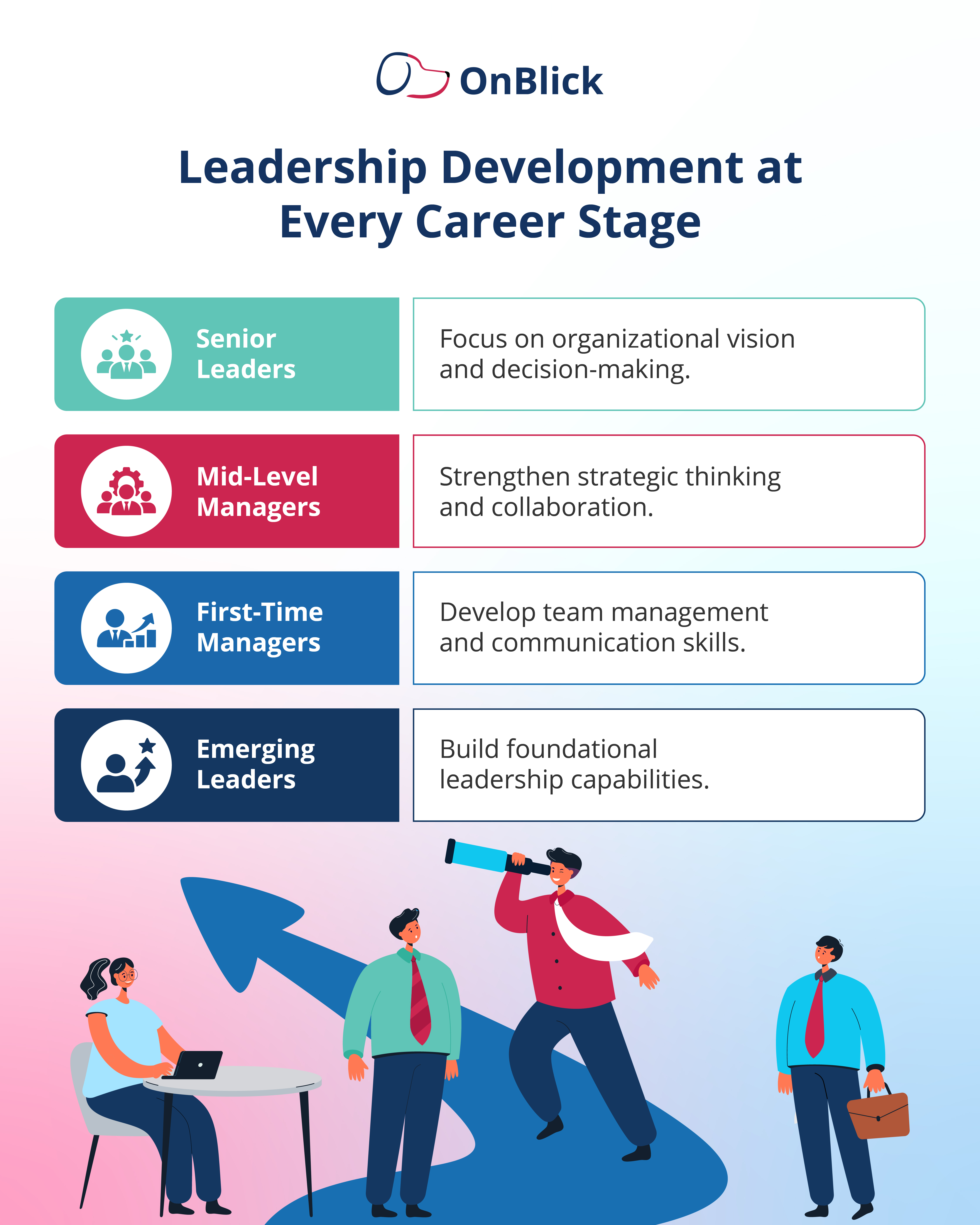
Leadership Development: Different Career Stages
How to Build an Effective Leadership Development Program
A successful leadership development program requires more than organizing occasional training sessions. Organizations need to understand their leadership requirements, identify development opportunities, and establish ways to evaluate progress.
The following steps can help HR teams create a structured program.
Step 1: Identify Organizational Leadership Needs
Start by understanding the leadership capabilities required to support current and future business objectives.
Consider the organization's size, structure, workforce requirements, growth plans, and operational challenges. For example, an IT services company expanding its client operations may need more project managers and account managers with strong communication, resource planning, and team coordination skills.
Identifying these requirements helps HR teams determine which leadership capabilities deserve priority.
Step 2: Assess Existing Leadership Capabilities
Evaluate the strengths and development areas of existing managers and employees with leadership potential.
Organizations can use:
- Performance reviews.
- Manager and employee feedback.
- Leadership competency assessments.
- Self-assessments.
- Peer feedback.
- Observation of workplace performance.
The objective is to understand current capabilities and identify areas where additional support or experience may be useful.
Step 3: Establish Clear Development Goals
Once leadership needs are identified, establish measurable development objectives.
For example, a first-time manager may need to improve delegation, while a department head may need to strengthen strategic planning and cross-functional coordination.
Clear goals make it easier to select appropriate development activities and evaluate whether employees are making progress.
Step 4: Create Individual Leadership Development Plans
Employees have different strengths, experience levels, and career aspirations. A personalized leadership development plan helps align learning opportunities with individual requirements.
Each plan can include:
- Current skills and competencies.
- Specific development areas.
- Learning activities and resources.
- Mentoring or coaching opportunities.
- Practical assignments.
- Expected outcomes and review timelines.
These plans also help employees understand what is expected of them as they prepare for greater responsibilities.
Step 5: Provide Structured Learning Opportunities
Organizations can combine different learning approaches to develop leadership capabilities.
Some effective options include:
- Leadership workshops: Provide structured learning on communication, decision-making, conflict resolution, and team management.
- Mentoring: Connect employees with experienced leaders who can share knowledge and provide career guidance.
- Coaching: Offer individualized support to help managers address specific leadership challenges and improve performance.
- Online learning: Provide access to courses, learning resources, and development materials that employees can use at their convenience.
- Cross-functional assignments: Allow employees to work with different teams and understand broader organizational operations.
Step 6: Encourage Practical Leadership Experience
Leadership skills develop through application. Employees need opportunities to use what they learn in real workplace situations.
Organizations can assign project leadership responsibilities, encourage employees to coordinate team activities, and involve emerging leaders in planning and decision-making.
These experiences help employees build confidence, understand management responsibilities, and learn from challenges.
Step 7: Collect Feedback and Monitor Progress
Regular feedback helps employees understand their development and identify areas requiring further attention.
HR teams and managers can review progress through performance discussions, employee feedback, leadership assessments, and observations of workplace behavior.
Development plans should remain flexible so that learning activities can be adjusted according to individual progress and changing organizational requirements.
Step 8: Review and Improve the Program
Leadership development should evolve with the organization. HR teams can periodically review development outcomes, identify gaps, and assess whether the program continues to support business priorities.
This helps organizations maintain relevant development initiatives and prepare employees for changing leadership responsibilities.
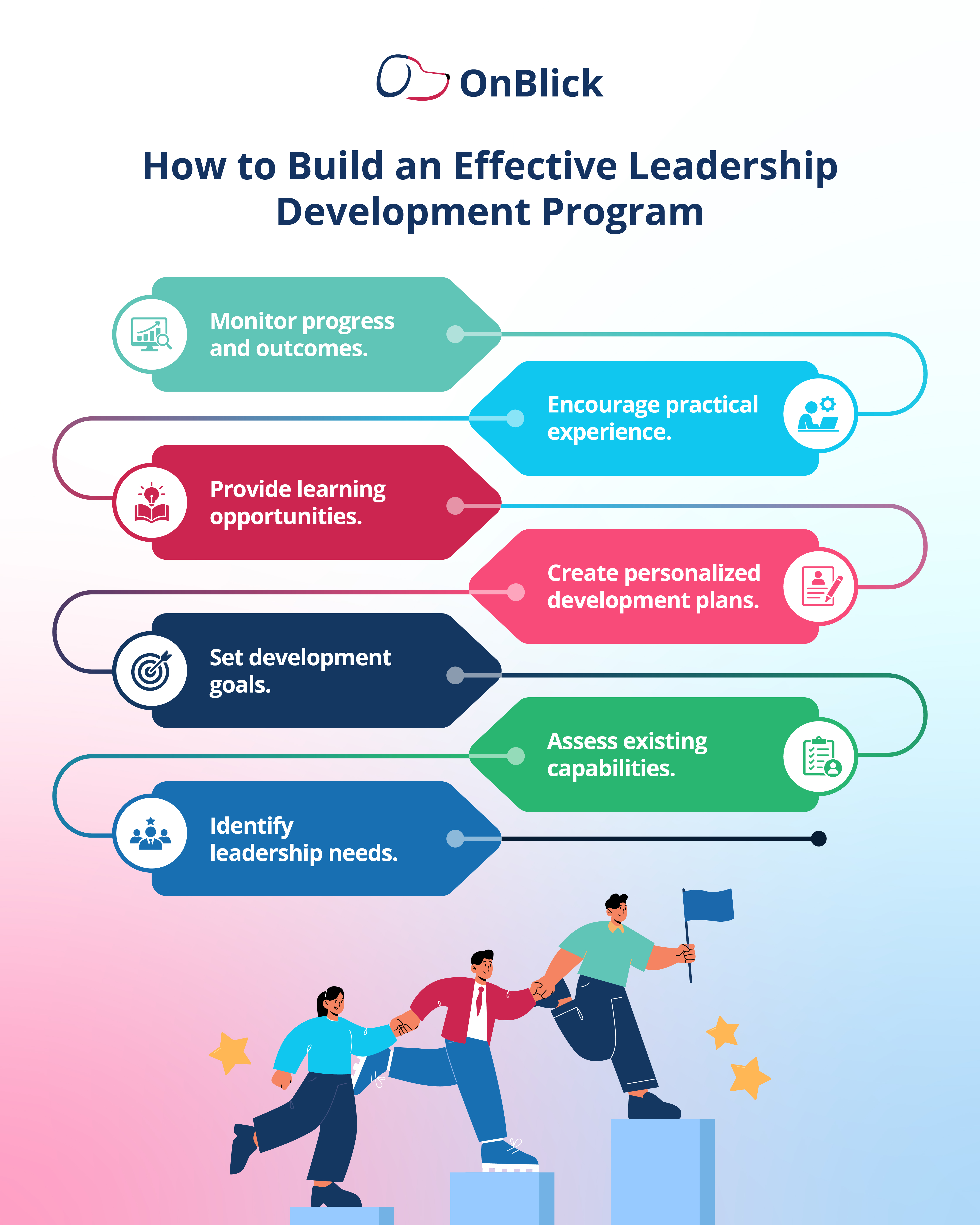
Building a Leadership Development Program
Common Leadership Development Challenges and How to Address Them
Even organizations that recognize the importance of leadership development can encounter challenges when implementing structured programs.
Understanding these challenges helps HR teams create more effective development strategies.
Another common challenge is treating leadership development as a one-time initiative. Employees need continued opportunities to apply their learning, receive feedback, and strengthen their capabilities.
Organizations can address this by integrating leadership development into regular HR processes rather than treating it as a separate training activity.
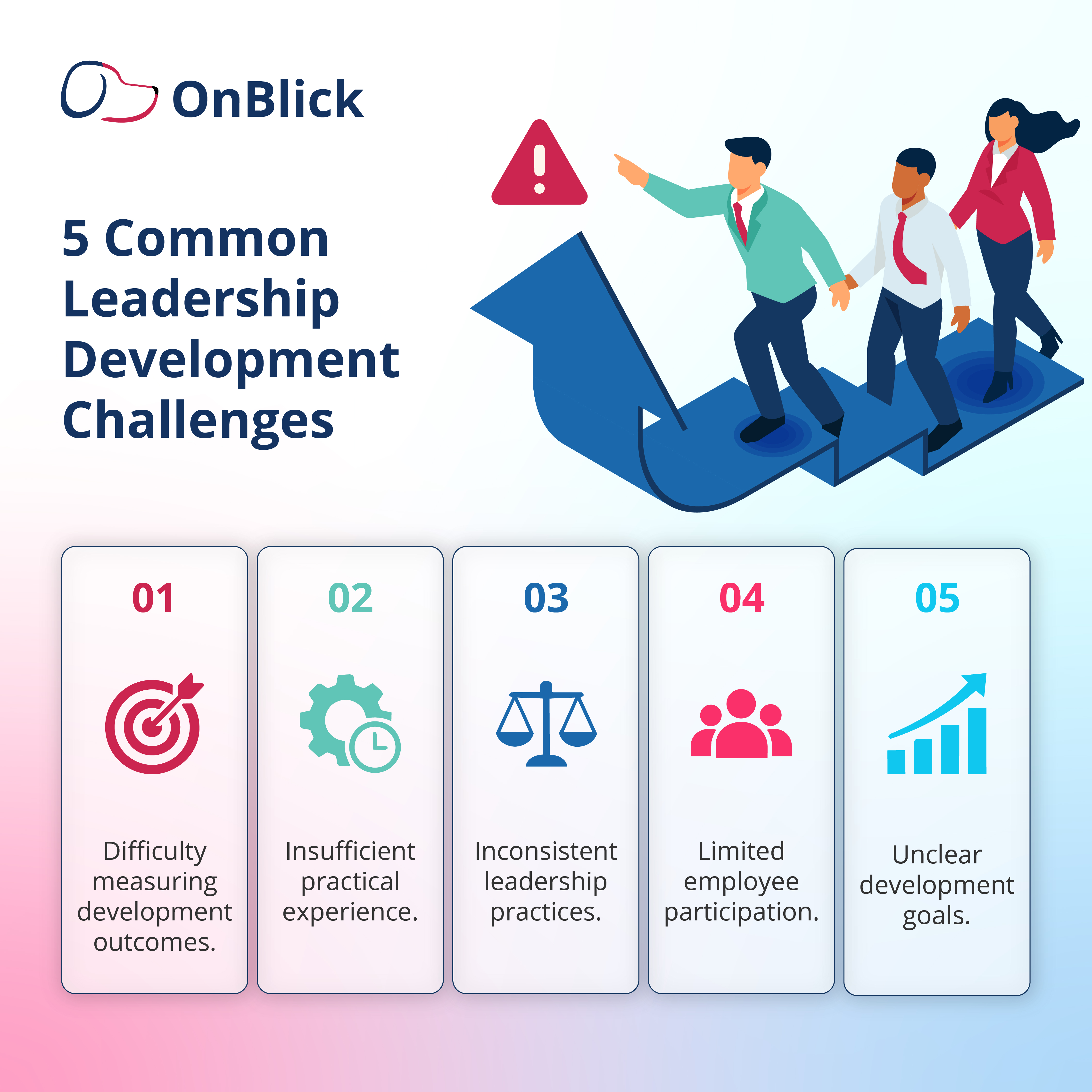
Leadership Development: Common Challenges
How to Measure the Effectiveness of Leadership Development
Organizations need to evaluate whether leadership development initiatives are producing meaningful improvements. Measuring program effectiveness involves looking beyond training participation and course completion.
HR teams can monitor the following indicators.
- Employee Engagement
Employee surveys and feedback can help assess how employees perceive communication, managerial support, recognition, and workplace relationships.
- Employee Retention
Retention trends can provide insight into workforce stability and the effectiveness of management practices. HR teams can also examine turnover patterns across departments and reporting levels.
- Internal Promotions
Tracking internal promotions helps organizations understand whether leadership development initiatives are preparing employees for greater responsibilities.
- Team Performance
Team productivity, project outcomes, goal completion, and operational performance can help assess how leadership capabilities influence team results.
- Leadership Competency Improvements
Periodic assessments and manager feedback can help determine whether employees are improving in areas such as communication, decision-making, delegation, and conflict resolution.
- Progress Against Development Goals
Reviewing individual leadership development plans helps HR teams understand whether employees are completing learning activities and applying new skills in their roles.
Organizations should evaluate these indicators over time rather than relying on a single measurement. Some improvements, particularly those involving employee retention and organizational performance, may take longer to become visible.
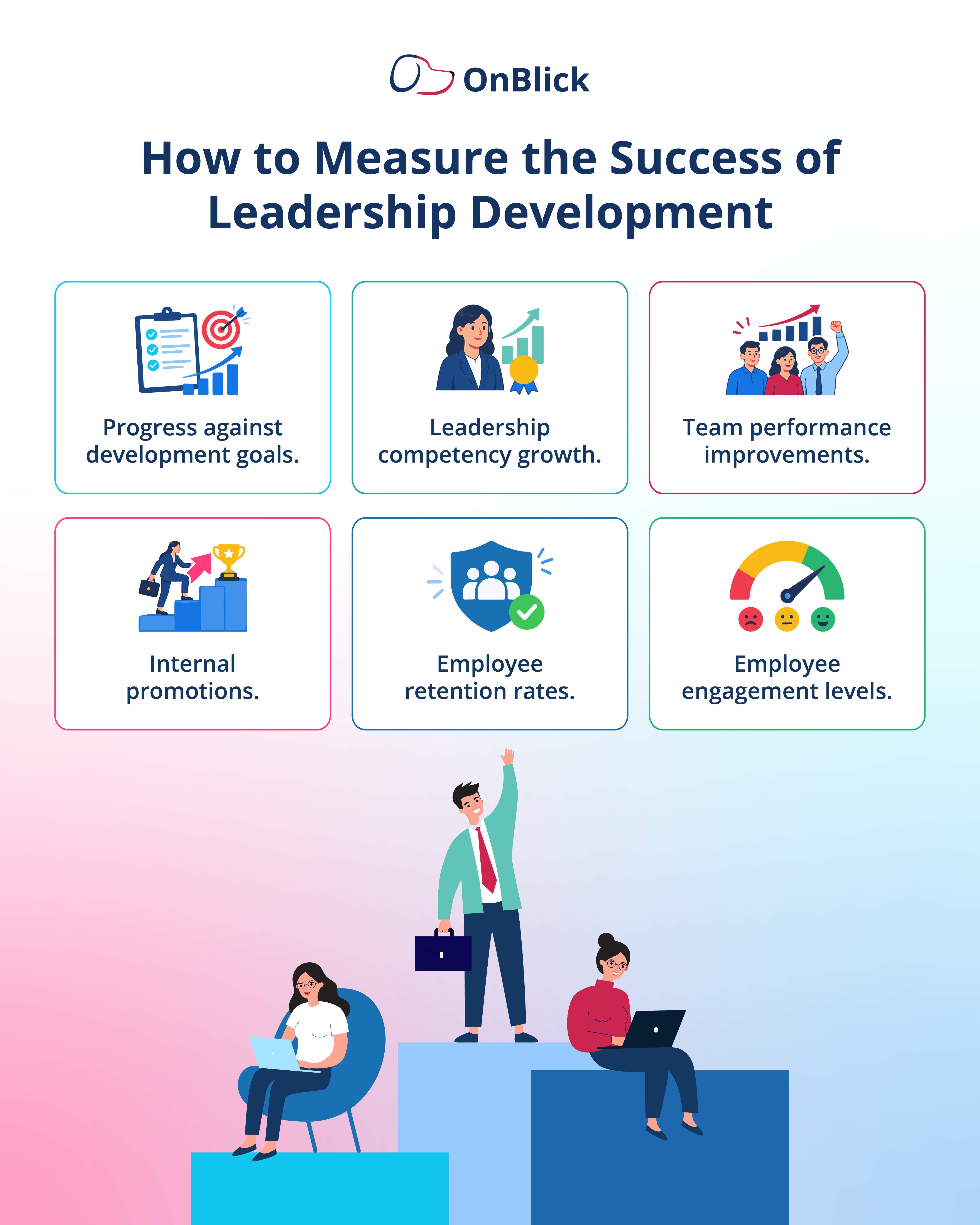
Measuring the Effectiveness of Leadership Development
What is HR's Role in Leadership Development?
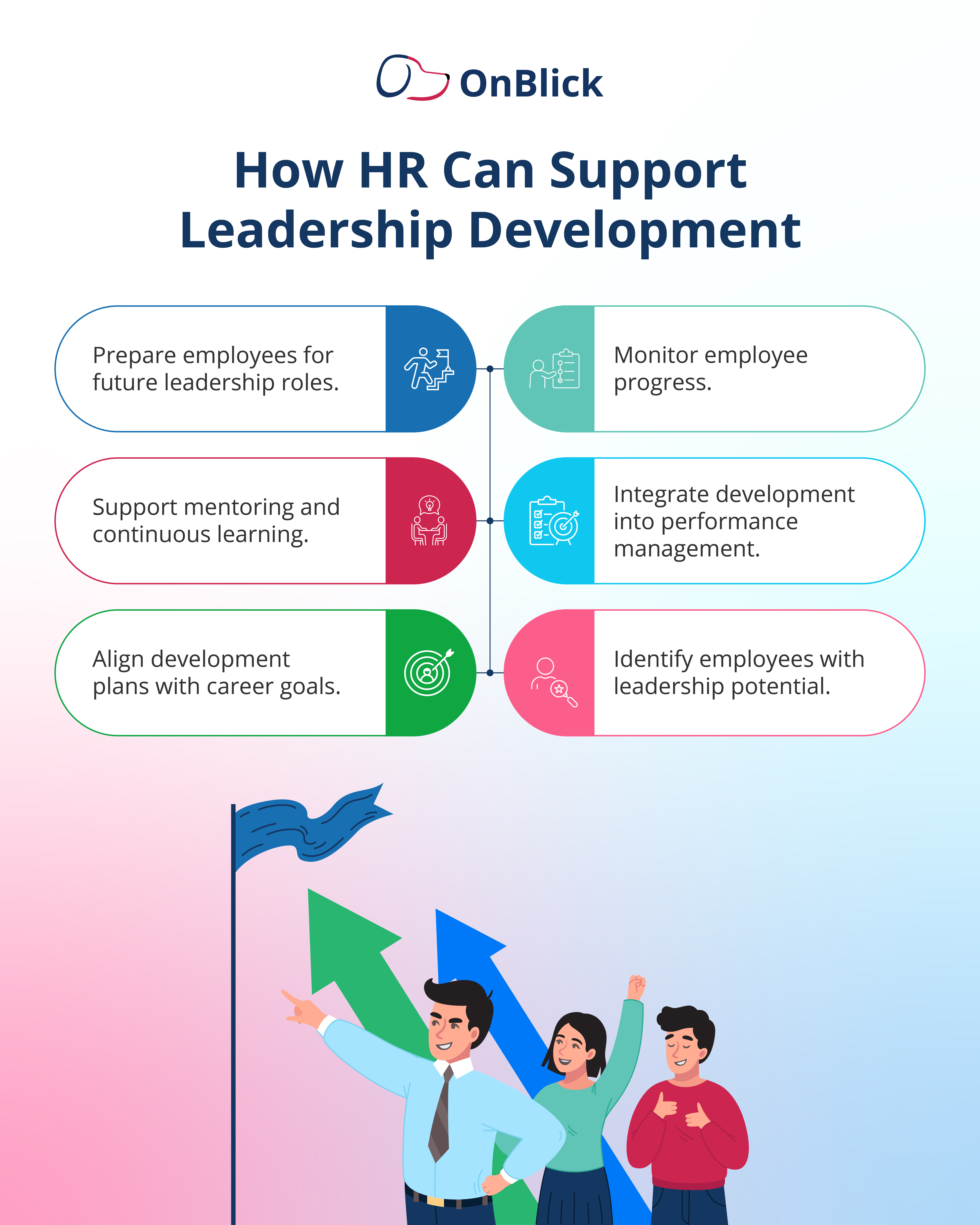
HR teams play an important role in connecting leadership development with broader workforce and business objectives. They help identify talent, coordinate development initiatives, and establish processes that support employee progression.
Some of the key responsibilities include:
- Identifying leadership potential: Working with department heads to recognize employees who demonstrate the capabilities and motivation to take on greater responsibilities.
- Supporting individual development plans: Helping managers define development objectives and identify suitable learning opportunities.
- Integrating development with performance management: Connecting employee feedback, performance discussions, and development goals.
- Facilitating mentoring and coaching: Creating opportunities for employees to learn from experienced managers and organizational leaders.
- Supporting succession planning: Maintaining visibility into potential internal candidates for important leadership positions.
- Monitoring development progress: Reviewing employee development activities and identifying areas where additional support may be needed.
HR teams also need access to reliable workforce information to understand employee roles, reporting relationships, and organizational structures.
For businesses managing multiple teams, departments, clients, and worksites, maintaining this information in an organized manner can support workforce visibility and HR coordination.
HR and Leadership Development
How OnBlick Supports HR and Workforce Management
Leadership development is primarily driven by learning, mentoring, coaching, and practical experience. However, the HR processes surrounding employee management also contribute to how organizations organize and support their workforce.
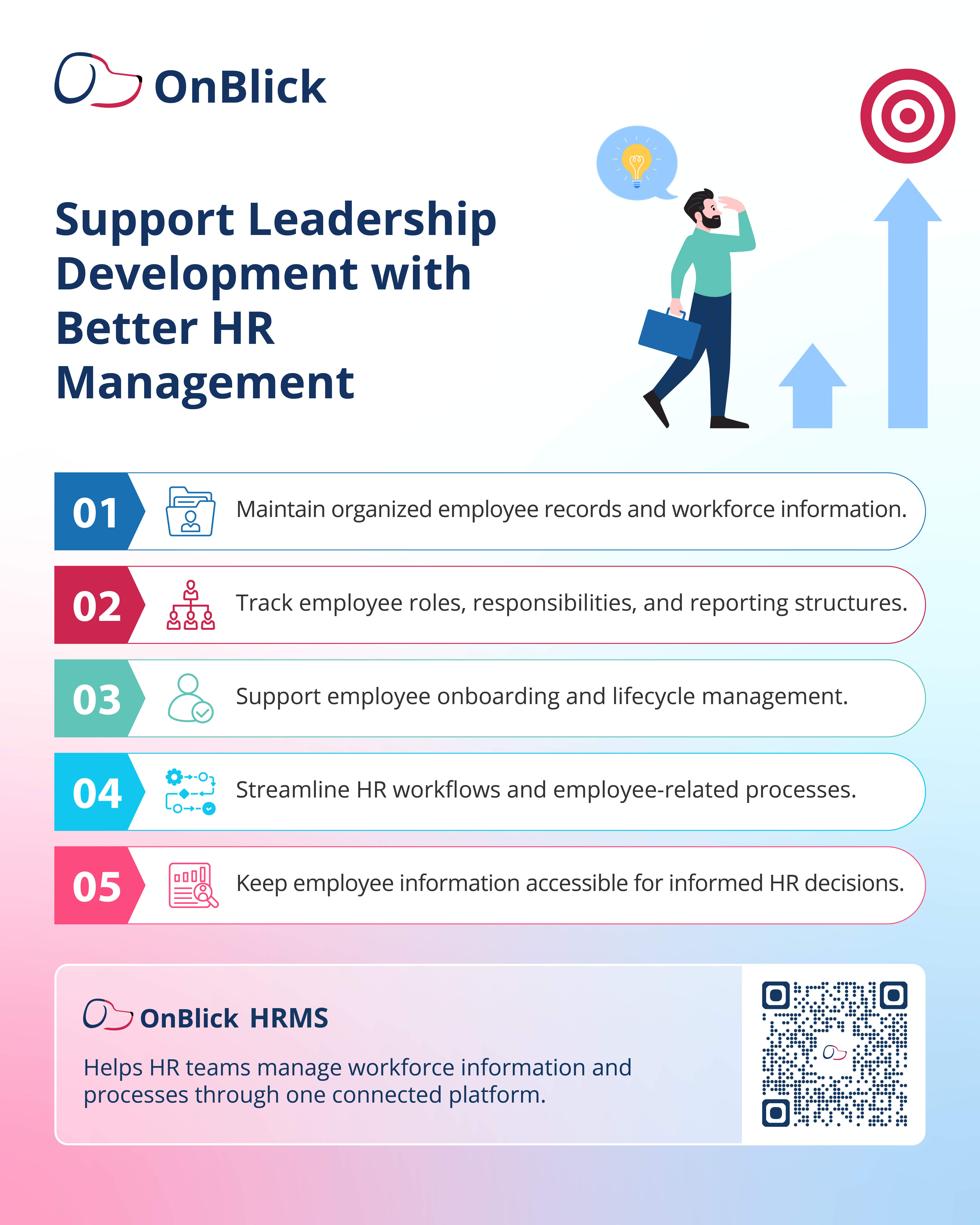
OnBlick's HRMS helps businesses manage employee information and HR workflows through a connected platform. Its workforce management capabilities include organizational hierarchy, employee-to-manager relationships, employee self-service, onboarding workflows, and employee activity tracking.
These capabilities help HR teams maintain organized workforce information, manage employee-related processes, and improve visibility across the employee lifecycle.
For organizations looking to strengthen their HR operations while supporting employee development initiatives, having structured workforce information can provide a useful foundation.
Book a free OnBlick demo and explore our HRMS to learn more about its HR and workforce management capabilities.
OnBlick HR Software
Summing Up
Effective leadership is developed through continuous learning, practical experience, feedback, and opportunities to take on greater responsibilities. Organizations that invest in leadership development can prepare employees for management roles, strengthen existing leadership teams, and establish a more consistent approach to workforce management.
For HR teams, the process begins with identifying organizational needs, assessing employee capabilities, and creating development plans aligned with business objectives. Regular feedback and meaningful performance indicators help ensure that these initiatives remain relevant and effective.
Rather than treating leadership development as a one-time training activity, organizations can make it part of their broader employee development and talent management strategy. This creates opportunities for employees to grow while helping businesses build the leadership capabilities needed for the future.
Frequently Asked Questions (FAQs)
1. What is leadership development?
Leadership development is the ongoing process of building the skills, knowledge, and capabilities individuals need to guide teams, manage responsibilities, and achieve organizational objectives. It includes training, mentoring, coaching, practical experience, and continuous feedback.
2. Why is leadership development important in the workplace?
Leadership development helps organizations prepare capable managers, improve team coordination, support employee engagement, and build a pipeline of future leaders. It also helps employees develop the skills needed to handle changing workplace responsibilities.
3. What are the key components of a leadership development program?
A leadership development program typically includes leadership assessments, clear development goals, personalized learning plans, training, mentoring, coaching, practical assignments, and regular progress reviews. The components should align with organizational priorities and individual development needs.
4. What are the most important leadership skills employees should develop?
Important leadership skills include communication, decision-making, emotional intelligence, conflict resolution, delegation, strategic thinking, adaptability, and coaching. The specific skills required depend on an individual's role, experience, and management responsibilities.
5. How can HR identify employees with leadership potential?
HR teams can identify leadership potential by evaluating employee performance, communication, initiative, problem-solving, accountability, collaboration, and willingness to take on additional responsibilities. Manager feedback, competency assessments, and project performance can also provide useful insights.
6. What is the difference between leadership training and leadership development?
Leadership training focuses on teaching specific skills and knowledge through structured learning activities. Leadership development is broader and involves continuously building leadership capabilities through training, mentoring, coaching, feedback, and practical workplace experience.
7. How can organizations measure leadership development success?
Organizations can measure leadership development through employee engagement, retention, internal promotions, team performance, improvements in leadership competencies, and progress against individual development goals. These indicators help evaluate whether employees are applying their learning effectively.
8. Who should participate in leadership development programs?
Leadership development programs can benefit employees at different career stages, including emerging leaders, first-time managers, mid-level managers, and senior executives. Development activities should be tailored to the responsibilities and capabilities expected at each level.
9. How often should organizations review leadership development plans?
Organizations should review leadership development plans regularly through scheduled performance discussions, feedback sessions, and progress assessments. Reviews can take place quarterly or at other intervals suited to the organization's needs and the employee's development goals.
10. How does succession planning relate to leadership development?
Leadership development prepares employees to take on future leadership responsibilities, while succession planning identifies potential candidates for critical organizational positions. Both processes work together to strengthen internal talent pipelines and support leadership continuity.