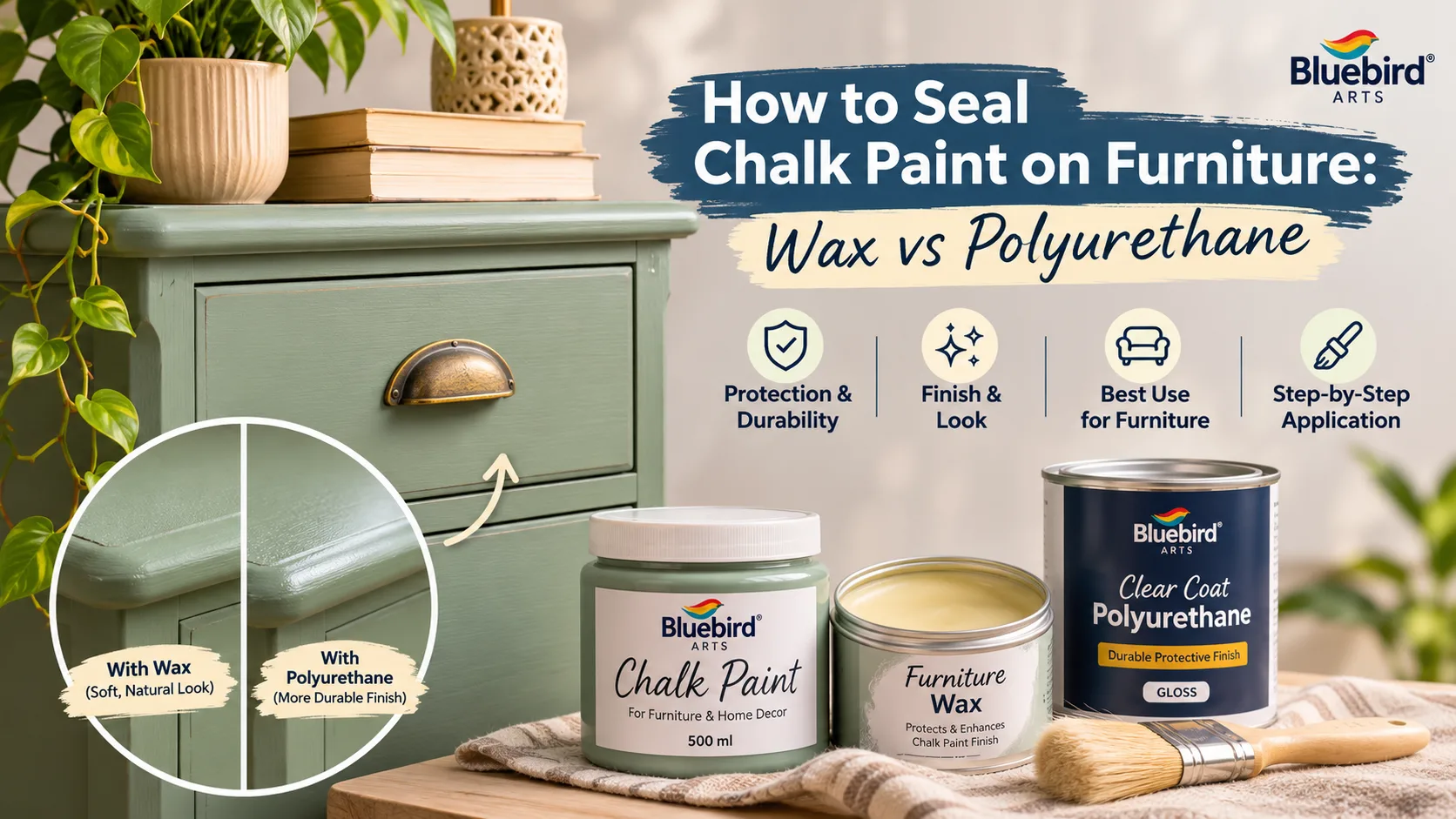
A freshly painted bedside table can look perfect until you place a water glass on it, move a lamp across the surface, or wipe away a small spill. Suddenly, that beautiful chalky finish has a mark you did not expect.
That is why sealing matters. Chalk paint creates a soft, matte appearance, but the level of protection depends on the paint formula and the finish applied over it.
If you are wondering how to seal chalk paint on furniture, the two options you will often come across are furniture wax and polyurethane. Both can work in suitable paint systems, but they are not interchangeable.
The better choice depends on what you painted, how often you use it, and whether you want a natural-looking surface or something easier to maintain.
Does Chalk Paint on Furniture Need to Be Sealed?
Not every chalk-style paint has the same finishing requirements. Some decorative formulas can remain uncoated in low-contact areas, while others need a protective topcoat.
Think about where your furniture will sit.
A decorative mirror frame rarely gets touched. A bedside table holds glasses, books, and lamps every day. A dining table faces spills, cleaning, and constant movement.
These pieces need different levels of protection.
Sealing can help reduce everyday scuffs, staining, and moisture-related damage. However, even sealed furniture should not be treated as waterproof or heatproof.
If you are still deciding which paint to use, read our guide on chalk paint vs acrylic paint for furniture.
Wax vs Polyurethane for Chalk Paint: What's the Difference?
Furniture wax creates a soft, natural-looking finish. Polyurethane forms a more continuous protective coating over the painted surface.
The difference becomes noticeable when you start using the furniture.
| Feature | Furniture Wax | Polyurethane |
|---|---|---|
| Appearance | Soft, natural sheen | Matt, satin, or gloss, depending on product |
| Best suited for | Decorative, low-contact furniture | Frequently used furniture |
| Spill protection | More limited | Generally better when properly applied |
| Application | Cloth or wax brush | Brush or roller |
| Maintenance | May need refreshing | Usually easier to wipe clean |
| Main concern | Marks, wear, and longer curing | Streaks, cloudiness, or colour changes |
When Would I Choose Wax?
Wax makes sense when the appearance and feel of the painted surface matter more than heavy-duty protection.
For example, a bedroom dresser or decorative side cabinet may look beautiful with a soft, hand-buffed wax finish.
Wax can also suit furniture with carved edges and an aged appearance.
However, it is less practical for surfaces that frequently come into contact with water, cleaning products, or hot objects.
When Is Polyurethane the Better Choice?
Polyurethane is generally the more practical chalk paint topcoat for furniture that receives regular handling.
Consider a painted hallway cabinet. People open its drawers, touch its edges, and place everyday objects on top.
A compatible polyurethane coating can offer better resistance to this kind of use.
You can explore different polyurethane clear coats, but always check the finish and compatibility before application.
Which Sealer Should You Use for Different Furniture?
Rather than choosing only by appearance, think about how the piece will be used.
- Bedroom dresser: Wax may work for gentle use if the paint system allows it. Polyurethane is useful when the top needs regular cleaning.
- Dining table: A suitable polyurethane finish is usually preferable because spills and abrasion are common. Use coasters and heat mats.
- Decorative console: Wax can preserve a traditional, soft appearance with relatively little daily handling.
- Kitchen cabinet: A compatible polyurethane coating is generally more practical because doors and handles are frequently touched.
For furniture that receives heavy wear, also check whether the underlying chalk paint itself is suitable for that use.
How to Seal Chalk Paint with Furniture Wax
Wax is relatively easy to apply, but using too much can leave a sticky or uneven surface.
Step 1: Let the Paint Dry
Make sure the final paint coat has dried according to the manufacturer's instructions.
A surface that feels dry is not necessarily ready for another product.
Step 2: Apply a Thin Layer
Use a clean, lint-free cloth or furniture wax brush.
Work in small sections, spreading a little wax across the painted surface. Avoid leaving thick deposits around corners or handles.
Step 3: Remove the Excess
Wipe away extra wax before it builds up. The surface should feel lightly coated rather than greasy.
Step 4: Buff and Allow It to Cure
Buff according to the wax manufacturer's directions to achieve the desired sheen.
Do not assume the furniture is ready for heavy use the next day. For example, Annie Sloan's wax guidance explains that its wax can feel dry within 24 hours but may take up to two weeks to fully harden.
Other products may have different curing periods.
How to Seal Chalk Paint with Polyurethane
For a polyurethane finish, preparation and careful application are especially important.
Step 1: Wait Before Applying the Topcoat
Let the painted furniture dry for the period specified by the chalk paint manufacturer.
Do not apply polyurethane simply because the surface no longer feels wet. Trapped moisture or insufficient drying can affect the final finish.
Step 2: Remove Dust and Loose Particles
Use a clean, dry, lint-free cloth to remove surface dust.
Pay attention to drawer corners, carved details, and horizontal surfaces where dust settles.
Step 3: Test an Inconspicuous Area
Apply a small amount of your chosen polyurethane to a hidden section.
This matters especially with white or pale chalk paint. Some clear coats can deepen the colour or reveal yellowing caused by substances in the wood or an older finish.
Also confirm that the topcoat is compatible with the paint underneath.
Step 4: Apply Thin, Even Coats
Use the brush or roller recommended by the topcoat manufacturer.
Work along the surface with controlled strokes. Avoid repeatedly brushing sections that have already started drying.
For example, the Clear Coat Gloss Polyurethane product guidance specifies one or two thin coats and warns that excessive thickness may cause cloudiness.
Step 5: Respect the Recoat and Curing Times
Follow the exact product instructions before adding another coat.
A topcoat may become touch-dry quickly without having developed its full resistance to wear.
Avoid heavy objects, standing water, and aggressive cleaning until the coating has properly cured.
Common Mistakes That Can Ruin a Chalk Paint Finish
Applying Polyurethane Over Wax
Can you use polyurethane over chalk paint that has already been waxed?
Not directly in most finishing systems.
Wax can prevent polyurethane from bonding properly, causing peeling or poor adhesion.
If you want polyurethane protection, choose that finishing system before waxing. For previously waxed furniture, consult the coating manufacturer about wax removal and surface preparation.
Applying the Sealer Too Thickly
A thick layer does not automatically provide better protection.
It may cause uneven drying, cloudy patches, or visible brush marks.
Controlled, thin applications generally produce a more consistent finish.
Ignoring High-Touch Areas
Drawer fronts, cabinet edges, and handles often show wear before the rest of the furniture.
Give these areas careful, even coverage without overloading them with product.
Using Furniture Before the Finish Has Cured
A newly finished table might feel smooth but still be vulnerable to pressure marks.
Leave enough curing time before returning it to regular use.
Final Thoughts: Choose Protection That Matches Your Furniture
The right sealer is the one that suits both your paint and your furniture's daily use.
Wax is worth considering for compatible decorative finishes where softness and appearance are priorities. Polyurethane is generally more suitable when you need a durable, wipeable surface.
For projects using furniture chalk paint, Bluebird Arts recommends its polyurethane clear coat system, with published guidance to apply the protective coating 48 to 72 hours after painting. Following the correct product instructions will do more for a lasting finish than simply adding extra coats.
Frequently Asked Questions
1. What is the best way to seal chalk paint on furniture?
Use a protective finish compatible with your chalk paint. Furniture wax can suit decorative pieces, while polyurethane is generally better for frequently used surfaces. Always follow the paint manufacturer's finishing instructions.
2. Can you use polyurethane over chalk paint?
Yes, provided the products are compatible and the paint has dried sufficiently. Test a hidden area before applying polyurethane across the entire piece.
3. Can you put polyurethane over waxed chalk paint?
Generally, no. Wax can interfere with polyurethane adhesion. The wax may need to be fully removed and the surface prepared before recoating, subject to manufacturer guidance.
4. Does sealing chalk paint make furniture waterproof?
No. A suitable topcoat can improve moisture resistance, but that does not make the furniture completely waterproof. Wipe spills promptly and protect surfaces from prolonged water exposure.
5. How long should chalk paint dry before sealing?
Drying requirements depend on the product. Some furniture chalk paint systems specify waiting 48 to 72 hours before polyurethane application. Always check the manufacturer's instructions rather than relying only on touch-dry time.