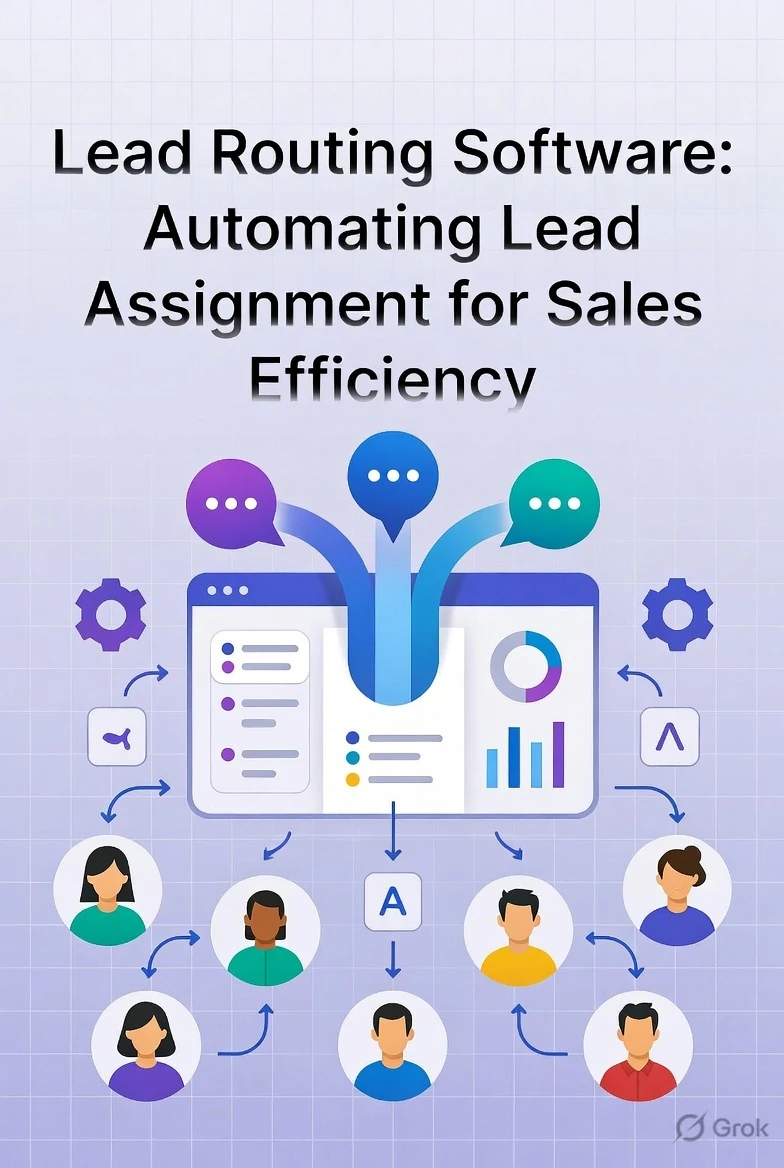
Modern sales teams generate leads from multiple channels such as website forms, marketing campaigns, paid ads, and integrations. Managing these leads manually can quickly become inefficient as the number of prospects grows. This is where lead routing software plays an essential role.
Lead routing software automatically assigns incoming leads to the most appropriate sales representative based on predefined rules. By automating lead distribution, companies can respond faster, improve productivity, and ensure that every lead is handled by the right person.
This guide explains what lead routing software is, how it works, and why businesses rely on it to optimize their sales processes.
What Is Lead Routing Software?
Lead routing software is a tool that automatically distributes incoming leads to sales representatives based on specific criteria.
Instead of manually assigning leads, the software evaluates lead data and routes each lead to the most relevant salesperson. Common routing conditions include:
- Geographic territory
- Industry or vertical
- Product interest
- Company size
- Round-robin distribution
- Account ownership
By using lead routing software, organizations can streamline lead management and ensure faster follow-ups with potential customers.
Why Businesses Use Lead Routing Software
Companies adopt lead routing software to solve common problems associated with manual lead management.
Faster Lead Response Time
Speed is critical in sales. Lead routing software assigns leads instantly, allowing sales reps to contact prospects quickly and increase the chances of conversion.
Balanced Lead Distribution
Round-robin routing ensures that leads are evenly distributed among sales representatives, preventing workload imbalance.
Improved Sales Productivity
Automation eliminates manual lead assignment tasks, allowing sales teams to focus on engaging with prospects and closing deals.
Accurate Lead Ownership
In B2B sales, leads often come from companies that already exist in the CRM. Lead routing software can match leads with existing accounts and assign them to the correct account owner.
How Lead Routing Software Works
The process of using lead routing software typically follows these steps:
- A lead enters the system through a web form, marketing automation tool, or CRM integration.
- The software evaluates lead information using routing rules.
- The system automatically assigns the lead to a sales representative or team.
- The sales rep receives the lead and begins follow-up communication.
This automated workflow helps businesses manage large volumes of leads efficiently.
Key Features of Lead Routing Software
When selecting lead routing software, organizations should look for features that support scalable sales operations.
Rule-Based Lead Routing
Allows businesses to create routing conditions based on territory, industry, or product interest.
Round-Robin Distribution
Ensures fair lead allocation across sales teams.
Lead-to-Account Matching
Matches new leads with existing accounts in the CRM.
Real-Time Lead Assignment
Routes leads instantly to improve speed-to-lead.
Reporting and Analytics
Provides visibility into routing performance and lead management efficiency.
Benefits of Implementing Lead Routing Software
Adopting lead routing software provides several advantages for sales and revenue operations teams.
Improved speed-to-lead
Leads are assigned instantly, allowing sales teams to respond quickly.
Higher conversion rates
Faster follow-ups increase the likelihood of converting leads into opportunities.
Better sales efficiency
Automation reduces manual tasks and improves team productivity.
Scalable lead management
Organizations can handle larger lead volumes without increasing administrative workload.
Best Practices for Using Lead Routing Software
To maximize the effectiveness of lead routing software, businesses should follow several best practices.
Define clear routing criteria
Create rules based on territory, industry, and sales expertise.
Prioritize high-value leads
Assign enterprise leads to experienced sales representatives.
Monitor routing performance
Regularly analyze routing reports and update rules when needed.
Align routing with account ownership
Ensure leads from existing companies are assigned to the correct account owner.
Conclusion
As sales organizations grow, manual lead assignment becomes inefficient and difficult to manage. Lead routing software helps businesses automate lead distribution, improve response times, and ensure accurate lead ownership.
By implementing lead routing software, companies can streamline lead management, increase productivity, and improve their chances of converting prospects into customers.
For organizations focused on scaling their sales operations, adopting the right lead routing software is a critical step toward building an efficient and automated sales process.