
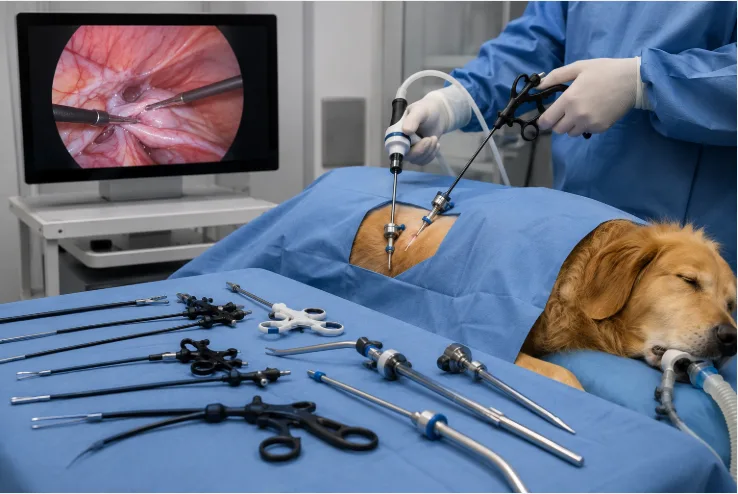
Veterinary medicine has seen significant improvements with the use of advanced surgical techniques and specialized equipment. One of the most important developments in animal healthcare is the use of minimally invasive procedures. These techniques allow veterinarians to perform surgeries using smaller incisions, reducing stress on the animal and improving recovery conditions.
Specialized tools known as Laparoscopic instruments play a central role in these procedures. These instruments allow veterinary surgeons to access internal areas of an animal’s body through small entry points while maintaining precision and control. Along with advanced surgical tools, veterinary clinics must also rely on effective sterilization systems to ensure that all instruments are properly prepared before use.
The Role of Minimally Invasive Surgery in Veterinary Care
Minimally invasive surgery has become increasingly common in veterinary practices. These procedures allow veterinarians to perform surgical tasks through small openings rather than large incisions. As a result, animals often experience less physical trauma and improved recovery conditions.
Procedures performed using Laparoscopic instruments allow surgeons to examine internal organs and perform surgical corrections while limiting disruption to surrounding tissues. The use of these specialized tools helps improve accuracy during procedures and supports better visualization of the surgical area.
Types of Equipment Used in Laparoscopic Veterinary Procedures
Laparoscopic procedures require several types of specialized equipment. Each tool serves a specific purpose and must work together effectively during surgery.
Laparoscopic Scopes
Scopes allow veterinarians to view internal structures using a small camera inserted through a tiny incision. The images captured by the scope are displayed on a monitor, allowing the surgeon to observe the surgical area clearly.
Surgical Access Instruments
Specialized access tools allow laparoscopic instruments to enter the animal’s body through small openings. These tools help maintain stable entry points for the surgical instruments.
Tissue Handling Tools
Veterinary surgeons use a variety of laparoscopic tools designed to grasp, cut, or manipulate tissues during procedures. These tools allow surgeons to perform delicate tasks with precision.
Surgical Lighting Equipment
Proper lighting is essential for clear visualization during laparoscopic procedures. Surgical lighting systems ensure that internal structures are visible throughout the operation.
All of these instruments must be sterilized properly before they are used in veterinary procedures.
Importance of Sterilization for Veterinary Surgical Equipment
Sterilization is a fundamental requirement in veterinary surgery. Instruments that come into contact with tissues must be completely free of bacteria and other contaminants.
Veterinary clinics rely on sterilization systems designed to prepare surgical equipment quickly and effectively. These systems help ensure that laparoscopic tools, scopes, vessel sealing devices, and surgical lighting equipment remain safe for use.
Compact Sterilization Kits for Individual Instruments
In certain situations, veterinary clinics may need to sterilize a single instrument quickly before surgery begins. Compact sterilization kits are designed to address this need.
These kits include small sterilization pouches that hold individual instruments. The sterilization process for these systems can be completed in a short period, allowing the instrument to be used shortly after the cycle begins.
Medium Sterilization Kits for Multiple Surgical Tools
Many veterinary procedures require several instruments to be prepared at the same time. Medium-capacity sterilization kits allow veterinary clinics to process multiple tools together.
These kits provide larger pouches that can hold several instruments during a single sterilization cycle. Even when multiple items are included, the process remains efficient and does not require long waiting periods.
Conclusion
Modern veterinary clinics rely on advanced technology and well-organized surgical preparation to provide quality care for animals. Minimally invasive procedures allow veterinarians to perform surgical tasks with greater precision while reducing physical stress on the animal.
Specialized laparoscopic tools enable surgeons to work effectively in small surgical spaces, improving accuracy during procedures. At the same time, efficient sterilization systems ensure that all surgical equipment remains safe and ready for use.