
Operating a landscaping firm goes beyond activities like tree planting, mowing lawns, and gardening. Landscaping firms also have to manage employees, make appointment schedules, organize equipment, and ensure that the different tasks carried out outdoors are done on schedule. Manual coordination of all these tasks is cumbersome when you operate on several maintenance contracts.
As the business expands, coordinating business operations becomes more complicated. Appointment scheduling errors, conflicts, delays in making maintenance visits, and lack of proper communication might impact customer satisfaction and business productivity.
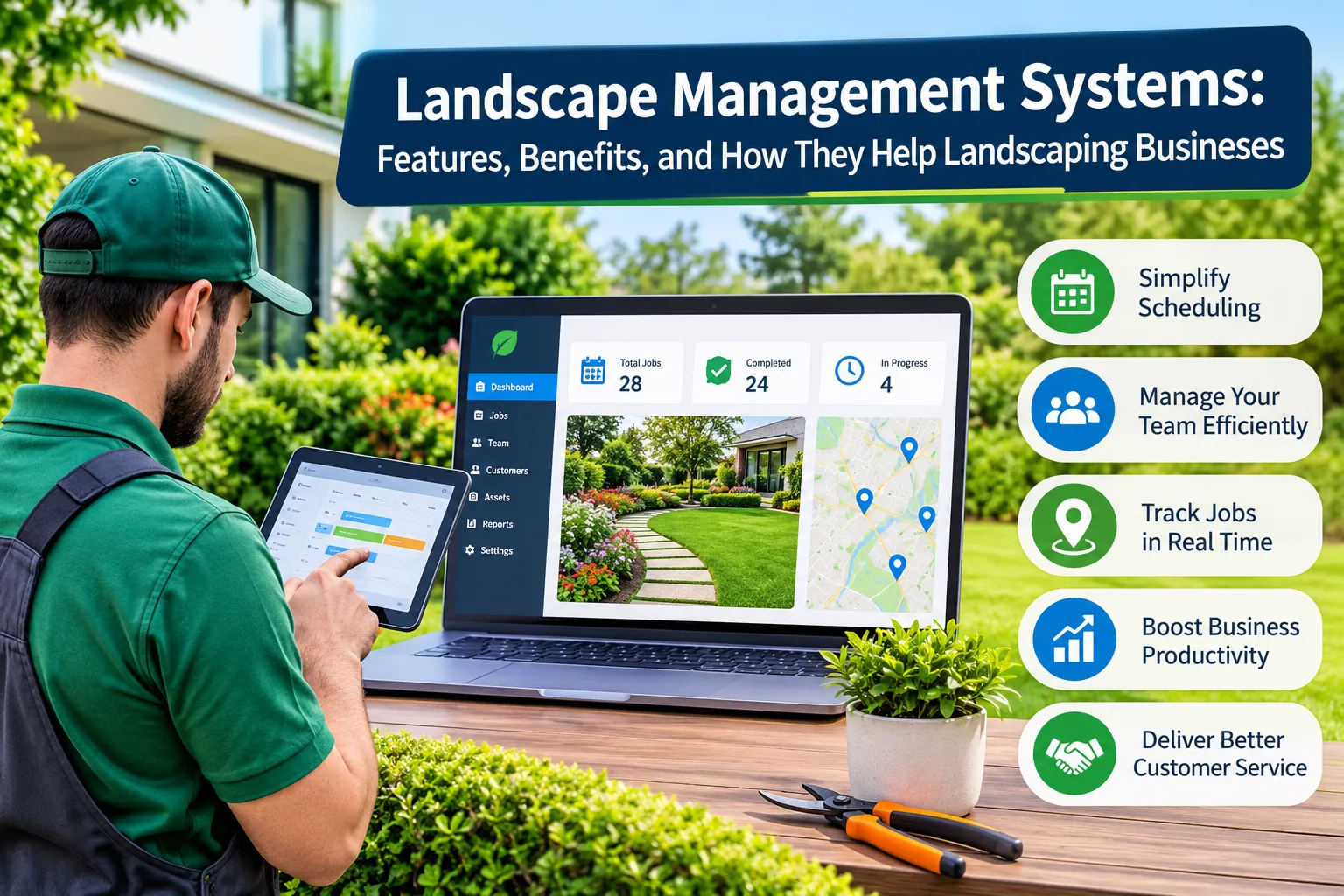
Landscape management systems come in handy in such situations since they offer landscapers an opportunity to coordinate daily activities, employees, job scheduling, and task management from one platform.
In this blog post, we will look at what landscape management systems are, their important features, and how they benefit landscaping businesses.
What Are Landscape Management Systems?
Landscape management systems refer to digital platforms that are designed to assist landscaping firms in managing their day-to-day operations. These systems integrate significant aspects of the business, including customer management, scheduling of workers, assignment of tasks, tracking of equipment, and services provided into one coherent system.
In some cases, landscaping companies can receive a number of requests regarding lawn mowing, trimming of trees, garden cleaning, and irrigation services from various clients.
Management of all the above-mentioned services by phone calls and using spreadsheets takes considerable time. With the use of a digital platform, management will find it easier to manage all the tasks assigned, assign workers, and track jobs accomplished.
The above-mentioned landscape management systems are useful for small as well as large landscaping businesses.
Why Do Landscaping Businesses Need Management Software?
Landscaping businesses often work across multiple locations and handle different types of outdoor services. Without proper planning, daily operations can become difficult to manage.
Here are some common challenges that landscaping companies can overcome with the right software.
1. Managing Multiple Customer Appointments
Landscape service providers could have more than one request for their services in a single day. Handling all the appointment schedules manually will cause overlapping and missed appointments.
Management software ensures effective appointment scheduling and keeps an eye on the work coming up.
2. Coordinating Field Employees
Employees will be working in various sites throughout the day. Managers will require knowledge of who will be free and which team is assigned to which task.
Technology makes it easy to distribute tasks and instructions on jobs.
3. Tracking Equipment and Materials
Equipment such as lawnmowers, trimmers, irrigation machines, and materials are needed to undertake landscaping tasks. Mismanagement of the equipment may result in delays.
The use of digital technology will help businesses to keep track of the equipment and materials needed.
4. Handling Recurring Maintenance Work
Several consumers need constant lawn maintenance, garden maintenance, and tree trimming. It is not always possible to remember all the recurring appointments.
It becomes easy for businesses to make plans for regular visits with automated scheduling.
Important Features of Landscaping Management Software
Choosing the right landscaping management software can help businesses manage their teams and daily activities more efficiently. Here are some useful features to consider.
1. Job Scheduling and Management
Scheduling plays a critical role in any landscaping firm. The software will help management create schedules of jobs and organize appointments according to the availability of workers.
They can then make changes to these schedules according to the demands of the clients.
2. Employee and Crew Management
Coordinating various teams of landscapers is important. The employee management system allows the company to allocate tasks and follow the progress.
The managers are able to make sure that appropriate personnel will be assigned to appropriate job positions.
3. Customer Management
Customer management functions enable organizations to manage contacts, property data, services rendered, and appointments made.
This ensures that the employee is able to view relevant data prior to visiting the customer and is aware of the job needs.
4. Mobile Access for Field Employees
The mobile system enables the workers to check their job assignments, instructions, and update their work status through their phones or tablets.
Furthermore, it helps them file service reports and upload pictures after finishing their landscape jobs.
5. Invoicing and Payment Management
Preparing invoices manually after every completed job can take time. Digital invoicing helps businesses create bills, share them with customers, and monitor payment status.
This makes financial management easier and reduces administrative work.
6. Reporting and Performance Tracking
Reports help managers understand how many jobs have been completed, which tasks are pending, and how employees are performing.
These insights support better planning and help businesses identify areas that need improvement.
How Landscaping Scheduling Software Improves Daily Operations
Efficient scheduling is vital for completing landscaping projects on time. The landscape scheduling software assists businesses in organising the schedules of employees, customer appointments, and regular maintenance visits.
Suppose a landscaping business has five teams working on various projects. While one team works on lawn cutting, another team focuses on tree trimming, and the other two teams focus on gardening.
In place of assigning all these tasks manually, managers can use the scheduling software to determine the availability of employees and assign appropriate teams.
Some important benefits include:
- Better time management: Organised schedules help employees understand their daily responsibilities.
- Fewer scheduling conflicts: Managers can view existing appointments before assigning new jobs.
- Improved team coordination: Employees receive updated job information and instructions.
- Recurring appointment management: Regular maintenance visits can be planned in advance.
- Reduced travel time: Assigning nearby jobs together can help employees spend less time travelling.
These features make it easier for landscaping businesses to handle more projects without creating unnecessary confusion.
Best Practices for Managing a Landscaping Business
Along with using the right software, businesses should follow some simple practices to improve their daily operations.
1. Plan Projects in Advance
Make schedules before commencing any project. This includes assessing the size of the property, the needed equipment, the availability of employees, and the duration of the project.
2. Maintain Regular Customer Communication
Inform the clients about their appointments, any schedule changes, and services provided. Good communication is essential in fostering trust among the customers.
3. Monitor Employee Work Progress
Check the progress of assigned jobs regularly. Employees should update task status and report any problems that may affect project completion.
4. Keep Equipment Records Updated
Maintain information about available equipment, maintenance requirements, and material usage. This helps prevent unexpected delays.
5. Review Business Performance
Regularly review completed jobs, customer feedback, employee productivity, and operating expenses. These details can help businesses improve their planning and service quality.
How Field Service Management Software Supports Landscaping Companies
The landscaping companies offering on-the-job services may also use field service management software to streamline their operations.
It is useful for businesses in managing the entire service process from the customer request to employee scheduling and job completion.
In a situation where a customer makes a request for garden maintenance services, the business owner is able to create a job and assign the best team along with the relevant property information.
These will be accessible via a mobile app by the employees, who will then be able to report back on how far they have gone with the work done and attach photographs as proof.
Genic Teams' field service management capabilities include job scheduling, intelligent dispatching, workforce mobility, customer interaction, and billing.
Conclusion
Effective operation of a landscaping company necessitates correct planning, cooperation among employees, and communication with customers. As the number of projects and contracts grows, it becomes increasingly challenging to coordinate them manually.
With the help of landscape management solutions, a business is able to plan appointments, assign employees, track the progress of work, and handle customer data more efficiently.
With the right landscaping management and scheduling solutions, a business will be able to simplify administration, increase employee efficiency, and offer excellent customer service.
Frequently Asked Questions
1. What are landscape management systems?
Landscape management systems are digital platforms that help landscaping businesses manage customers, employees, schedules, service jobs, and daily operations.
2. How does landscaping management software help small businesses?
It helps small landscaping companies organise appointments, assign employees, manage customer records, and reduce manual paperwork.
3. What is landscaping scheduling software?
Landscaping scheduling software helps businesses plan customer appointments, organise employee schedules, assign jobs and manage recurring maintenance visits.
4. Can landscaping software manage recurring maintenance jobs?
Yes. Many systems allow businesses to schedule regular lawn care, garden cleaning, tree trimming and other maintenance services in advance.
5. Why is field service management software useful for landscaping companies?
It helps landscaping businesses manage field employees, schedule service jobs, monitor work progress, maintain customer records, and organise invoicing through a central platform.